
When top dermatologists are asked which habits they most wish people would break for the sake of their skin, the answers often include familiar warnings like washing your face before bed or avoiding the temptation to pop a blemish. However, the strategies these medical professionals recommend for breaking those tendencies and forming healthier habits offer genuinely fresh perspectives. Simple adjustments, such as placing sunscreen next to the toothbrush, provide practical solutions to protect the skin day and night.
Across the board, dermatologists emphasize that patients should avoid following skincare trends blindly, urging consumers not to give up on a proven formula too quickly. Skincare is a long game, according to Dr. Laurel Naversen Geraghty, a board-certified dermatologist in Medford, Oregon. Success does not come from repeatedly blasting the face with aggressive new ingredients; rather, it stems from sticking to good, proven steps over time.
Treating Skincare Like Fast Fashion
While society looks back with amusement at the candy-colored tracksuits and low-rise jeans of past decades, future generations may view current skincare fads with the same bewilderment. Practices like heavy slugging with petroleum jelly or rapidly cycling through chemical peels could soon look like missteps of a trend-obsessed era. Dr. Geraghty notes that consumers do not need to embark on a continual quest for the ultimate new product, nor should they feel pressured to throw every possible active ingredient at their complexion or spend exorbitant amounts of money to achieve a healthy glow. Regimens should remain simple and consistent, relying on proven ingredients rather than whatever product is currently trending on social media. Trends come and go, but the skin must last a lifetime.
Shopping for skincare has always been a pastime, but a modern, compulsive willingness to purchase new items more frequently to keep up with buzzy ingredients like exosomes, PDRN, and growth factors has shifted the cultural landscape. Dr. Ava Shamban, a board-certified dermatologist in Los Angeles, explains that looking good has expanded from traditional aesthetic choices like eyebrow shapes to evaluating the immediate condition of one’s skin.
The worst-case scenario involves spending significant sums of money on formulations that ultimately damage the skin barrier. Younger patients frequently overdo their routines by piling on multiple active ingredients simultaneously or repeatedly applying harsh new treatments. This over-exuberance often leads to adverse reactions such as bumps, flaking, itchy rashes, and a generally compromised, fragile skin barrier that requires medical consultation and prescription intervention to reverse.
Furthermore, products that work well for an acquaintance or social media influencer are not guaranteed to suit an individual’s unique biology. Dr. Corey Hartman, a board-certified dermatologist in Birmingham, Alabama, points out that constantly jumping between products makes it difficult to determine which items are causing irritation and which are actually helping. Dr. Shamban frequently plays detective for young patients obsessed with preventing aging who adopt too many trends at once and arrive at her office with inflamed skin.
To avoid these pitfalls, experts recommend a conservative approach to introducing new items. Dr. Geraghty advises against introducing more than one new product or ingredient at a time, or trying multiple new items within any single week. Certain trends require particular caution, including slugging, which frequently triggers breakouts according to Dr. Shamban, and alpha hydroxy acids, which Dr. Hartman describes as a double-edged sword that irritates sensitive individuals. Injectable peptides used for tanning present even greater risks, as they stimulate melanocytes throughout the body, including the central nervous system and internal areas, potentially activating precancerous cells.
Even when consumers avoid immediate irritation, they often rob products of their efficacy by giving up prematurely. Dr. Hartman emphasizes that people frequently abandon formulations before allowing adequate time to work. Formulas containing tried-and-true ingredients that cause no irritation should be used consistently for at least three months. Peptides in moisturizers and serums require sustained application over two or three months to yield significant changes, while clinical studies demonstrate that retinoids require approximately six months to produce meaningful line-smoothing and brightening results.
The Dangers of Seeking the Sun
According to Dr. Geraghty, indoor tanning, intentional sunbathing, and resulting sunburns remain the single most damaging habits for skin health. Despite the rise of anti-sunscreen rhetoric, ultraviolet light remains a proven carcinogen. It elevates the risk of skin cancer and precancerous lesions while causing irreversible damage, dark spots, sagging, and deep wrinkles. Dr. Geraghty compares the cancer risk of UV light to that of smoking and asbestos, noting the irony of patients who believe a tan makes them look healthier while ignoring the physiological dangers.
For individuals seeking vitamin D, Dr. Geraghty recommends obtaining it through diet—via cheese, egg yolks, and fortified milk—or supplements rather than increasing cancer risks. For those who find sun exposure or tanning beds psychologically comforting, she notes that these behaviors are physiologically addictive, functioning similarly to opioid drugs. Just because a habit feels good does not make it healthy.
Dr. Shamban echoes these concerns, noting that short durations of sun exposure still contribute significantly to premature aging and skin cancer. Furthermore, ultraviolet exposure compromises the skin’s immune function, which can exacerbate internal medical conditions such as lupus. Skin cancer removal in areas with minimal skin laxity, such as the nose, eyelids, and ears, often necessitates complex surgical procedures like skin grafts using nearby tissue, frequently leaving permanent scars.
Using sunscreen daily remains a powerful preventative measure against cancer, wrinkles, and hyperpigmentation. A wide variety of mineral and chemical formulations, sheer options, and quick-touch-up sprays are available, making SPF application far simpler than attempting to reverse established damage later. While self-tanners and tinted moisturizers offer a safe alternative for achieving a bronzed appearance, dermatologists ultimately encourage individuals to embrace their natural skin tones.
Daily Sun Protection and Blemish Management
Even for those who do not actively seek a tan, skipping sunscreen on overcast days or during short commutes accumulates significant ultraviolet damage over time. Dr. Hartman recommends integrating sunscreen into daily habits by placing the bottle directly next to the toothbrush, ensuring the step is completed automatically every morning. It is also vital to cover frequently missed areas, including the space between the brows, above the upper lip, the sides of the nose, the temples, and the ears, utilizing mineral formulas or SPF sticks for sensitive zones.
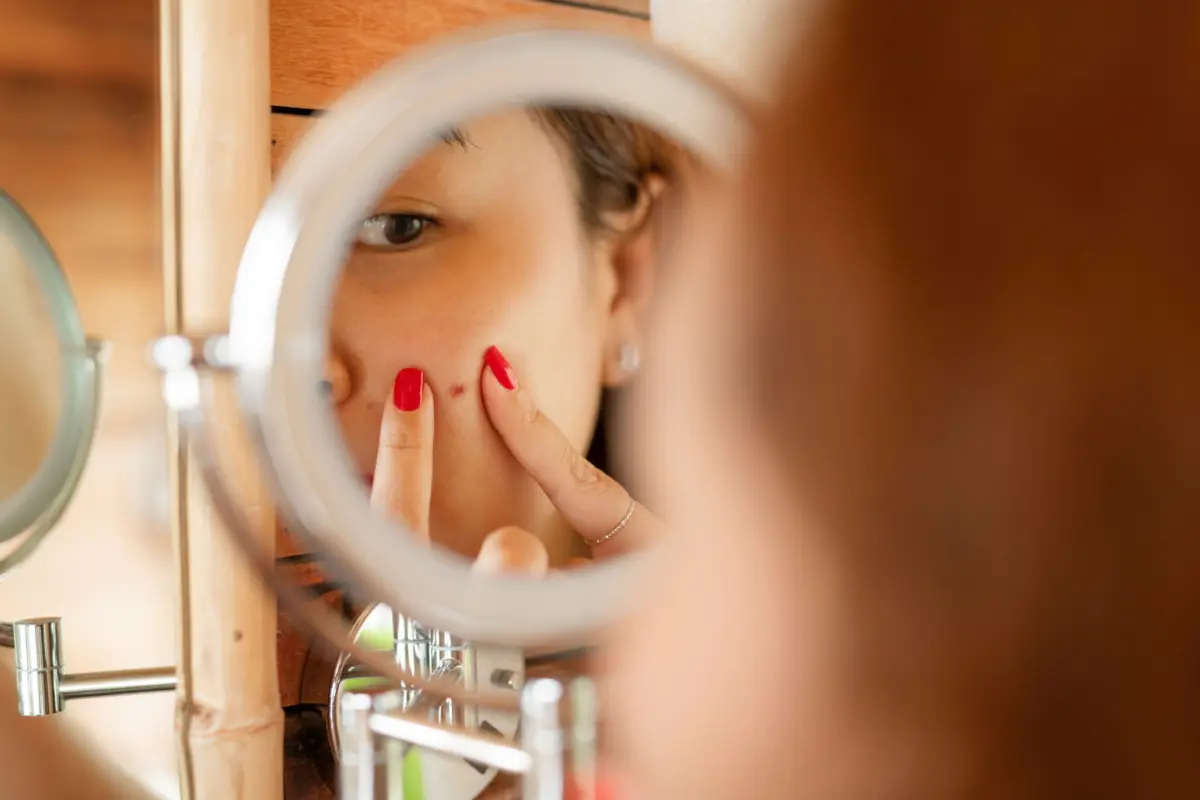
Another deeply ingrained habit is the urge to pop pimples. Dr. Hartman acknowledges that this is perhaps the hardest habit to break because human nature makes the temptation difficult to resist. Rather than demanding cold-turkey cessation, he suggests a compromise of limiting extraction attempts to one per day if a blemish has naturally come to a head. If the plug does not release immediately, further manipulation should cease, as continued squeezing pushes bacteria deeper into the pore, prolonging healing and increasing the likelihood of post-inflammatory hyperpigmentation. Covering the blemish with a salicylic acid spot treatment or a hydrocolloid patch provides a protective barrier and prevents physical picking.
Cleansing Habits and Scalp Care
Overzealous cleansing techniques present another common issue. Using washcloths, silicone brushes, or mesh sponges during cleansing introduces excessive friction that leads to redness, irritation, and dryness. Similarly, double-cleansing with multiple washes is generally unnecessary unless an individual is removing heavy makeup or using a targeted medical cleanser. Dr. Hartman advises paring down routines to a single gentle, fragrance-free cleanser suited to one’s skin type.
Skin picking extends beyond blemishes to healthy skin, the scalp, and hair, often serving as a physical release for emotional anxiety or stress. Dr. Rachel Nazarian notes that patients frequently feel deep shame and go to great lengths to hide the behavior, but consulting a board-certified dermatologist can provide effective redirection tools, such as fidget toys, stress reduction through exercise, and keeping fingernails trimmed very short.
Scratching an itchy scalp similarly causes hair breakage and potential thinning, particularly when combined with chemical treatments or hormonal shifts associated with perimenopause. Dr. Jeanine Downie recommends addressing the root cause of scalp irritation with anti-inflammatory shampoos containing ingredients like pyrithione zinc or prescription corticosteroids for conditions such as scalp psoriasis, rather than relying on physical scratching that damages hair shafts within days.
Additional Lifestyle Factors
Other daily routines can quietly impair skin vitality. Smoking cigarettes or cannabis decreases facial oxygen delivery, exacerbates conditions like eczema, psoriasis, acne, and hair loss, and deposits oxidative pollutants onto the skin’s surface.
Similarly, skipping nighttime face washing allows makeup, oil, environmental pollutants, and bacteria to accumulate, resulting in oxidative stress, collagen breakdown, and a heightened risk of painful eye infections like styes. Dr. Nazarian suggests shifting the cleansing routine earlier in the evening—such as immediately upon returning home—to bypass late-night exhaustion. While cleansing wipes offer a quick alternative, they often leave behind irritating residues that require traditional soap and water to fully remove.
Timing oral hygiene can also impact skin health. Brushing teeth immediately before bed often leaves residual toothpaste containing sodium lauryl sulfate around the mouth, which can cause chapped lips and contact dermatitis over time. Washing the face after brushing or switching to a sulfate-free toothpaste can effectively prevent this irritation.
Additionally, the physical fit of eyewear matters. Glasses that place excessive pressure on the bridge of the nose can eventually cause stubborn areas of hyperpigmentation. Regularly adjusting frames helps prevent these long-term dark spots.
Finally, seeking cosmetic procedures at med spas rather than medical offices carries elevated risks of complications, ranging from burns and infections to severe vascular occlusion. Dermatologists advise consulting board-certified physicians who possess a thorough understanding of facial anatomy and exercising restraint with injectable treatments to maintain natural aesthetics and preserve tissue health over the long term.