The findings, published in the prestigious journal Nature, center on expeditions to the Kuril-Kamchatka Trench, the western Aleutian Trench, and the iconic Mariana Trench in the western Pacific. For decades, scientists theorized that hadal trenches—some of the least explored and most hostile environments on Earth—might harbor life driven by chemical energy rather than sunlight. However, actual documentation of such vast, complex communities has historically been exceptionally rare.
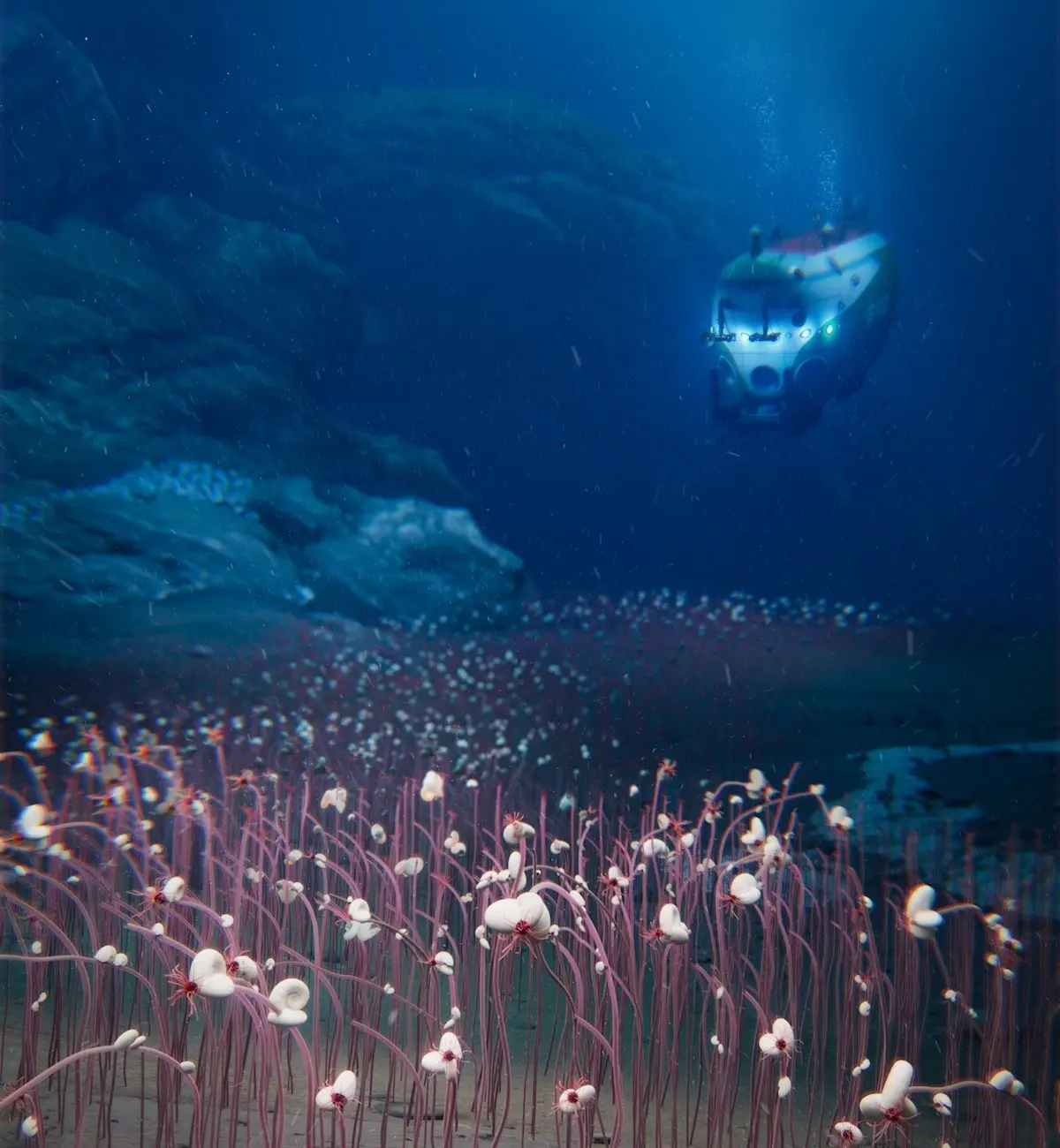
That paradigm has now shifted. During a series of 23 dives conducted last year using the manned submersible Fendouzhe, researchers revealed that life not only survives in these extreme, crushing depths, but flourishes in vibrant oases.
Unlocking the Secrets of the Hadal Zone
The newly discovered animal communities are staggering in both scale and composition. Primarily consisting of siboglinid polychaetes (tubeworms) and bivalves (clams and mussels), these organisms span an astonishing distance of 1,553.4 miles at depths ranging from 3.6 to 5.92 miles. To put the depth of the Mariana Trench into perspective, it extends farther downward than Mount Everest reaches upward toward the sky.
At these extreme depths, no sunlight penetrates the pitch-black water. Without light, photosynthesis—the foundational energy source for the vast majority of life on Earth—is impossible. Instead, these deep-sea creatures rely on an alternative biological engine known as chemosynthesis. Isotopic analysis indicates that the communities are sustained by hydrogen sulfide-rich and methane-rich fluids. These chemical-laden fluids are transported upward along fault lines traversing deep sediment layers within the trenches, where methane is produced microbially from accumulated, decaying organic matter drifting down from upper ocean layers.
Lead author Xiatong Peng noted that the geological similarities shared among various hadal trenches suggest that these chemosynthesis-based communities may be far more widespread across the globe than previously anticipated. The discovery fundamentally challenges current scientific models regarding deep-ocean carbon cycling and the absolute limits of where and how life can exist.

A Vibrant Oasis in a Deep-Sea Desert
Co-author Mengran Du, a marine geochemist with the Institute of Deep-sea Science and Engineering at the Chinese Academy of Sciences, emphasized that the true breakthrough lies not merely in the extreme depth of the find, but in the sheer abundance and diversity of the organisms recorded on video.
Footage captured during the Fendouzhe dives revealed dense fields of tubeworms growing up to a foot long, alongside massive mounds of clams and mollusks. Researchers also observed free-floating marine worms, spiky crustaceans, sea lilies, sea cucumbers, and a host of other complex invertebrates. Rather than existing as isolated pockets of hardy survivors, these creatures cluster densely around snow-like microbial mats where microbes actively produce methane, forming a bustling ecosystem that defies the harsh pressures and perpetual darkness of the abyss.
Reflecting on the expeditions, Du described the experience of descending into the trench in the submersible as akin to traveling through time and unveiling a hidden world. While the first human explorers briefly visited the bottom of the crescent-shaped Mariana Trench in 1960, and filmmaker James Cameron completed a historic solo descent in 2012—famously describing the landscape as desolate and alien—the latest crewed missions are painting a picture of a dynamic, living frontier.
Implications for Marine Conservation and Deep-Sea Mining
The publication of these findings arrives at a critical juncture for global environmental policy. As scientists reveal the unexpected richness of these deep-sea habitats, international bodies and governments are locked in intense debates regarding the regulation of deep-sea mining.
Proponents of the emerging industry look to the ocean floor for valuable minerals essential for green technologies, but ocean scientists and marine conservationists have repeatedly warned that industrializing the seabed could permanently devastate fragile marine ecosystems in one of the last truly wild, undisturbed zones on Earth. Despite ongoing talks, the International Seabed Authority has yet to adopt comprehensive binding rules governing commercial mining operations.
The discovery of extensive, flourishing animal communities six miles below the sea surface underscores just how little humanity still understands about the planet’s deepest waters—and highlights the urgent need to protect these fragile, hidden ecosystems before the full extent of their mysteries can even be charted.