

For those who have tuned out the daily financial drama, the contemporary narrative surrounding artificial intelligence follows a familiar trajectory of rapid adoption, immense capital investment, and breathless media coverage. Yet, beneath the current wave of market enthusiasm lies a deeper, more psychological phenomenon. Investors frequently worry that while artificial intelligence is undoubtedly a major technological advancement, the current market mania is moving too fast and too intensely. Many fear that society is careening toward an amplified version of the dot-com crash of the early 2000s—a historical market bubble that shaped early careers and retirement paths for a generation of investors before the ensuing correction tested job security and economic stability.
Financial commentators and long-term observers frequently field questions about these recurring investment cycles. To address the mounting anxiety surrounding the current economic climate, public talks and presentations at gatherings such as Camp FI Midwest and upcoming financial literacy conferences have begun focusing on a fundamental theme: how human psychology drives financial panic, and why historical cycles of worry rarely match long-term reality.

Will the AI Bubble Ruin Our Retirement?
Achieving long-term financial independence and reaching decades of retirement brings a certain comfort with market volatility, yet questions from concerned peers remain remarkably consistent across the decades. Friends and family members frequently voice deep anxiety about the state of the world, wondering how anyone can remain financially secure and sleep soundly given global instability.
A retrospective look at these worries reveals a striking pattern. In the mid-2000s, specifically around 2006, the worries dominating the news cycle felt equally existential. Back then, society wrestled with geopolitical conflicts in the Middle East, escalating national debt, stubborn inflation, and an overvalued stock market driven not by artificial intelligence, but by a runaway housing bubble. Concerns abounded that domestic jobs would be entirely outsourced overseas, and prominent public debates centered on "peak oil"—the widespread fear that global fossil fuel consumption would inevitably outstrip supply and plunge industrial civilization into crisis.

Yet, looking back over the subsequent two decades, the trajectory of the broader world paints a vastly different picture. Despite the advent of the Great Financial Crisis—caused by a dangerous combination of irrational exuberance in real estate and complex financial leverage—the broader stock market continued its upward march over the long term. Major historical shocks, including the severe economic disruption of the 2020 pandemic, ultimately appeared as temporary blips on a multi-decade chart of global economic growth.
Simultaneously, global living standards improved dramatically across several measurable metrics. The proportion of the human population living in extreme poverty dropped significantly over a twenty-year span, while global infant mortality rates were cut in half. Clean energy infrastructure expanded rapidly, driven by dramatic cost reductions in solar technology, and electric vehicles transitioned from a theoretical concept to a substantial share of worldwide automotive sales.

Prosperity and Productivity
These historical realities point to a fundamental truth often overlooked by financial doom-mongers: true economic prosperity does not originate from the financial system or the daily fluctuations of the stock market, which ultimately represent numerical expressions tracked by computers. Instead, sustainable prosperity stems directly from human productivity.
The underlying mechanics of capitalism are inherently choppy, characterized by wild swings, corrections, and speculative bubbles. However, beneath these turbulent surface waves, real people continue to perform tangible labor, solve practical problems, and invent new tools. The financial system itself is a human invention; if a market structure experiences a severe correction because participants lose confidence in prevailing valuations, economic systems have historically adapted by restructuring debt, redefining metrics, and returning to productive work.

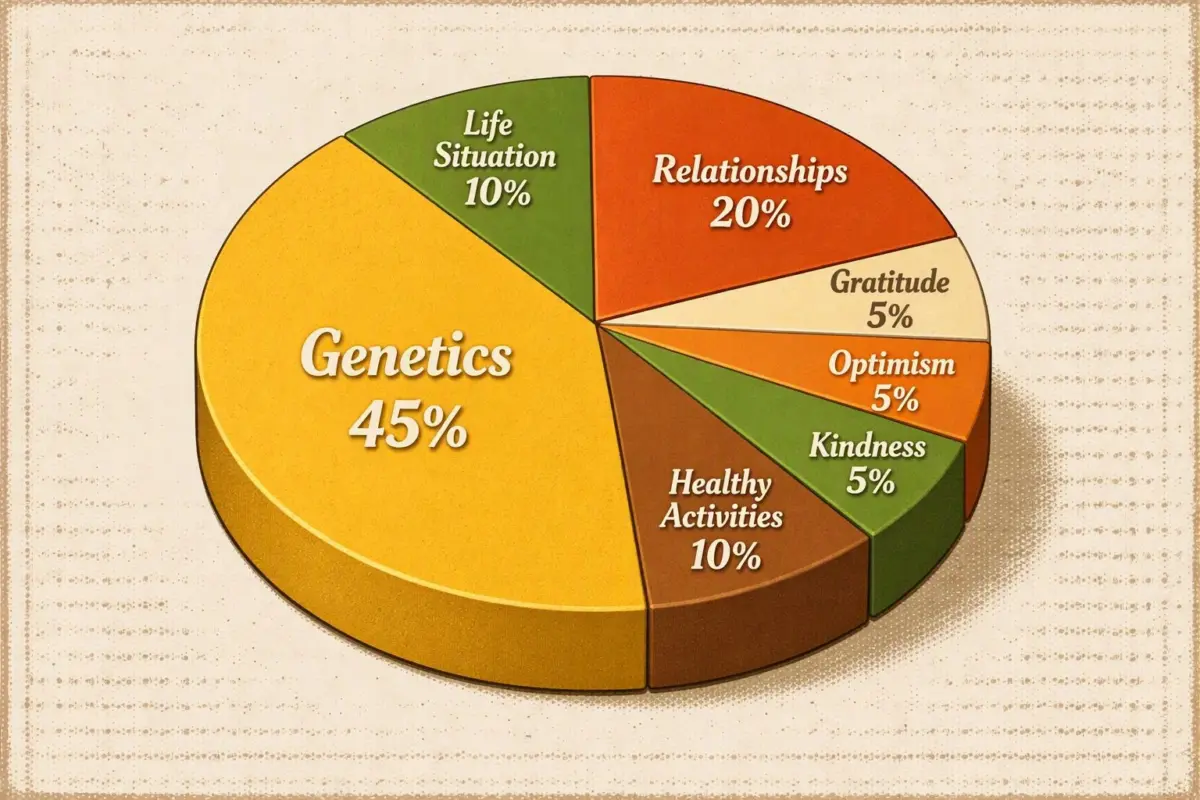
Standard of living, economic growth, and the viability of early retirement are fundamentally anchored to productivity. Furthermore, once societies achieve a certain baseline level of material wealth, human happiness tends to stabilize in that dimension. Wealth largely functions as one component of a broader life situation, sitting alongside genetics, personal choices, the cultivation of close relationships, regular physical activity, and a practice of lifelong optimism.
Understanding and Managing Financial Fear
Despite historical evidence demonstrating that long-term progress generally prevails over systemic shocks, a pervasive background fear continues to grip many individuals. This persistent anxiety often has less to do with objective economic indicators and more to do with the wiring of the human brain.

As a biological species, humans evolved primarily as danger-detection machines. This trait served an essential evolutionary purpose by protecting early humans from predators, starvation, and disease. However, a distinct quirk of this psychological machinery is that when immediate physical threats are successfully mitigated, the brain continues to search for new subjects of concern, effectively shifting the goalposts of anxiety.
Once physical survival and basic food security are achieved, individuals often transition to worrying about social acceptance, tribal exile, economic status, and complex financial strategies. In advanced stages of wealth accumulation, concerns can shift toward tax optimization, estate planning, and managing government-mandated retirement account distributions.

Combating this persistent fear requires a degree of self-awareness and rational evaluation. Examining personal history often reveals the roots of financial anxiety, whether those fears stem from childhood memories of scarcity, family attitudes toward money, or broader experiences of trauma. Understanding that current emotional responses may be driven by past conditioning rather than an objective assessment of the present moment is a critical step toward emotional resilience.
Identifying specific financial fears by playing out worst-case scenarios in detail often reveals that hypothetical disasters are far less terrifying upon closer inspection. Taking concrete, proactive steps helps make the unfamiliar manageable. Action builds confidence and fosters resilience—the ability to adapt to any new socioeconomic environment.

Another vital strategy involves filtering out unnecessary noise from the daily mental diet, particularly sensationalized news cycles designed to capture attention through fear. Human beings are physically and mentally wired to solve tangible problems through active engagement rather than passive media consumption. Focusing energy on positive behaviors, physical health, continuous learning, and supportive communities of optimistic peers helps replace chronic anxiety with constructive action.
Navigating the AI Era as an Experiment
Adopting a mindset that treats major life transitions as experiments can fundamentally alter how individuals perceive emerging technologies. Whether applied to personal decisions, career shifts, or broader societal changes, viewing developments through an experimental lens removes much of the associated dread.

The contemporary rise of artificial intelligence represents a major technological shift, bringing both unknown variables and significant potential. Rather than succumbing to doom-scrolling and pessimistic media narratives, examining the underlying mechanics of artificial intelligence reveals why many technologists and economists view it with optimism rather than alarm.
Artificial intelligence functions effectively as a cognitive tool designed to enhance efficiency and scale human output. Like previous technological revolutions—such as the widespread adoption of personal computing, the internet, and mobile smartphones—it promises to drive long-term productivity gains and foster entirely new industries, even as it displaces certain traditional administrative and operational tasks. While these transitions inevitably concentrate rewards among owners of capital and shareholders, they also lower the cost of essential services and expand overall economic capacity.

Ultimately, artificial intelligence represents another opportunity for individuals to make deliberate choices. By recognizing that fear is often a symptom of evolutionary conditioning rather than an accurate predictor of financial ruin, investors can approach the future with clarity, resilience, and a focus on long-term productivity and personal well-being.