The first world was her parents’ home—a environment she describes as an "ice castle." On the surface, everything was immaculate, beautiful, and strictly orderly. Every object occupied its designated space, and every action adhered to an unyielding standard of decorum. Yet, beneath the pristine exterior lay an emotional chill. Fomichova’s mother rarely permitted her to pursue what she genuinely wished to do, demanding instead that her time and energy be dedicated strictly to what had to be done. Many evenings concluded in exhaustion, quiet tears, and lingering frustration. When Fomichova sought comfort or expressed dissatisfaction, her mother offered a singular, unbending resolution: "You have to endure it. That’s how everyone lives."
The second world was the domain of her grandmother—a vibrant sanctuary infused with warmth, spontaneity, and unconditional acceptance. Unconcerned with immaculate perfection, her grandmother’s house was constantly alive with creative disarray. She spent her days baking, sewing, planting flowers, or testing new recipes simply for the joy of the experience. She cooked what brought her pleasure, never forcing others to eat food they disliked, and shared her home with beloved animals. On warm summer nights, her grandmother loved sleeping outside in the garden beneath the open stars and frequently invited her young granddaughter to join her—a gentle adventure Fomichova’s mother consistently forbade.
While her grandmother was not without flaws, she imparted a foundational wisdom that remained deeply encoded in Fomichova’s nervous system: the true meaning of balance. She demonstrated that life does not require relentless self-coercion, and that human beings flourish when motivated by genuine inspiration rather than rigid obligation. Most importantly, her grandmother taught her that when a day has proven difficult, one must not continue the race after stepping inside the home. A stressful day does not mandate a stressful evening. Instead, recovery begins with simple, intentional comforts—a warm bath, a nourishing meal, a cozy blanket, and an early night’s sleep.
Drawing from these childhood lessons and her adult reflections, Fomichova—author of Under My Skin and Empath Diaries—explores how modern coping mechanisms often prolong internal distress rather than relieve it. Many individuals default to habits that momentarily numb discomfort while quietly compounding exhaustion for the days ahead. Below, Fomichova breaks down five widespread post-stress habits that make long-term recovery harder, along with healthier, nervous-system-centered alternatives.
1. Scrolling Until You Forget Why You Picked Up Your Phone
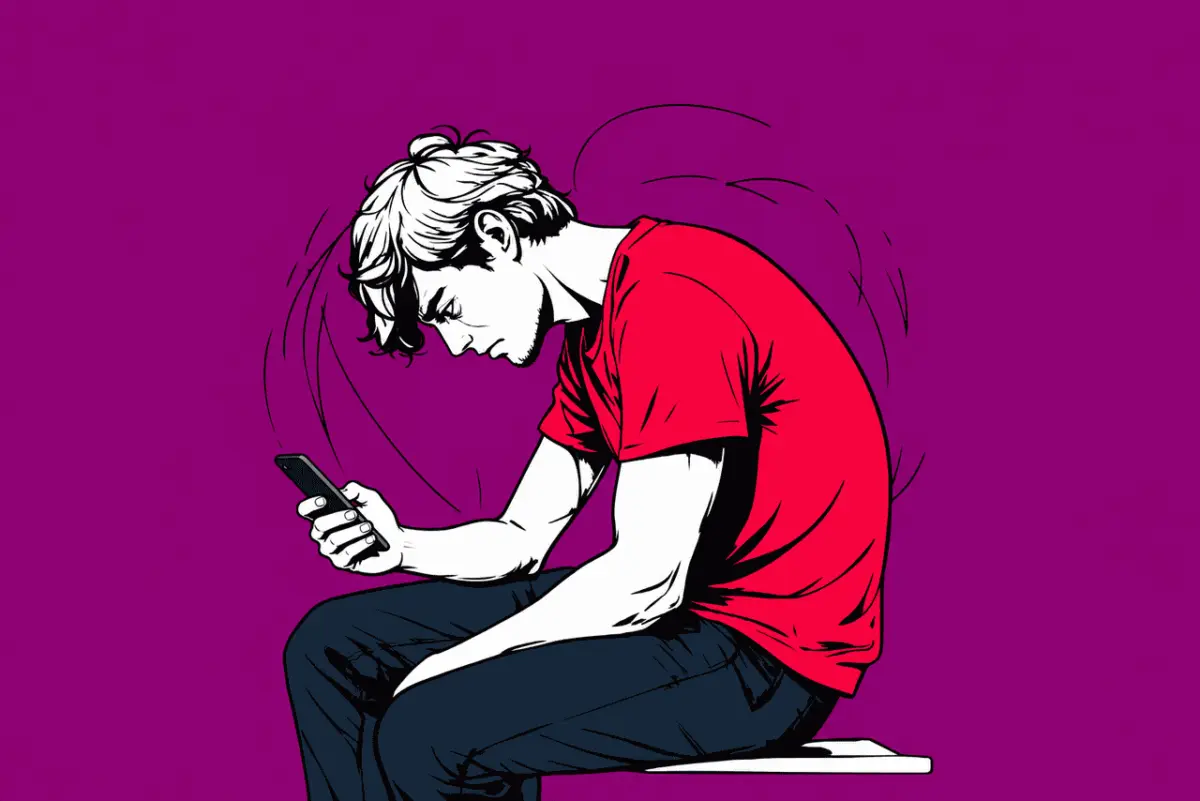
In moments of deep emotional or physical fatigue, turning to a smartphone feels like an innocent reprieve. A intended five-minute check on social media, however, frequently expands into two hours of mindless consumption. Rather than feeling restored, individuals often emerge from these digital sessions feeling more overwhelmed and emotionally drained than before.
This behavior stems from a natural brain mechanism: when faced with severe fatigue, the mind actively seeks distraction because slowing down forces an confrontation with underlying exhaustion. Yet, digital platforms rarely deliver meaningful rest. Algorithms flood users with unprompted recommendations, strident opinions, and continuous feeds of content that increase sensory overload.
Rather than turning to hyper-stimulating feeds, Fomichova advocates for rituals that restore quiet to the mind and gently reorient attention inward:
- Spending ten minutes in absolute silence, doing nothing at all.
- Preparing a hot cup of tea or another comforting beverage.
- Pausing to watch the sunset and observing the gradual transition of colors in the sky, ideally alongside a loved one.
- Sitting quietly beside an open window or spending time near a body of water.
- Taking a deliberate, uninterrupted bath or shower.
Fomichova notes that while she no longer lives in a home with a garden like her grandmother’s, spending even a few quiet minutes in a small green space near her apartment provides significant physiological relief. Choosing silence over digital consumption ultimately yields far greater mental clarity and creative inspiration than endless browsing.
2. Ignoring Your Emotions and Masking Distress
Societal conditioning often encourages individuals to adopt emotional masks long before reaching adulthood. Common refrains like "I’m fine," "It wasn’t that bad," or "I’ll deal with it tomorrow" become reflexive responses to genuine distress. While postponing emotional processing can occasionally serve as a temporary coping strategy, chronic suppression causes unaddressed feelings to accumulate, eventually reemerging as heightened anxiety, irritability, burnout, or emotional numbness.
Fomichova links this pattern directly to her early upbringing in her mother’s household, where maintaining a front of perfection and emotional stability was treated as a mandatory duty. Children were expected to smile regardless of their internal state. As an adult, Fomichova has intentionally dismantled this habit within her own life and parenting.
Healing begins with the simple, unvarnished admission: "Today was hard."
True strength lies not in pretending to be unaffected, but in granting oneself permission to feel deeply. Fomichova allows herself to cry when necessary and ensures her daughter understands that all emotions are valid. Expressing feelings does not signal weakness; pretending they do not exist simply creates internal fragility.

3. Treating Stress as a Personal Failure
A prevalent misconception in modern culture is viewing stress as evidence of personal inadequacy or lack of resilience. Individuals frequently criticize themselves for feeling overwhelmed, ignoring the crucial diagnostic question: What created this state of overwhelm in the first place?
Stress is fundamentally information. It signals when an individual has taken on excessive responsibilities, when physical rest is overdue, or when personal boundaries have quietly lapsed. Furthermore, stressful events are often driven by external factors beyond an individual’s control, such as the actions, demands, or lack of consideration of others.
Recalling her childhood, Fomichova shares a humorous metaphor her grandmother used to describe unexpressed feelings: emotions are like "tiny worms" that, if trapped inside, slowly begin to nibble at a person from within. By learning to acknowledge, feel, and release her emotions, Fomichova avoids carrying the residue of past stress into new days. Each morning offers an opportunity to start fresh, as if approaching a completely clean sheet of paper.
4. Demanding That Rest Be "Earned"
Many people operate under the persistent belief that relaxation is only permissible after completing every pending task—one more email, one more chore, one more work assignment. However, because new tasks constantly arise, the finish line continually recedes, turning rest into an unreachable goal.
Rest is a fundamental biological necessity, not a luxury reward reserved for total task completion. The human brain cannot achieve true recovery if it remains in a constant state of conditional alertness. Prioritizing personal well-being is not an act of selfishness; it is a vital practice for long-term health.
Fomichova acknowledges having previously fallen into the trap of constant busyness, confusing perpetual motion with meaningful progress. Operating in high-gear often masks underlying anxieties—such as the fear of falling behind or missing opportunities. Upon slowing down, she realized that relentless activity resulted in automatic, unreflective habits that consumed energy without producing meaningful fulfillment.
Transitioning from endless output to a balanced rhythm of creation and rest transformed her work. Shifting away from producing content tailored primarily for external expectations or algorithms allowed her creative work to become far more vibrant, authentic, and restorative.
5. Seeking Instant Relief Instead of Genuine Recovery
Following a demanding day, immediate comfort options—such as overeating, retail therapy, alcohol consumption, or binge-watching television—exert a strong pull. While enjoying these activities in moderation is not inherently problematic, relying on them as primary coping strategies merely postpones genuine emotional processing.
Authentic recovery tends to be quiet and low-key. It manifests through restorative practices such as:
- Engaging in a meaningful, open conversation.
- Taking a peaceful walk in nature.
- Practicing gentle physical movement or listening to music.
- Reading, journaling, or securing eight hours of uninterrupted sleep.
These practices do not offer instantaneous escape; instead, they foster long-term healing. True recovery does not disguise pain behind a cheerful facade; it acknowledges internal distress, listens patiently, and gradually allows emotional wounds to mend.
Reframing Recovery: Self-Compassion Over Self-Criticism
The fundamental key to managing stress lies in shifting from self-criticism to gentle self-care. As Fomichova’s grandmother frequently reminded her: "A stressful day doesn’t mean you’re weak. It doesn’t mean you’re failing. It doesn’t mean you’re doing life wrong. It simply means your mind and body are asking for care instead of criticism."
To cultivate this mindset, Fomichova recommends a gentle visualization exercise: when feeling completely exhausted, imagine that the fatigued self is not an adult, but a young child who has endured a difficult day. One would never berate a tired child, demand greater productivity, or force a fake smile. Instead, one would offer a warm drink, a comforting blanket, a bedtime story, and a safe environment until sleep comes. Adult well-being deserves that exact same level of patience, gentleness, and grace.
Ultimately, navigating a demanding world does not require building greater emotional hardness or forcing constant positivity. True resilience comes from becoming a reliable, compassionate safe harbor for oneself. While external pressures will continually demand speed and productivity, long-term health relies on honoring the body’s need to slow down, process emotions, and recover fully.