
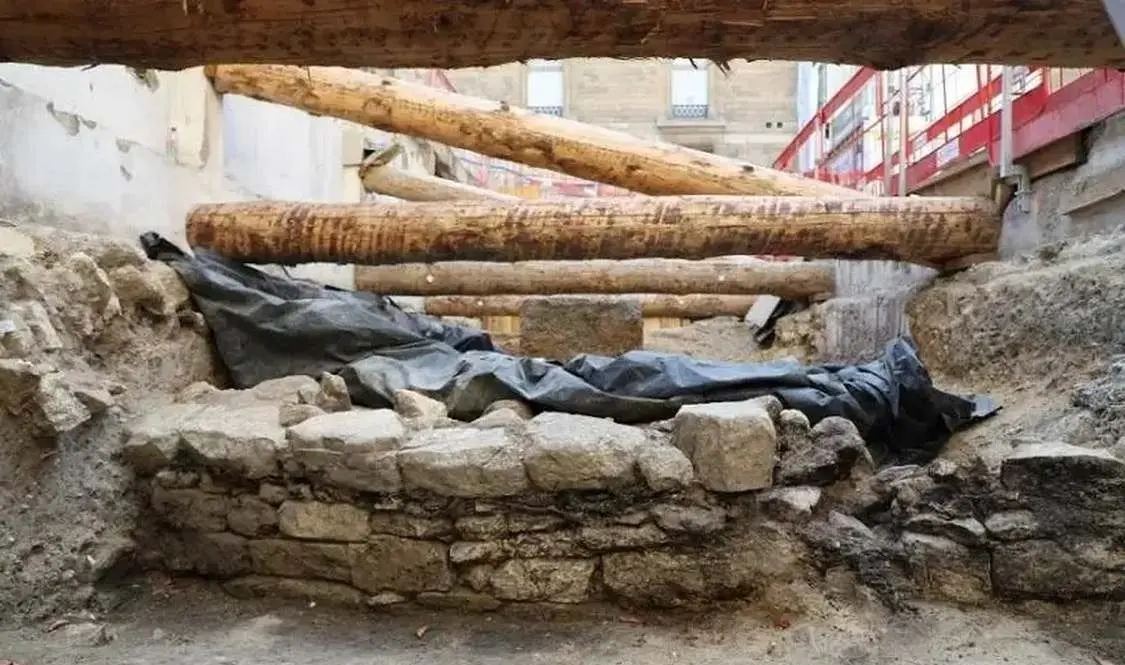
City officials and heritage experts described themselves as feeling profoundly disoriented and awestruck looking down onto what is essentially the zero point in time for Paris—a discovery made all the more dramatic because the ruins still bear the distinct, unmistakable physical scars of Julius Caesar’s historic conquest.
Throughout his extensive military campaigns in Gaul, a vast region encompassing modern-day France and Belgium, the legendary Roman general kept meticulous and copious notes. Among these writings was a detailed account of a strategic battle that many modern historians and classical scholars have long believed took place precisely where the modern French capital now stands.
According to Caesar’s surviving commentaries, the Celtic Parisii tribe had established a fortified settlement known as "Lutetia" situated strategically on an island in the middle of a major river, which scholars identify as the Seine. The Roman conqueror recorded that he laid siege to the settlement in 52 BCE, during which he ordered the bridges burned and the oppidum—the fortified urban center—torched as well to flush out or subdue the defenders.
For generations, historians and archaeologists have generally believed that the Île de la Citê, the historic island in the middle of Paris, had indeed been the site of Gallic Lutetia. However, the puzzle remained complicated because Caesar did not provide precise, exact geographical details within his texts about where precisely along the river he had encountered the settlement. Compounding this ambiguity, various archaeological finds over the decades had occasionally been made in other peripheral areas outside central Paris, leaving room for ongoing academic debate and alternate theories.
That long-standing uncertainty shifted dramatically in February 2026. A dedicated team of national archaeologists working under the Regional Archaeology Service was performing routine preventative excavations in the historic courtyards of the Hôtel-Dieu, which is recognized as the oldest hospital in Paris. The preventative archaeological work was initially expected to uncover standard traces of ancient domestic dwellings, historic roads, and layers of medieval occupation, which are common when digging deep beneath the dense urban fabric of the ancient city.
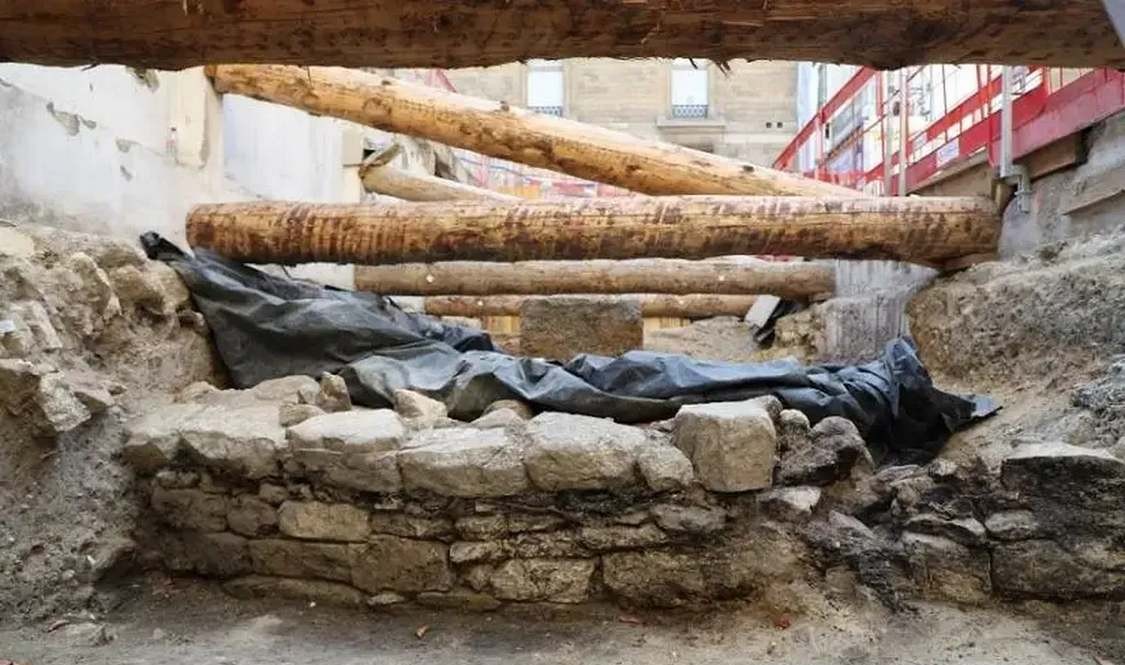
Instead, alongside these expected historical remains, a much older and far more significant structure was identified. Excavators uncovered a robust stone and wood wall, built using architectural techniques entirely typical of ancient Gallic fortifications. Directly behind this defensive wall, the team of archaeologists discovered a massive, 6.5-foot-thick platform constructed from a dense mixture of sand and gravel designed to stabilize the earthworks. In the immediate vicinity of these structural finds, the dig yielded a genuine Gallic spearhead, charred seeds from ancient crops, and the preserved remains of a burned wooden building. Subsequent laboratory testing revealed that the timbers had been carbon-dated to a timeframe between 200 BCE and 10 BCE, placing them squarely in the era of pre-Roman and Conquest-era Gaul.
Dorothée Chaoui-Derieux, a heritage curator and the territorial manager of Paris at the Regional Archaeology Service, highlighted the significance of the building style in an official statement released by the French culture ministry. She noted that the architecture of the wall, featuring massive stone blocks combined with a specialized system of intersecting wooden beams, immediately signaled a structure of distinct Gallic tradition.
She added that the presence of clear traces of intense fire damage and ceramic furniture contemporary to the era of Julius Caesar strongly reinforced their primary hypothesis. The researchers were left with a compelling question: could they have finally uncovered the physical, material traces of the elusive oppidum of Lutetia precisely as it was described centuries ago in Caesar’s famous work, The Gallic War?
It is a staggering thought for modern observers to consider how today’s vibrant "City of Light" possesses origins reaching so far back into antiquity—a sentiment shared openly by the leadership of the French capital.
Emmanuel Grégoire, the mayor of Paris, expressed his awe to the Agence France-Presse, remarking that it feels genuinely dizzying to find oneself standing at the site and discovering what is almost certainly the true physical origin of the city of Paris.
The section of the ancient defensive wall, which remains remarkably preserved in-situ complete with the historical damage inflicted by ancient fires, cannot unfortunately be kept permanently on the open site due to pre-planned, necessary infrastructure expansion at the historic hospital. To preserve the find for posterity, specialized experts plan to create a detailed casting of the wall following the completion of the rigorous scientific research and study currently underway at the location. This casting will eventually allow for a faithful reconstruction to be crafted and placed on public display in a museum setting for future generations.
Stéphane Deschamps, a researcher also working with the Regional Archaeology Service, reflected on the historical weight of the breakthrough, noting that for centuries the precise geographic location of Lutetia has been a matter of intense academic debate. With the unearthing of this ancient wall and its rich archaeological context, researchers may finally hold the key to unlocking the ancient mystery.