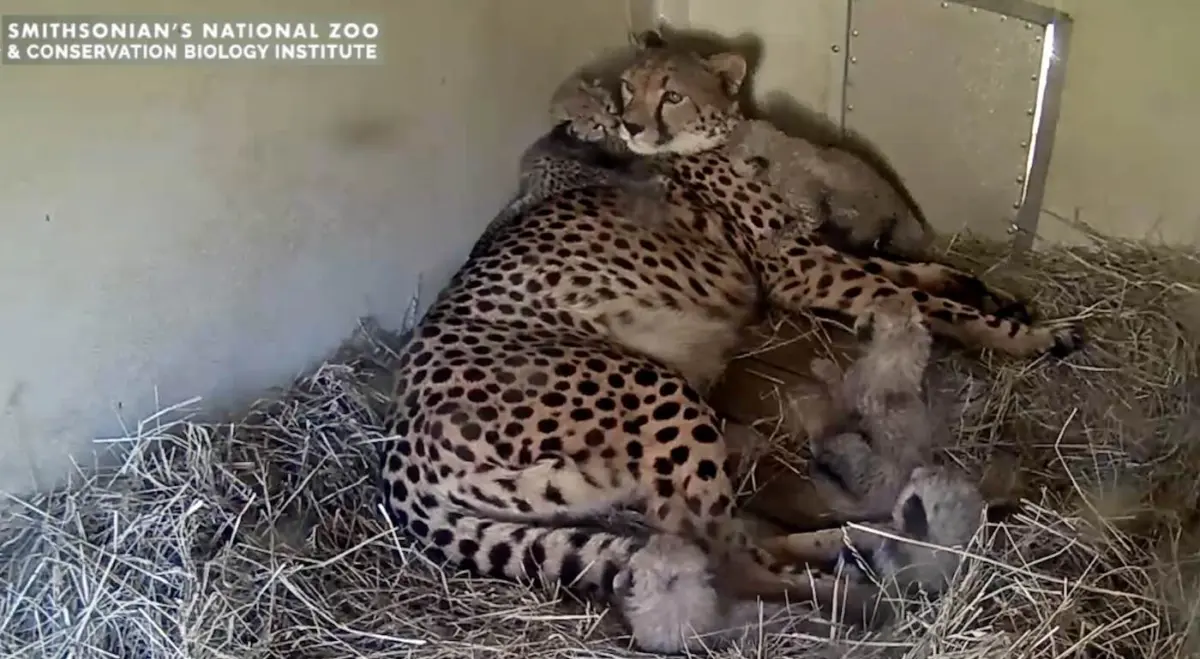
The dedicated live broadcast captures every aspect of the cubs’ early development. Whether the young cats are nursing, being meticulously groomed by their mother, or clumsily tumbling and wrestling around the den, the Smithsonian’s cheetah cam provides both the sights and sounds of their daily routine.
While the live feed offers endless moments of charm and entertainment for viewers tuning in from home, conservationists emphasize that the project serves a much deeper and more critical purpose. Cheetahs face severe survival challenges in the modern world, with recent estimates indicating that only about 7,000 individuals remain in the wild across their historic range. Habitat loss, human-wildlife conflict, and the illegal wildlife trade continue to put immense pressure on wild populations, making captive breeding programs and behavioral research vital components of global conservation strategies.
Significantly, the public-facing live stream is the exact same feed utilized by the institution’s animal care staff to monitor the big cats remotely from behind the scenes. This setup allows researchers and keepers to keep a watchful eye on Zura and her litter without causing unnecessary stress or disruption to the new family.
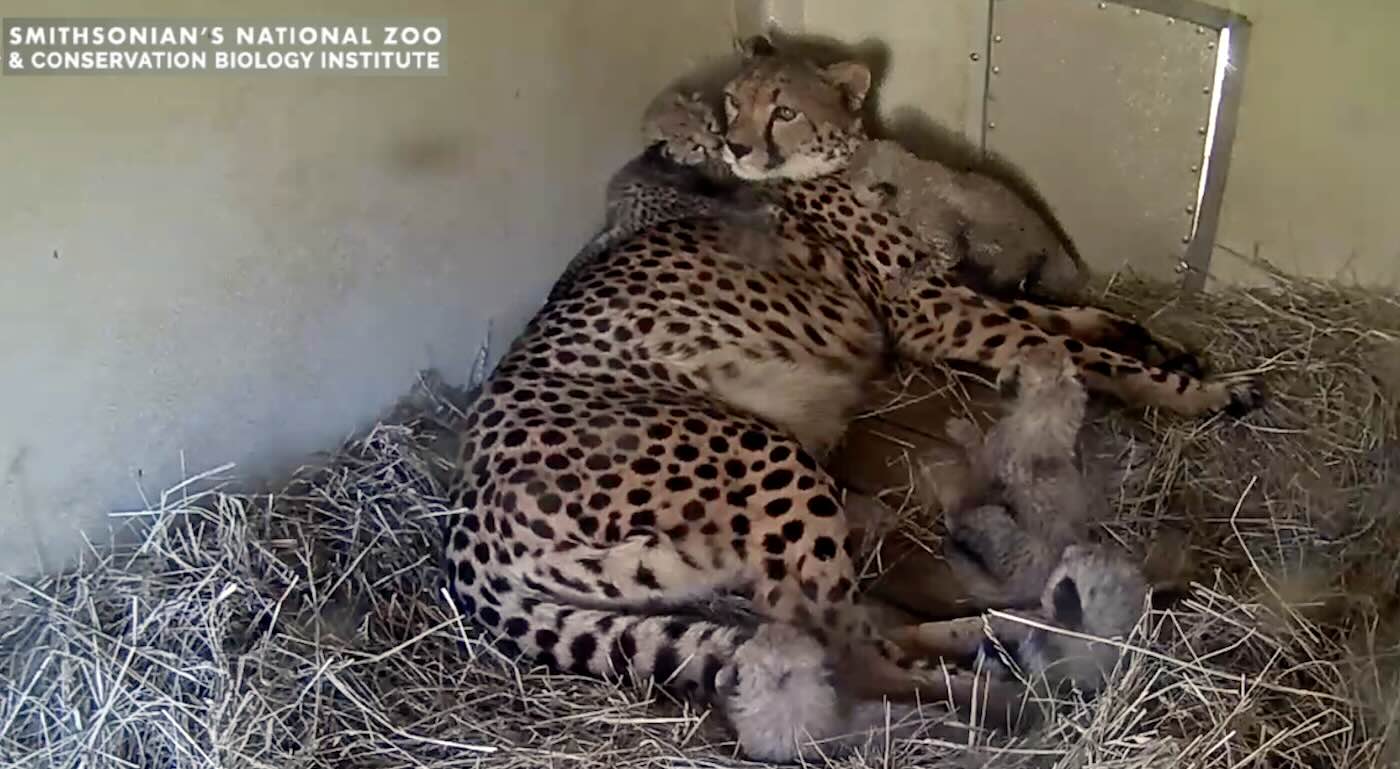
Unlike the animals housed at the Smithsonian’s main facility, the National Zoo in Washington, D.C., the cheetah cubs born at the Conservation Biology Institute in Front Royal experience very limited human contact during the earliest and most impressionable stages of their lives. This deliberate hands-off approach fosters a strong, natural bond between the cubs and their mother while simultaneously allowing animal caretakers and researchers to conduct behavioral observations that are simply not possible within a traditional zoo habitat.
The insights gained from monitoring these litters contribute to a broader understanding of cheetah reproductive biology, cub development, and maternal care, all of which help inform conservation management plans for both managed populations and wild reserves around the globe.
The birth of Zura’s five cubs adds to a growing body of positive developments for cheetah conservation worldwide in recent years. International conservation efforts have increasingly focused on protecting remaining populations and restoring the species to historical ranges where they had previously been extirpated. Notably, these initiatives have included landmark reintroduction projects, such as efforts in India to establish a new wild cheetah population, alongside the deployment of specialized conservation tools like protection dogs to safeguard the animals from poachers.
For viewers watching the live stream at the Smithsonian Conservation Biology Institute, tuning into Zura’s den offers a direct connection to these broader preservation efforts. The platform provides an educational window into the meticulous, behind-the-scenes science and dedication required to ensure the long-term survival of one of the world’s most iconic and vulnerable big cat species. Visitors to the Smithsonian’s National Zoo and Conservation Biology Institute webpage hosting the cheetah cam are also provided with opportunities to support these ongoing conservation initiatives through direct donations, helping fund the research and care necessary to protect the future of the species.