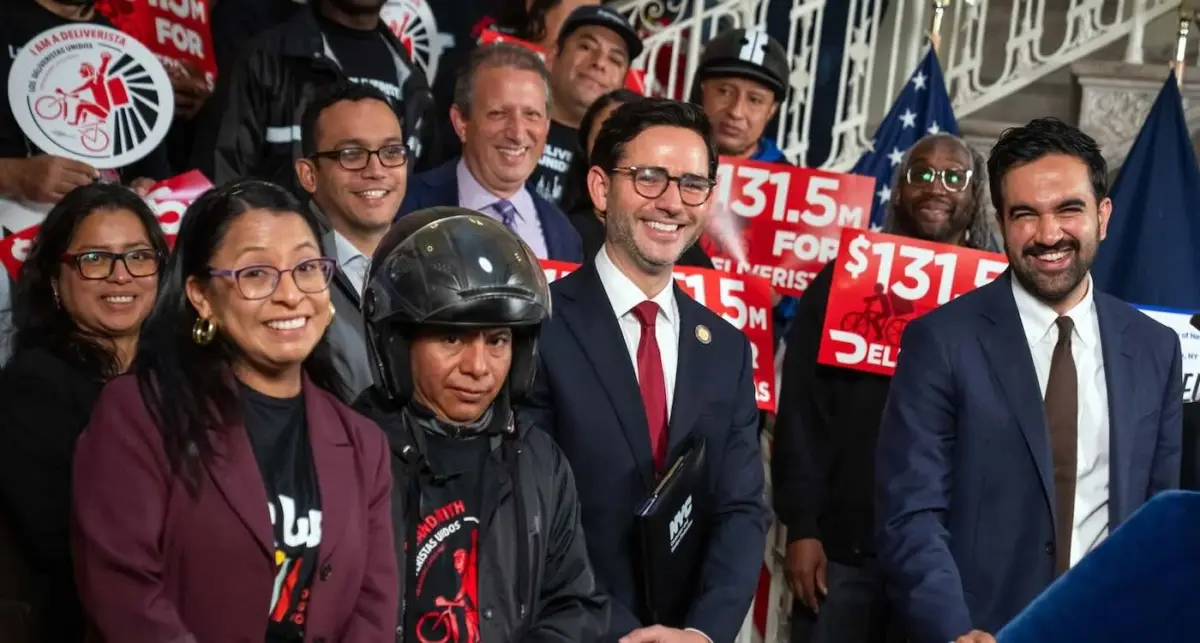
The sweeping resolution will route more than $115 million directly into the pockets of affected delivery workers, while allocating an additional $16 million toward civil penalties and administrative costs. According to city officials, more than 260,000 workers were underpaid by DoorDash during the investigative period. The violations included couriers who were completely denied compensation for completed deliveries, as well as those who experienced systemic delays in receiving the wages they had already earned.
The enforcement action underscores a growing municipal push to hold major technology platforms accountable to local labor standards, especially as gig-economy companies continue to post staggering financial gains. DoorDash reported $13.7 billion in revenue for 2025, representing a robust 28 percent increase compared to its $10.72 billion revenue from the previous year.
"DoorDash underpaid more than 260,000 workers, and today we are getting that money back," said Mayor Mamdani, emphasizing that no corporation operates above the law. "When a worker earns a wage, they deserve to be paid that wage, on time and in full."
The investigation itself was sparked by frontline reports submitted directly by workers. Dozens of couriers came forward to the DCWP to voice concerns regarding erratic pay schedules, unpaid time, and opaque compensation metrics. What began as a series of individual grievances snowballed into a massive citywide inquiry as investigators began examining the true scale of the company’s operational practices within the five boroughs.
To untangle the financial practices of the multi-billion-dollar corporation, the DCWP Research and Analytics Division obtained and processed terabytes of data from DoorDash. Analysts sifted through billions of rows of corporate data, ultimately dissecting more than 152 million individual payment transactions and 110 million working hours connected to the scope of the investigation.
DCWP Commissioner Samuel A.A. Levine highlighted the significance of dismantling opaque corporate practices through rigorous data analysis. "Today, New York City’s delivery workers are showing that opaque algorithms will not have the final word when it comes to how much they are paid for the hard work they do," Levine said.
Beyond securing immediate financial restitution for underpaid labor, the historic settlement establishes a pioneering compliance and monitoring framework designed to ensure DoorDash adheres to local laws moving forward. Rather than relying solely on periodic corporate self-reporting, the agreement establishes a collaborative technological infrastructure that gives workers a direct role in identifying ongoing violations and provides municipal regulators with the real-time data necessary to enforce compliance.
Under the terms of the enforcement action, the Workers’ Algorithm Observatory—a research initiative partnered with Princeton University—will develop specialized software. This tool will empower drivers to share their individual DoorDash trip and earnings data directly with the regulatory agency. The system will enable the DCWP to continuously monitor DoorDash’s compliance across several critical operational categories, including minimum pay standards, maximum trip distances, upfront trip disclosures, pay transparency, and tip transparency.
Furthermore, the settlement mandates significant structural adjustments to DoorDash’s proprietary software. The company is now required to implement software updates that prevent the platform from offering a delivery to a worker in New York City unless that worker’s time is actively recorded as compensable on-call time or trip time. These technological updates are also designed to provide workers with more comprehensive information regarding their work hours and pay structures. Additionally, the software changes are intended to ensure DoorDash fully complies with the city’s Minimum Pay Rule for "batched" trips, effectively bringing an end to the unlawful practice of paying a lower rate for specific legs of a multi-stop delivery journey.
The financial relief headed to workers has been calculated to account for the severity of the infractions they experienced. Workers who were completely denied payment for work they successfully performed will receive compensation calculated at approximately 200 percent of the original underpaid amount. For instance, a courier who was originally owed $1,000 but received zero compensation will be awarded $3,000. Meanwhile, workers who received their rightful pay, but experienced illegal delays past the statutory deadlines, will receive compensation calculated at 200 percent of the delayed wages, resulting in a payout such as $2,000 for a delayed $1,000 payment.
In an effort to streamline the distribution of funds and remove bureaucratic hurdles for busy couriers, the city structured the settlement so that workers do not need to file individual claims or submit extensive evidentiary documentation to receive their money. The DCWP has already identified all eligible individuals through its exhaustive analysis of DoorDash’s corporate records. Payouts are scheduled to be distributed to workers starting this fall.
A designated Settlement Administrator will send personalized electronic communications to every worker who experienced an underpayment during the operational window spanning from April 22, 2022, to June 28, 2026. Workers will be given the flexibility to choose their preferred method of receiving funds, selecting between a direct electronic payment or a traditional check sent by mail. Comprehensive details regarding the case, eligibility criteria, and distribution timelines have been made publicly available through the city’s dedicated portal at nyc.gov/doordash.
Local lawmakers and labor advocates have widely praised the settlement as a vital safeguard during a difficult economic climate. New York City established a progressive minimum wage law for app-based delivery workers in 2021. The baseline wage standard is adjusted annually to account for inflation and currently sits at $22.13 per hour, serving as a critical financial floor for a workforce that frequently contends with the high cost of living in the metropolitan area.
"Amidst a cost of living crisis, delivery workers deserve to rest assured that work completed means compensation earned," noted City Council Member and Consumer and Worker Protection Chair Harvey Epstein.
Echoing these sentiments, City Council Member Sandy Nurse pointed to the stark contrast between corporate enrichment and frontline labor conditions. "DoorDash thought they could shortchange their workers and get away with it," Nurse said. "As DoorDash pulls in record profits, the workers who make them rich are entitled to their fair share."