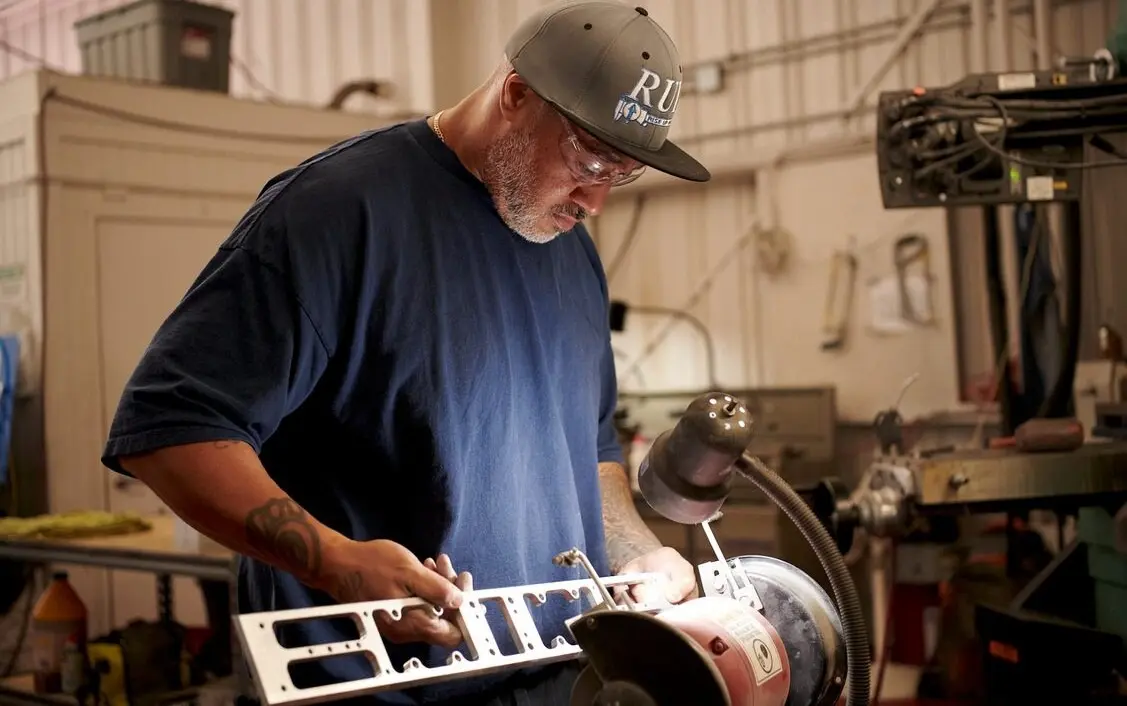
For more than ten years, Rise Up Industries has operated with a transformative mission: helping formerly incarcerated men rebuild their lives by entering a rigorous, paid apprenticeship program. The initiative is unique not only for its technical scope, but because it seamlessly integrates professional machining with essential behavioral health services, continuous tutoring, targeted education, and comprehensive case management.
While the program’s approach carries a powerful social metaphor—allowing participants to metaphorically trade their criminal records for skilled-trade credentials—the daily work itself is entirely grounded in the demands of modern manufacturing. The busy machine shop produces precision components for a diverse roster of clients, filling specialized contracts for aerospace equipment, medical devices, automotive parts, camera hardware, specialized faucet components, BMX bicycle parts, and fishing lures.
This grounded, practical approach to rehabilitation was tailor-made to address a harsh reality in the United States. The nation infamously leads the developed world in its per capita incarceration rate, yet individuals leaving the prison system routinely face immense systemic hurdles that make finding stable, living-wage employment exceptionally difficult. Without a reliable bridge back into the workforce, the cycle of poverty, isolation, and recidivism often continues unchecked.
Rise Up Industries has gathered compelling data to demonstrate the profound impact of its model. The organization’s internal tracking indicates that only 3% of program graduates return to prison or re-offend. This stands in stark contrast to the national average, where roughly 66% of released individuals recidivate within a three-year window, according to statistics compiled by the Bureau of Justice Statistics.
Among those who have beaten the national odds is Komisi Savaiinaea. Having served more than twenty years of prison time, Komisi graduated from the Rise Up apprenticeship program and ultimately stepped into a supervisory role within the shop. The transition, however, was far from easy, and he openly admits to harboring significant doubts when he first encountered the program.
"I was very intimidated and skeptical about the whole thing," Komisi admitted in an interview. "I’d never had any experience with machining, it had been many years since I went to school, I’m not too savvy with technology, so I was a bit fearful of the whole thing."
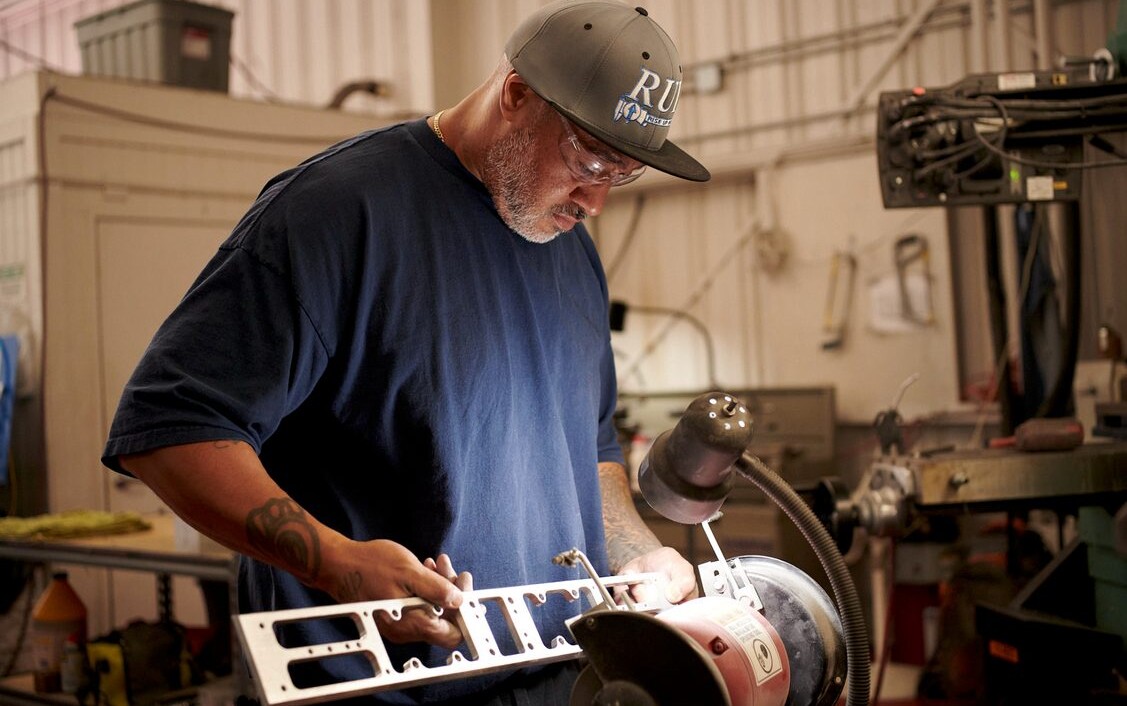
Yet, stepping inside the facility changed his perspective entirely. After touring the production floor and speaking directly with fellow participants who were operating the machinery, he realized that many of them had arrived with zero prior machining experience as well. The educational barrier quickly dissolved through patience, peer support, and a practical crash course in trigonometry delivered by dedicated tutors stationed right on the machining floor.
"If these gentlemen on the floor can get it, you know, I believe in myself, I think I can get it as well," Komisi recalled. Looking backward, he knew the alternative paths available to someone with his background were limited mostly to precarious, day-to-day construction jobs offering little security or upward mobility.
Giving Back
Like many participants in the program, Komisi’s early life involved complex challenges, including former gang involvement. A similar background is shared by current apprentice Anthony Walkens. In 1998, Walkens was convicted of gang-related homicide charges and sentenced to a term of fifty-five years to life. He ultimately spent forty-seven years behind bars across multiple correctional institutions throughout California.
Speaking about his journey, Walkens shared that a profound shift in his personality and outlook occurred during his final decade inside. His personal evolution eventually made him eligible for parole, leading to his release in 2025. When he first arrived at the doors of Rise Up Industries, his initial emotional reaction mirrored Komisi’s experience closely—a predictable response after spending nearly half a human life isolated from mainstream society.
"When I first came through the door, I was overwhelmed, I thought I had bit off more than I could chew. But the welcome I got here from people like Komisi, it reassured me that I would be able to do this," Walkens said. "When Komisi first started, he had this same experience, and coming from the same scenario as I, it started being more comfortable."
Komisi’s recent promotion to a supervisory position within the machine shop has positioned him as a vital pillar of support for incoming trainees. Described by colleagues as a consistent source of encouragement and practical guidance, he uses his lived experience to connect with new participants on a level that traditional institutional authorities cannot replicate.
"It’s more gentle, they can relate to it better," Komisi explained when discussing how he welcomes fellow ex-offenders into the fold. "So it allows me to continue my learning and be of service to others."
Beyond his professional responsibilities, Komisi’s resilience has been tested by significant personal health hurdles. As a cancer survivor—a battle that required him to temporarily pause his work between 2023 and 2024—he has also leaned heavily on the program’s therapy and clinical support services. This therapeutic framework has helped him navigate not only his health recovery but also his reintegration as a husband of more than thirty years.
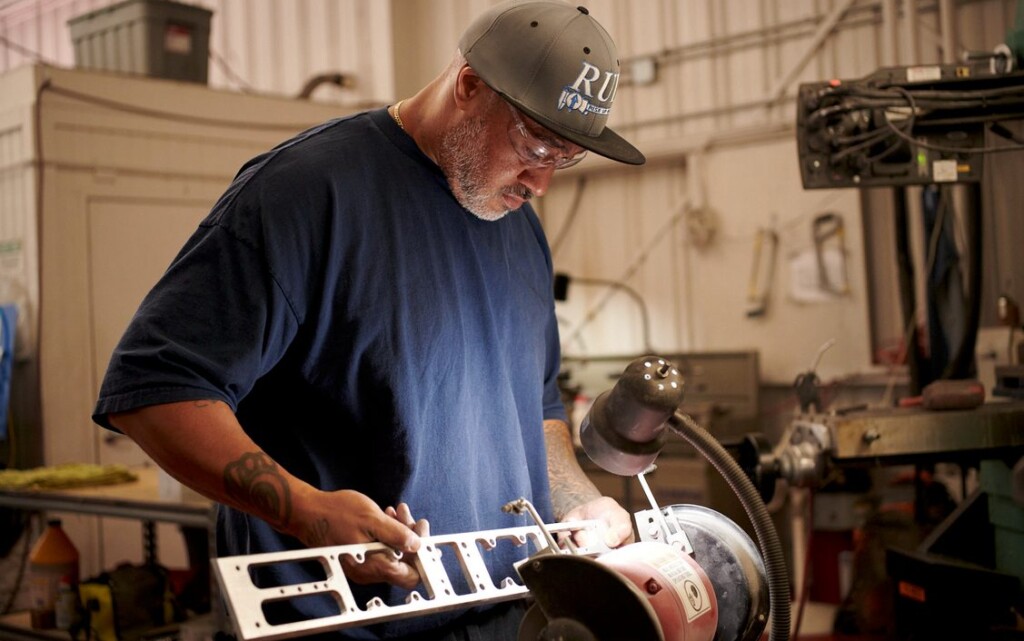
"I’ve been with her through dysfunction, addiction, and it looks different coming home in a responsible state of mind in a pro-social setting," he reflected.
Executive Director Jonathan Yackley emphasized that the success of Rise Up Industries stems from a comprehensive understanding of the root causes of incarceration. In a written statement, Yackley noted that San Diego boasts a robust advanced manufacturing sector with a persistent demand for skilled labor, making computer numerical control (CNC) machining a natural and sustainable employment pathway for the program. However, technical instruction alone has never been viewed as a complete solution.
"Over the years, we have learned that technical training alone is not enough," Yackley said. "Someone can leave incarceration with a certificate and still face the same isolation, trauma, instability, and lack of opportunity that contributed to incarceration in the first place."
According to Yackley, sustainable personal and professional change occurs only when demanding career training is coupled with behavioral health care, professional case management, ongoing education, and a supportive community where individuals feel a genuine sense of belonging. He points to Komisi as a powerful embodiment of this holistic philosophy, noting how the leadership skills Komisi once utilized in difficult environments are now dedicated to supervising a modern manufacturing team, mentoring incoming participants, and strengthening the broader community.
For participants like Anthony Walkens, the impact of this integrated environment is transformative and deeply personal. Surveying the busy workshop floor and the camaraderie among his peers, Walkens offered a simple, telling description of his new reality.
"It’s really a beautiful place," he said, "kind of like a family setting."