For those who have tuned out the financial news cycle to focus on everyday life, the current landscape might feel remarkably peaceful. However, the broader financial narrative is dominated by the meteoric rise of generative AI, massive tech valuations, and the inevitable comparisons to historical market manics. Investors worry that while artificial intelligence is unquestionably a monumental technological leap, the financial mania surrounding it is moving too fast and reaching too high.

This dynamic bears a striking resemblance to the dot-com bubble of the early 2000s—a period that ironically propelled the early career of internet financial commentator and retiree advocate Mr. Money Mustache, before the subsequent crash nearly derailed his employment and citizenship application. As an experienced financial commentator who has navigated multiple market cycles, he has increasingly fielded questions about the current investment climate. To address these widespread concerns, he recently debuted a presentation at Camp FI Midwest and plans an expanded version for the upcoming Bogleheads conference.
Will the AI Bubble Ruin Our Retirement?
Having spent over two decades in retirement, the concept has become second nature, yet certain questions from peers still offer a moment of pause. Among the most striking was a query from a friend asking how anyone could remain retired, comfortable, and sleep peacefully given the state of the world, questioning whether a deep sense of worry was warranted.

To a consumer of modern news, the list of apparent threats can feel overwhelming. Headlines frequently highlight volatile geopolitical figures menacing the global stage, persistent inflation eroding purchasing power, the expanding AI bubble, towering national debt levels, and simmering international conflicts threatening widespread instability.
Yet, looking backward reveals a fascinating psychological pattern. That same anxious question was posed to the veteran retiree over twenty years ago, back in 2006. At that time, the cast of characters and specific anxieties were different, but the emotional core was identical. Back then, the world worried about political leaders like George W. Bush, Saddam Hussein, and Osama Bin Laden, alongside ongoing conflicts in the Middle East. Observers fretted over national debt, inflation, and a notoriously overvalued housing market that ultimately birthed the Great Financial Crisis. Instead of AI automation threatening livelihoods, the prevalent fear was the outsourcing of jobs to India and China. There was even widespread panic over "Peak Oil"—the prevailing theory that global fossil fuel consumption would inevitably outstrip supply and doom civilization—an outcome that was ultimately upended by technological shifts.

Despite the severe anxiety of 2006, the subsequent two decades witnessed staggering economic and societal growth. Even the Great Financial Crisis—the deepest market crash since the Great Depression, born of irrational exuberance and excessive mortgage leverage—appears as a temporary dip when viewed through a long-term lens. A hypothetical $100,000 investment made during those turbulent years would have still ballooned substantially over the following two decades, easily absorbing subsequent market shocks, including the pandemic-induced crash of 2020.
At the same time, the broader world experienced remarkable improvements. Global extreme poverty rates plummeted significantly over a twenty-year span, and infant mortality rates were cut in half. Clean energy adoption surged as solar panel manufacturing costs dropped dramatically, making solar generation a dominant force in new energy capacity. Meanwhile, electric vehicle adoption transitioned from a novelty to a substantial share of global automotive sales.

This historical perspective challenges the fundamental premise of continuous worry. It raises a pressing question: whether finite human energy is better spent dreading an uncertain future or maintaining long-term optimism.
Is It Different This Time?
Naturally, skeptics are quick to ask whether the current era is fundamentally different. Concerns persist that the U.S. national debt has finally reached a tipping point, that the AI bubble dwarfs the historical housing market excesses, or that artificial intelligence could eventually evolve into an uncontrollable superintelligence.

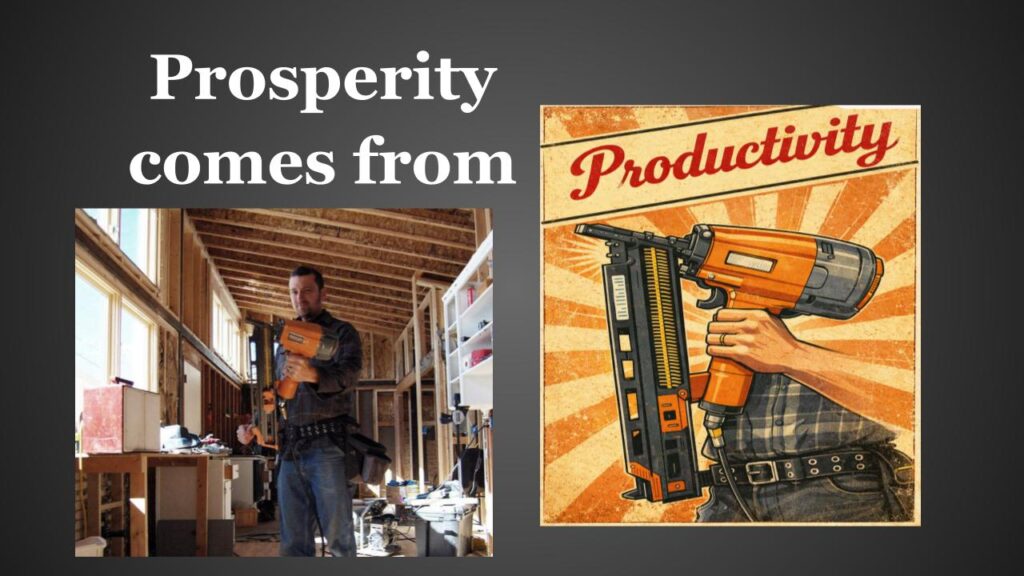
Financial media outlets thrive on crafting compelling, fear-driven narratives around these themes. However, these pessimistic forecasts routinely overlook a fundamental economic principle: true prosperity is not derived from the financial system or the stock market, which ultimately represent numerical abstractions tracked on computers.
Instead, genuine prosperity stems from productivity. This core lesson has long maintained that while capitalist markets are inherently volatile and prone to dramatic short-term swings, real economic value is generated by human beings performing tangible work and developing genuine inventions. The concept of an "economy" is simply another human-constructed framework. If the financial machinery stalls because market participants dislike current asset valuations, society has repeatedly demonstrated the capacity to recalibrate the system and resume productive labor, much as it did following the disruptions of 2008.

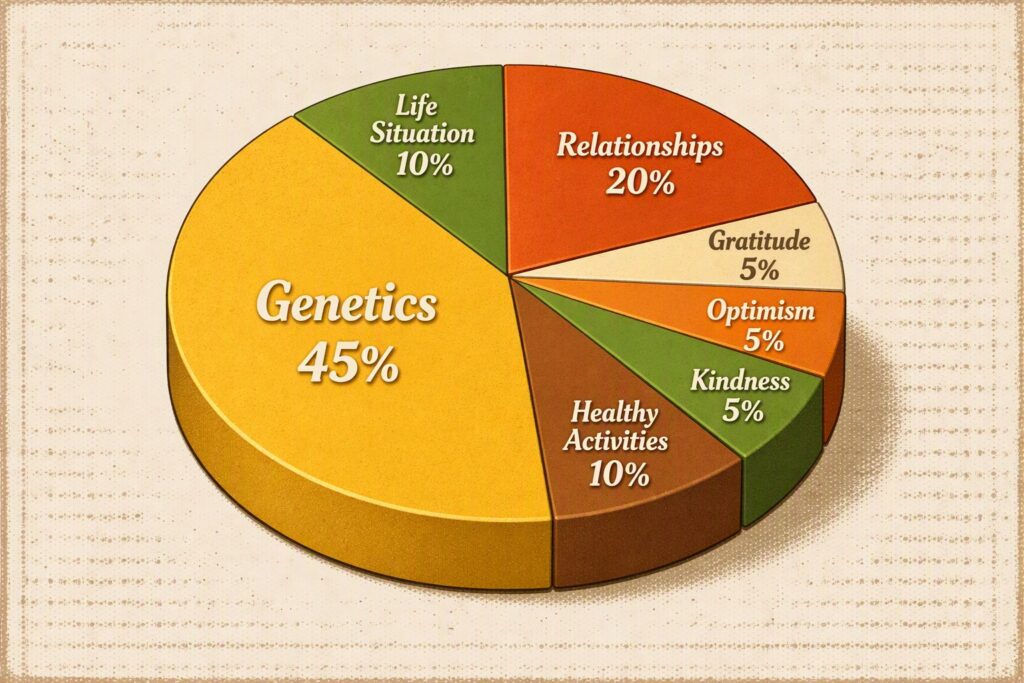
Humanity retains every productivity-enhancing tool ever invented. Standards of living, economic expansion, and the viability of early retirement are fundamentally anchored in high productivity rather than transient market sentiment. Furthermore, once basic standards of living are met, human happiness plateaus in the material dimension, shifting focus toward interpersonal relationships, health, and personal fulfillment.
Confronting Fear Itself
The persistence of financial anxiety often stems less from objective economic threats and more from human evolutionary biology. As a species, humans are effectively sophisticated danger detection machines. This background anxiety served an evolutionary purpose by protecting early humans from immediate physical threats. However, in modern environments where many baseline physical dangers have been mitigated, the detection machinery simply moves the goalposts, seeking out new targets for worry—ranging from economic scarcity and social ostracization to portfolio performance and tax strategies.

Combating this pervasive fear requires deliberate self-awareness and rational evaluation. Understanding personal history—such as growing up in households shaped by generational scarcity or experiencing past trauma—can clarify why certain anxieties persist independently of present-day reality. Articulating the absolute worst-case scenario often reveals that potential outcomes are far less catastrophic than anticipated.
Taking decisive action serves as an antidote to fear, transforming the unfamiliar into the manageable and building personal resilience. Furthermore, curating one’s mental diet by minimizing exposure to sensationalized daily news cycles helps reduce unnecessary psychological distress. Shifting focus toward constructive behaviors, physical activity, and connecting with optimistic, forward-looking communities allows individuals to reclaim agency over their well-being.
Approaching major life transitions and technological shifts through the framework of experimentation can fundamentally alter one’s perspective. Whether evaluating a minor lifestyle change, a career move, or adjusting to emerging technologies like artificial intelligence, treating developments as experiments neutralizes dread and fosters curiosity.
Navigating the AI Era
When viewed through this experimental lens, the current artificial intelligence boom ceases to be a source of existential dread and instead becomes an object of profound technological fascination. Rather than yielding to doom-scrolling, understanding the underlying drivers of AI reveals significant potential upside.
At its core, artificial intelligence functions as a cognitive tool—an advanced efficiency multiplier designed to boost productivity. Like previous technological revolutions, it will inevitably displace certain entry-level administrative and operational roles while simultaneously reducing the cost of services and spawning entirely new industries, much like the advent of the internet and mobile computing.
While productivity gains and technological efficiencies ultimately benefit the broader economy and corporate shareholders, they also require individuals to adapt. Artificial intelligence represents another transitional opportunity, leaving it up to individuals and societies to decide whether to meet it with apprehension or use it as a catalyst for continuous learning and personal growth. Managing underlying emotional responses to change remains far more effective than attempting to outrun the symptoms of an uncertain future.