
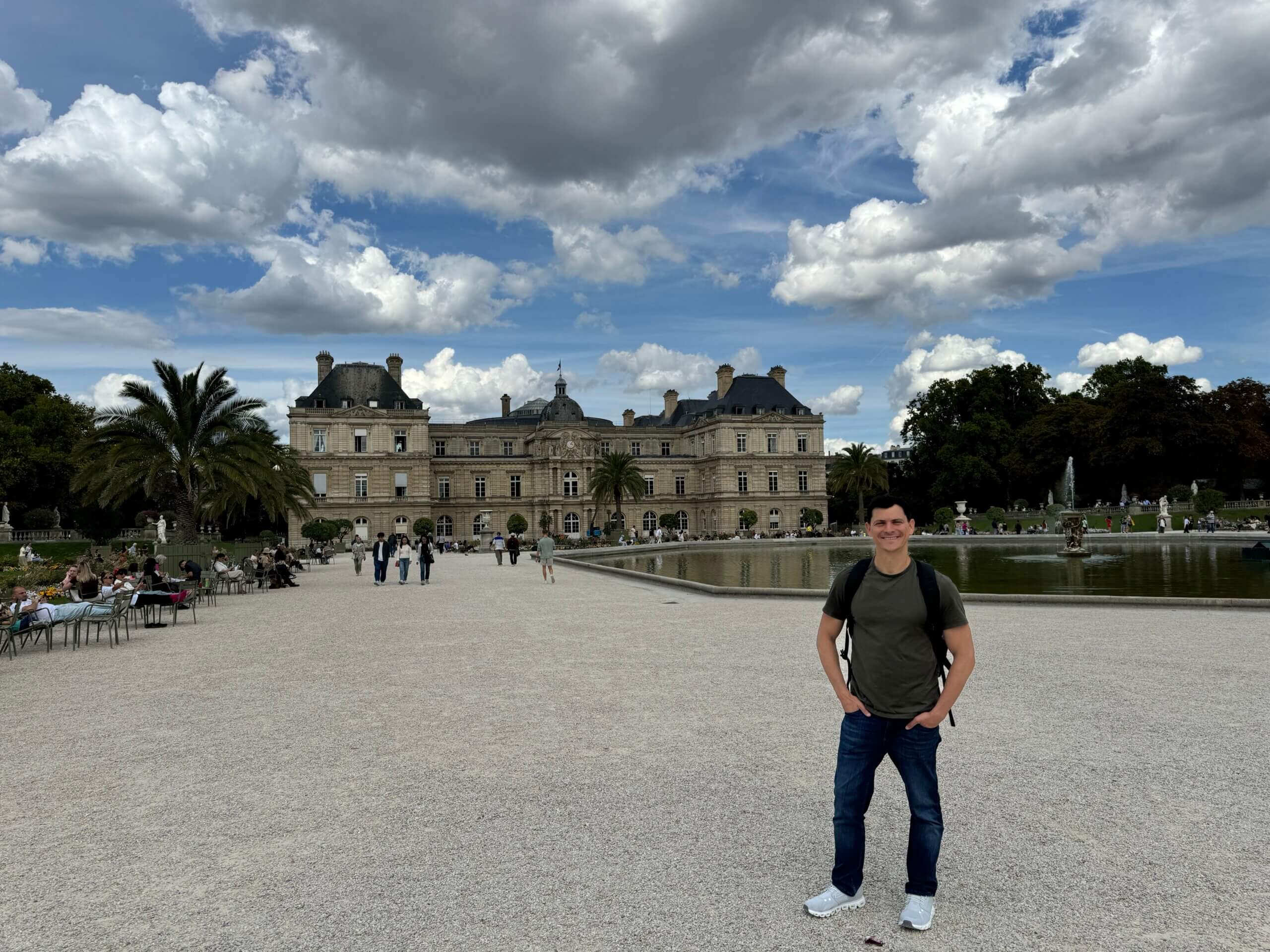
In the years that followed, Paris secured a permanent place in his heart. Kepnes returned to France repeatedly to explore the country and the capital, eventually leading organized tours and spending several months living in the city in 2019. Last August, following yet another extended sojourn in the French capital, he found himself facing a familiar introspection: What if he moved back permanently?
At the time, the impetus for a major life change had been quietly building. Kepnes was growing weary of the New York City dating scene, grappling with a rapidly rising cost of living, and feeling creatively constrained. Furthermore, the rapid emergence of artificial intelligence and its disruption of the digital media landscape left him questioning the future trajectory of his career as a content creator. Simply put, he needed a substantial change of scenery, and Paris emerged as the most logical and alluring destination.
Compared to New York City, Paris offered a more manageable cost of living, an established network of friends, an opportunity to finally achieve fluency in French, and an ideal logistical base for broader European travel. Moreover, he hoped the relocation would provide the creative catalyst necessary to begin writing his next book. Yet, as any aspiring expatriate soon discovers, relocating to France presents a distinct set of bureaucratic challenges. Unlike nations with dedicated digital nomad visas, France limits standard tourists from non-Schengen-exempt countries or regular Schengen visitors to a maximum stay of three months, necessitating a more formal legal approach for anyone seeking a longer residency.
Despite common perceptions of European bureaucracy as impenetrable, securing a legal move to France is entirely achievable for citizens of developed nations such as the United States, Canada, Australia, and New Zealand. Generally, prospective expatriates must navigate four primary visa pathways, each tailored to specific circumstances, career stages, and financial backgrounds.
The student visa represents one of the most straightforward routes. Applicants must enroll in a full-time university or accredited language program and demonstrate sufficient financial resources to support themselves, typically calculated at roughly 600 euros per month. This pathway allows individuals to work part-time during their studies, and upon completion of the program, graduates can often transition to a job-seeker visa, which extends their stay in France by an additional six months or more. However, this residency status remains strictly contingent upon active enrollment; leaving or discontinuing the educational program immediately voids the visa.
Alternatively, entrepreneurs can pursue a business creation visa, though the application process is notoriously complex and can take several months to finalize. Applicants must formally establish a business within France, navigate extensive administrative paperwork, prove financial viability, secure at least one French client, and generate an income that meets or exceeds the French minimum wage. Authorities heavily scrutinize personal assets and financial records, and business owners are required to register locally and contribute to the French tax system.
For recognized leaders in their respective fields, France also offers a talent passport visa. Designed for established experts with verifiable credentials and accolades, this option suits individuals planning long-term residency and physical commercial operations within the country. Artists and creative professionals applying under this category must explicitly demonstrate how their work will enrich French culture. While Kepnes recognized he might meet the criteria for both the entrepreneur and talent visas, the protracted administrative timelines and the uncertainty of whether France would become his permanent home led him to explore alternative pathways.

Ultimately, Kepnes opted for the long-term visitor visa, officially designated as the VLS-TS visiteur. This status grants non-EU nationals the right to reside in France for up to 12 months with the possibility of local renewal. However, the visa comes with strict limitations: holders are legally barred from performing physical work within France and are excluded from the country’s social welfare safety net.
This specific visa category is widely utilized by retirees and expatriates with independent passive income or robust retirement savings who simply wish to experience life in France. It facilitates the opening of a local bank account and can be renewed almost indefinitely, provided the applicant satisfies the primary governmental mandate: proving financial self-sufficiency so as not to become a burden on the state.
A central point of confusion for many contemporary content creators and remote professionals centers on whether remote work is permissible under the visitor visa. From a strictly legal standpoint, France does not currently offer a dedicated digital nomad visa. While the French tax administration expressed a viewpoint last summer that remote work income derived from foreign sources could theoretically be subject to local taxation, no formal legislation has been enacted to codify this stance. In fact, holders of the long-term visitor visa are often not issued a local tax identification number upon arrival, rendering local taxation practically impossible.
The application guidelines primarily require individuals to declare their legitimate means of financial support while residing in the country. When presenting his application, Kepnes openly declared that his livelihood derived from his established travel blog and book royalties. Nevertheless, French immigration law still largely reflects a traditional economic framework, defining labor through a physical presence that could potentially displace a local worker. Consequently, running walking tours in Paris or taking employment at a local café is strictly prohibited.

Distinguishing between passive digital management, unpaid creative pursuits like writing a novel or publishing a free blog post, and monetized digital endeavors creates a considerable regulatory gray area. To navigate these complexities safely, immigration experts strongly recommend seeking professional counsel. Specialists such as Daniel Tostado, a prominent American-French immigration attorney based in Paris who regularly consults with government officials, provide crucial guidance for expatriates trying to interpret shifting legal interpretations.
The administrative procedure for obtaining the long-term visitor visa involves initiating an online application through the official French government portal, followed by scheduling an appointment via TLScontact, an externalized service provider that manages document intake for the French consulate. Applicants must substantiate their request by proving secure accommodation for an initial period of at least 90 days and presenting comprehensive financial records demonstrating adequate personal funds.
While official processing times are estimated at up to 15 days, many applicants receive their passports within a week. Upon approval, travelers may enter France at their convenience and must subsequently register their visa digitally within 90 days of arrival to formalize their residency status. For Kepnes and many others seeking a temporary or extended chapter abroad, the careful navigation of bureaucratic requirements opens the door to the enduring charm and creative inspiration of Parisian life.