This dynamic raises a practical dilemma for individuals attempting to better themselves: how does one carve out the necessary hours in an already crowded life to pursue meaningful learning goals? Addressing this challenge requires examining different personal situations, recognizing that the strategies yielding success in one context often fail in another. Whether an individual is operating as a full-time academic, juggling a demanding career alongside family responsibilities, or simply trying to capture fleeting spare moments throughout the day, the approach to time management must be tailored to the circumstances.
Creating a Full-Time Studying Schedule
For individuals who find themselves engaged in full-time or nearly full-time educational pursuits—ranging from traditional university students and candidates preparing for high-stakes professional examinations to those undertaking intensive self-directed projects akin to rigorous independent challenges—the construction of an explicit studying timetable is widely recommended. This structured approach involves blocking off specific hours dedicated entirely to maximizing learning outcomes while respecting the other inescapable constraints of daily life.
Drafting this type of schedule on paper is conceptually straightforward. Because the individual is studying full-time, the framework typically mirrors a standard full-time work week, allocating those prime hours directly to academic engagement. However, navigating this path successfully requires avoiding several common pitfalls that derail well-intentioned learners.

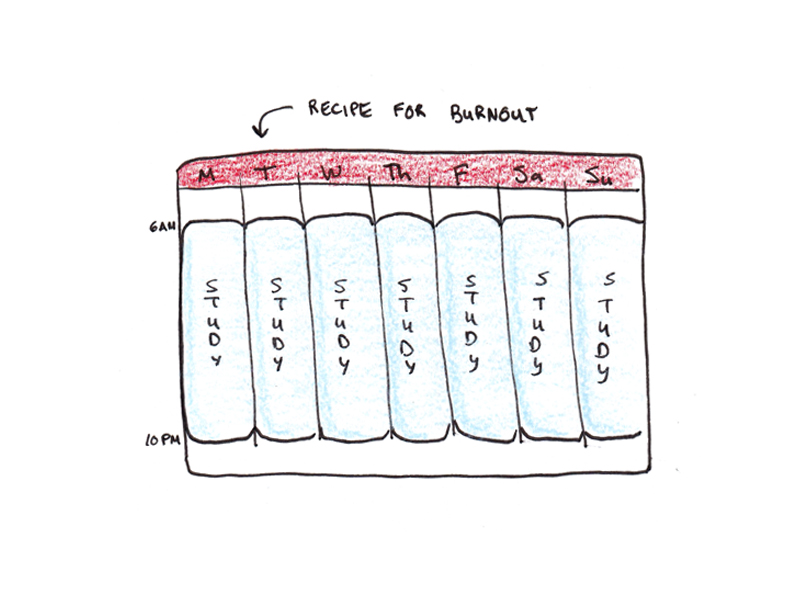
One major trap is attempting to study for excessive durations. Human cognitive capacity is finite, and very few individuals can maintain reliable concentration for more than five to eight hours per day, even when driven by intense motivation. Schedules demanding twelve or more hours of daily focus are usually unrealistic fantasies, typically culminating in chronic procrastination and wasted time rather than sustained productivity.
Equally detrimental is the tendency to neglect vital biological and psychological needs, such as adequate sleep, physical exercise, social interaction, and stress relief. When individuals face competitive examinations or high-pressure academic deadlines, the temptation to strip away non-essential activities to maximize study time is exceptionally strong. Yet, when a studying period extends beyond a brief week or two, these cuts prove counterproductive. Sleep, for instance, plays a fundamental physiological role in memory consolidation; sacrificing rest to squeeze in extra study hours ultimately undermines cognitive performance. Similarly, short bouts of physical activity serve as powerful cognitive boosters, while social contact and stress management sustain mental well-being over multi-month timelines.
Furthermore, learners frequently err by failing to incorporate sufficient short breaks into their daily routines. The optimal frequency of these pauses varies depending on the individual and the nature of the task. Intensive problem-solving sessions or complex reading assignments generally demand more frequent recuperation than passive lecture viewing. Incorporating strategic breaks of ten to fifteen minutes, characterized by short walks or brief periods of physical detachment rather than digital distraction through social media, helps preserve focus and mitigate mental fatigue. Finally, preserving larger blocks of time off during evenings or weekends prevents burnout, ensuring that the endeavor functions as a sustainable endurance event rather than a self-defeating sprint.
Creating a Serious, Part-Time Studying Schedule
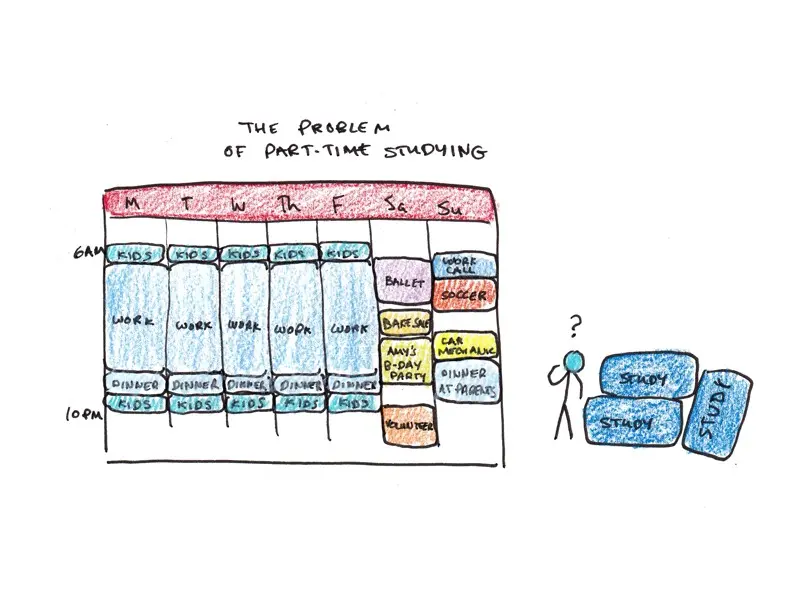
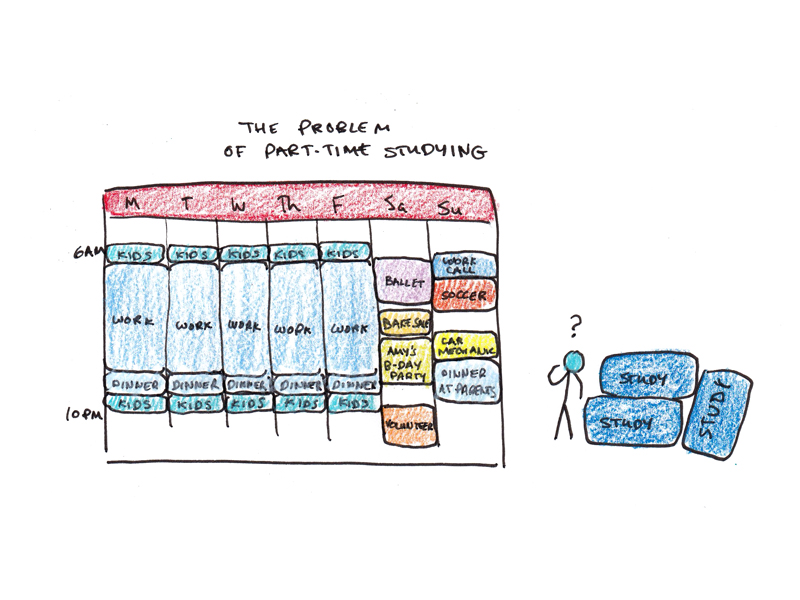
While full-time study presents distinct endurance hurdles, pursuing a rigorous learning goal part-time is arguably more complex. Individuals who must master difficult material while simultaneously managing the heavy responsibilities of a full-time career, domestic duties, or childcare face extreme structural strain with significantly fewer hours at their disposal. Navigating this environment demands meticulous planning and careful preparation.
The process begins by mapping out mandatory commitments—fixed blocks of time dedicated to employment, caregiving, and essential daily maintenance. Once these non-negotiable obligations are accounted for, learners must identify the largest available windows of unscheduled time within their calendars, which typically reside in the early mornings, late evenings, or weekends. Establishing a consistent, repeatable routine within these chosen slots is critical. Whether an individual elects to rise early to study for three hours before heading to the office or dedicates specific blocks late into the evening, adherence to a predictable timetable minimizes the cognitive friction of decision-making.
Yet, part-time learners must carefully calibrate their ambitions to their actual capacity. Attempting an overly aggressive weekly commitment—such as carving out fifteen hours of study on top of an already exhausting career and family life—frequently leads to failure. Adopting a more modest, sustainable volume of study that can be reliably executed proves far more effective over the long term than aiming unrealistically high and collapsing under the pressure.
Recovering Spare Moments of Time
When individuals lack the bandwidth or desire to prioritize a learning project over existing life obligations, structured scheduling gives way to opportunistic time recovery. Many people possess a strong intrinsic interest in acquiring a new skill but recognize that the pursuit cannot take precedence over mandatory daily duties. In these scenarios, maximizing available time often involves seizing random moments throughout the day.
However, learning is an inherently effortful cognitive endeavor. Engaging in activities such as reading dense texts, watching instructional lectures, or practicing a difficult technique requires considerable mental energy, making it an uphill battle when compared against passive leisure alternatives like digital entertainment. Consequently, relying purely on spontaneous, ad hoc decisions to study during scattered intervals rarely succeeds. Even when individuals theoretically possess pockets of spare time, the high psychological friction of initiating effortful tasks usually steers them toward easier options.
To overcome this barrier, learners must focus on reducing the effort threshold required to engage with the material. While simplified educational applications attempt to address this by watering down the content into gamified formats, these tools frequently deliver disappointing long-term results relative to the time invested, as they isolate learners from more rigorous and effective methodologies.
Combining the Approaches
A viable alternative to rigid scheduling or purely spontaneous engagement is a hybrid model that merges fixed study routines with opportunistic learning. This approach accommodates projects that naturally encompass both high-effort analytical tasks and low-effort complementary activities. For example, language acquisition often pairs scheduled, high-focus conversational practice and grammatical study with lower-effort practices such as reviewing vocabulary flashcards or listening to foreign-media broadcasts during casual moments of the day.
Successfully executing a hybrid strategy requires clear recognition of which learning components demand deep, uninterrupted focus and which can be managed fluidly in brief intervals. By matching the appropriate effort level to the available time windows, learners can expand their overall productivity without succumbing to the frustration of trying to force complex cognitive work into unsuitable fragments of time. Ultimately, while real-world disruptions inevitably cause deviations from even the most carefully constructed plans, establishing a thoughtful blueprint transforms daunting intellectual burdens into manageable, actionable pursuits.