
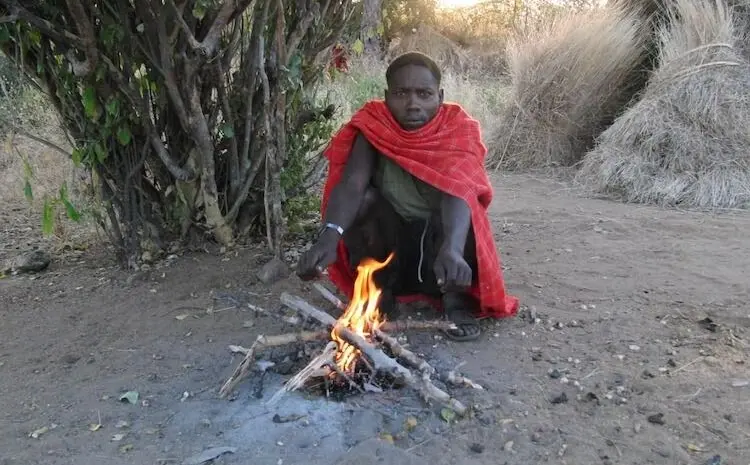
To the average office worker tossing and turning under the glow of a smartphone screen, the conditions endured by indigenous hunter-gatherers might sound like a recipe for total insomnia. Imagine trying to fall asleep on the hard dirt floor of a jungle hut in the Bolivian Amazon, enduring a torrential downpour while venomous snakes and spiders scurry in the dark just outside your shelter. Yet, scientific research reveals a startling reality: for these traditional societies, insomnia is practically non-existent.
Recent insights into the sleeping habits of the last remaining, contactable hunter-gatherer societies on Earth have been brought to light through the work of UCLA somnologist Jerome Siegel. In landmark research published in the scientific journal Current Biology, Siegel and his team examined the bedrock of bedtime among the Tsimane people in Bolivia, the San in the Kalahari Desert, and the Hadza in Tanzania.
When researchers asked members of these indigenous communities about their nightly rest using their native languages, they were met with confusion. "If you ask hunter-gatherers, ‘do you ever have trouble sleeping?’ in their native language, they have trouble understanding the concept," Siegel told the BBC.
This profound disconnect from modern sleep anxiety raises fundamental questions about human biology and evolution. Sleep has been evolutionarily conserved across virtually every lifeform observed thus far, from the most ancient bacteria and tiniest viruses to the largest-brained mammals. Evolutionary theory suggests that any biological trait that could safely be discarded over millennia eventually would be. Yet, sleep has remained an essential component of organic life since the dawn of evolutionary history.
Humans come hardwired with the neurological tools, cues, and triggers necessary to sleep soundly in rough, unpredictable environments. Understanding these evolutionary triggers may help sleep-challenged readers in the modern world rethink their approach to rest. The broader implications of this research were recently explored in an article for the BBC by science, psychology, and history journalist Amanda Ruggeri, whose forthcoming book, The Sleep Myth, is scheduled for release in 2027.
The findings from Siegel’s field studies point to several foundational elements that govern sleep in non-industrialized societies, offering potential lessons for a fatigued modern world.
The first major factor is natural light. While modern society relies heavily on artificial illumination that delays the onset of sleep, hunter-gatherer sleep cycles are strictly dictated by the sun. To help correctly set the body’s internal biological clock—known as the circadian rhythm—experts suggest seeking natural light exposure as soon as you wake up. Simple adjustments, such as taking a morning cup of coffee outside under the open sky or sitting near an east-facing window, can send powerful neurological signals to the brain that the day has begun. Conversely, as night falls, reducing exposure to artificial light by keeping homes as dark as safely possible, utilizing dimmer switches, and minimizing screen time can help mimic the natural environmental cues our ancestors relied upon.
The second crucial element is temperature. Professor Siegel’s research suggests that falling ambient temperatures at night and rising temperatures in the morning track the sleep schedules of non-industrialized populations even more accurately than light does. Members of these societies frequently wake up a few hours before sunrise when nighttime temperatures reach their lowest points. Modern individuals can attempt to replicate these natural thermal fluctuations by opening windows slightly before bed, adjusting programmable thermostats to gradually lower temperatures throughout the night, or setting cooling systems to activate during the pre-dawn hours.
Social dynamics also play a significant role in how hunter-gatherers transition from wakefulness to rest. According to researchers who spoke with Ruggeri, these indigenous groups typically engage in communal activities at sundown and after dark. Without electricity or artificial illumination to enable productive nighttime labor, all attention shifts naturally toward socializing, storytelling, and strengthening community bonds.
While the easy part of replicating this dynamic involves spending meaningful time with family and friends at the end of the day, the difficult part for modern workers involves resisting the pervasive urge to check professional emails or answering late-night messages from employers. Reclaiming the evening hours for relaxation requires letting go of modern workplace expectations that demand constant availability.
Paradoxically, despite their lack of sleep-related anxiety, hunter-gatherers actually sleep less and wake up more frequently throughout the night than people living in modern, technologized societies. The fundamental difference lies in their psychological response to these waking periods. For traditional hunter-gatherers, waking up during the night is a completely normal, stress-free occurrence.
In contrast, one of Siegel’s colleagues pointed out to the BBC that modern society has transformed "good" sleep into an obsessive quest for eight uniform, uninterrupted hours—a comparative fantasy when measured against our evolutionary counterparts.
Consequently, experts emphasize that modern sleepers should avoid expecting their rest to look identical every single night. Letting go of the anxiety associated with waking up in the middle of the night, or worrying about sleeping fewer hours than desired, can profoundly change one’s physiological response. Releasing this pressure can actually make it easier to fall asleep initially and help individuals wake up feeling more refreshed the following morning, freeing themselves from the modern myth of the flawless night.