
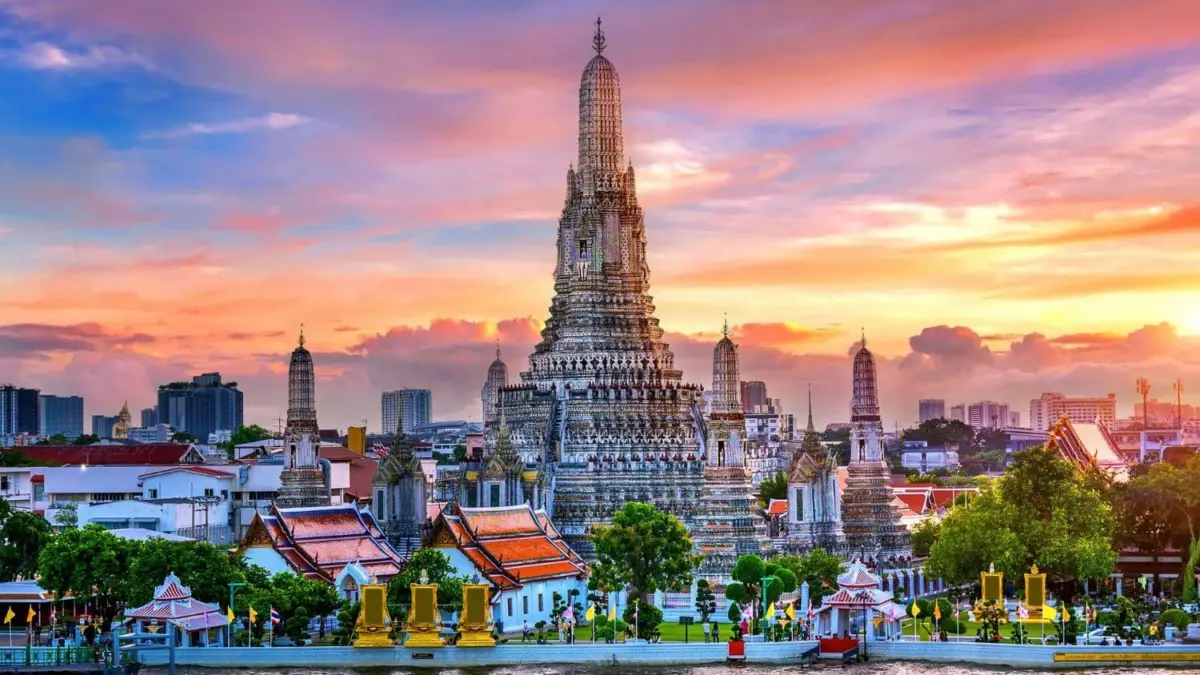
The journey north began with an overnight bus ride rather than a flight. Opting out of air travel allowed the traveler to witness more of the local landscape, though the experience of a long-distance night bus through largely undeveloped regions is admittedly not suited for every tourist. Arriving in the early morning hours, the traveler stepped into a city starkly different from the tranquil, tourist-friendly towns of Krabi, Phuket, and the Phi Phi Islands left behind.
Visiting during the month of September, the sensory contrast was immediate. The relentless heat reflecting off the pavement felt almost unbearable, and stepping outside the hotel meant breaking out into an immediate full-body sweat. Without the cooling ocean breezes found in the south, dehydration and exhaustion quickly set in, prompting a temporary bout of wondering why the idyllic southern shores had been abandoned for the urban sprawl.
Despite the initial culture shock and intense weather conditions, the capital presented a wealth of historic landmarks, bustling markets, and diverse neighborhoods that reward the curious visitor.
The Grand Palace
Among the essential stops in the city is the Grand Palace, a sprawling complex that is easily accessible and virtually impossible to miss. Originally constructed in 1782, this walled city within a city serves as Bangkok’s most popular tourist attraction, drawing visitors into a world of glittering mosaics, ornate architecture, and sacred temples. Walking the grounds for hours reveals a stunning level of craftsmanship and historical depth.
A major highlight within the complex is the revered Emerald Buddha, an ancient green stone carving perched high within Wat Phra Kaew. With hundreds of temples scattered across the metropolis, offering striking sights around every corner, this historic sanctuary stands out as a premier destination for those taking in the city’s architectural heritage.
Bangkok Old Town
Establishing a base in the Old Town area provided plenty of opportunities to explore on foot, particularly around the famous night market near Khao San Road. For a solo traveler, the vibrant street offers an ideal environment for resting, people-watching, and sampling local cuisine. While the surrounding streets are lined with numerous bars and restaurants, the true culinary draw often comes from street vendors selling affordable treats like Thai pancakes and Pad Thai for under three dollars.
The energy of the market truly peaks after dark, pulling in younger crowds and tourists with music blaring from nearby clubs. For those preferring a quieter experience, visiting earlier in the evening allows travelers to purchase food and enjoy it in the peaceful sanctuary of a hotel room after a long day of sightseeing.
ICONSIAM
For visitors inclined toward modern retail spaces, ICONSIAM offers a massive, brightly lit destination complete with a sprawling lower-level food court and market. This ground-floor hub serves a wide variety of delicious local foods and drinks at remarkably reasonable prices.
Reaching the destination via ferry from the Old Town pier costs less than a dollar, providing a scenic and economical transit option. However, visitors must remain mindful of operating hours, as the final return boat departs unexpectedly early at 5:00 p.m., a schedule detail easily overlooked upon arrival.
The upper levels of the complex boast some of the best night views across Bangkok. Visitors can enjoy a coffee at the terrace Starbucks or step outside into the open air to take in the sprawling cityscape in relative quiet. Alongside standard high-end retail brands, the venue features specialty stores and diverse eateries, making it easy to spend an entire day browsing in air-conditioned comfort.
Chinatown
Seeking a different perspective, the traveler relocated after three days from the Old Town to Chinatown, anticipating a vibrant base for further urban exploration. Instead, the neighborhood proved to be intensely hot, noisy, and congested, while presenting a level of traditional cuisine more authentic than expected. Confronted with local delicacies such as bird’s nest and shark fin soup, the traveler found these adventurous dishes beyond personal culinary boundaries.
Navigating the crowded streets further complicated the stay, as the heavy mixture of cooking aromas and vehicle exhaust fumes induced mild nausea. Recognizing the early signs of illness, the traveler spent the majority of the time resting in the hotel room or venturing out briefly for simple sustenance like clear broth and white rice.
While Chinatown remains an essential destination for those seeking an uncompromised cultural experience, the heavy congestion prompted another move after just two days, leading the traveler toward the quieter coastal city of Ao Nang.
Tuk-Tuks and Scooter Taxis
Getting around the city efficiently requires navigating local transportation options. Tuk-tuks provide a fun and direct way to cover short distances between major attractions. To ensure a smooth ride, travelers are advised to provide drivers with a precise destination, preferably utilizing a smartphone to show the address written in Thai. Checking estimated pricing through a navigation app beforehand helps establish a baseline before agreeing on a fare with the driver prior to boarding.
While negotiation is standard practice, drivers may occasionally attempt to alter the agreed-upon price upon arrival. Firm yet polite refusal accompanied by a smile usually encourages travelers to seek out alternative drivers. Additionally, drivers may attempt to initiate conversations about daily itineraries to pitch outside excursions, occasionally even detouring to an agency office in an effort to sell day trips.
Grab Taxi
For a more reliable and often more economical alternative to tuk-tuks, ride-hailing services like Grab prove invaluable. These vehicles typically arrive within minutes and frequently cost only a dollar or two for short city hops.
When the urban heat becomes overwhelming and walking is no longer feasible, summoning a ride through the app provides immediate relief, complete with upfront estimates for travel time and cost. The service also simplifies transit to airports and railway stations, offering significantly lower rates compared to standard hotel-organized car services.
Looking back on the urban leg of the journey, the overall experience of Bangkok remained largely positive, inspiring future plans to venture even further north toward the city of Chiang Mai. As for the immediate future, reflections on the idyllic scenery and highlights of southern Thailand will soon follow in subsequent accounts.