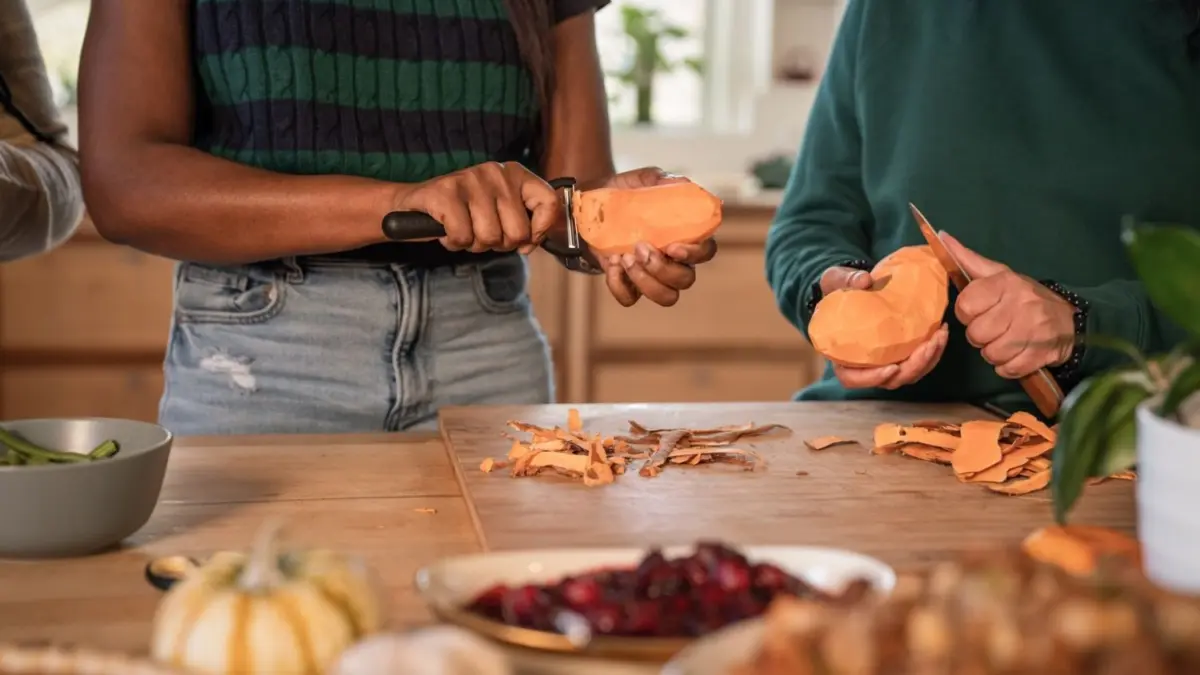
The tradition often begins days before the holiday, mapping a journey that starts at local farmers’ markets for fresh collard greens, kale, mustard greens, and potatoes. In years past, the sheer volume of produce required to feed the family resulted in towering 30-gallon bags of greens that required hours of meticulous cleaning. Trips to historic locations like Baltimore’s Lexington Market secured fresh poultry and beef, followed by subsequent stops for cheeses and other staples. By Tuesday, the physical labor of the holiday truly commenced, with greens washed, meats seasoned, and root vegetables peeled ahead of Wednesday’s major cooking push.
Within these kitchens, certain dishes stood out not just for their flavor, but for their permanence in family lore. Alongside traditional Southern staples like crispy fried chicken, macaroni and cheese, and heavily seasoned greens, unexpected items like sauerkraut found a regular home at the holiday table, establishing a unique family custom. Desserts, while less traditional, included homemade rice pudding—a dish that remained a staple despite mixed reviews from younger generations.
Yet, the most coveted culinary creations often remained unwritten. Signature items, such as sweet potatoes infused with secret measurements of lemon and almond extract, or handmade butter rolls that melted on the tongue, relied entirely on intuition, memory, and experience. Similarly, the secret to obtaining a perfectly golden, crispy-skinned Southern fried chicken was frequently attributed not just to a precise spice blend, but to the heavily seasoned cast-iron skillet passed down through decades of family cooks.
As years passed and younger family members established homes of their own, the inevitable phone calls began. Questions regarding how to properly season chicken, prepare potato cakes, or cook greens were met with the timeless, unhelpful precision of culinary instinct: a dash of this, a pinch of that, and a reminder to simply taste the food. This informal method of passing down knowledge meant that many exact recipes evaporated with the passing of elder family members, leaving subsequent generations to rely on memory and trial-and-error.
This dynamic eventually shifted as decades progressed. The author of these family recollections eventually found herself fielding frantic culinary questions from her own daughter, realizing with gentle amusement that she had fully adopted the language and habits of her mother and grandmother. Over time, however, the student became the teacher. As younger generations embraced more health-conscious, organic, and globally adventurous cooking styles—temporarily exploring veganism before returning to balanced, clean-eating traditions—the flow of culinary advice reversed. Calls shifted from asking older generations for traditional recipes to younger family members for modern innovations like sweet potato hash or pineapple mint refreshers.
Spanning four distinct generations—grandmother, mother, daughter, and granddaughter—this evolution highlights how family traditions grow, accommodating new dietary habits and creative flairs while retaining the foundational love shared around the table.
Faced with the common regret of failing to document these ephemeral recipes before older relatives passed away, modern cooks are increasingly turning to unconventional tools to bridge the gap. While technology cannot replicate the exact taste of a well-seasoned cast-iron skillet or recover missing measurements of long-forgotten extracts, digital applications and artificial intelligence offer a practical way to organize scattered recipe cards, reconstruct traditional dishes through detailed memory prompts, and compile family photographs alongside personal anecdotes.
By capturing these narratives, organizing chaotic notes, and integrating historical images, families are finding new ways to archive their culinary heritage. As holiday travel plans bring family members together across state lines to resume the shared rituals of shopping, chopping, and storytelling, the focus remains fixed on the enduring value of passing down not just the food, but the rich history behind every meal.