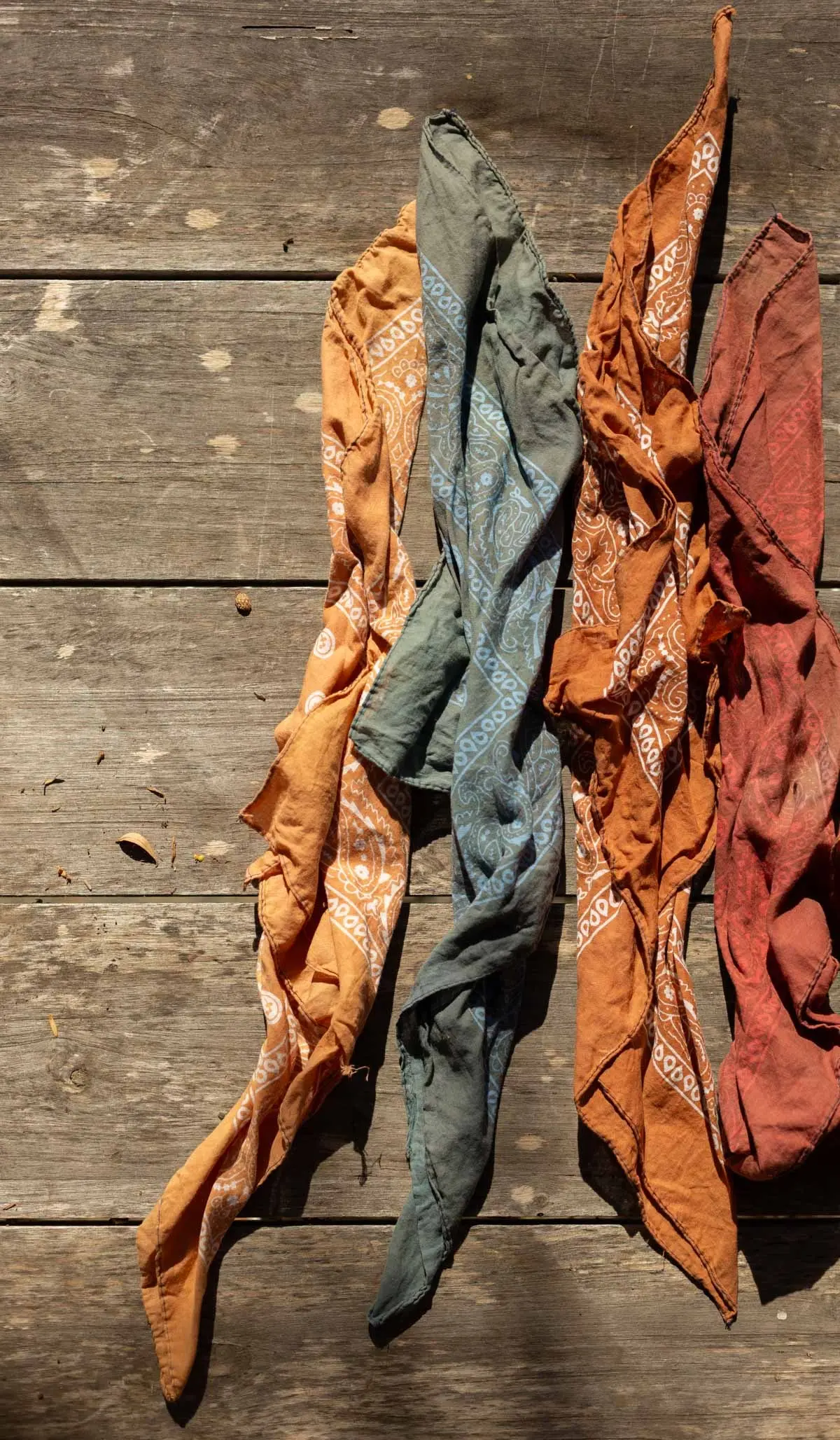
The resulting project successfully shifted the harsh black fabric into a collection of organic, dusty earth tones using a simple combination of household bleaching and subsequent re-dyeing techniques. Far from being a complex industrial process, the transformation relied on accessible methods that can be adapted for various textile and apparel projects, ranging from event decor to wearable accessories for pets.
The concept began with a simple assessment of available resources. Because the initial batch of black cotton bandanas was obtained at zero cost, the project carried no financial risk, making it an ideal candidate for experimentation. Traditional bandanas often feature vibrant primary colors or stark black-and-white motifs, which can sometimes clash with specific event themes that call for a more subdued, organic palette. To achieve the desired look, the project required stripping the original black pigment before introducing a new color spectrum.
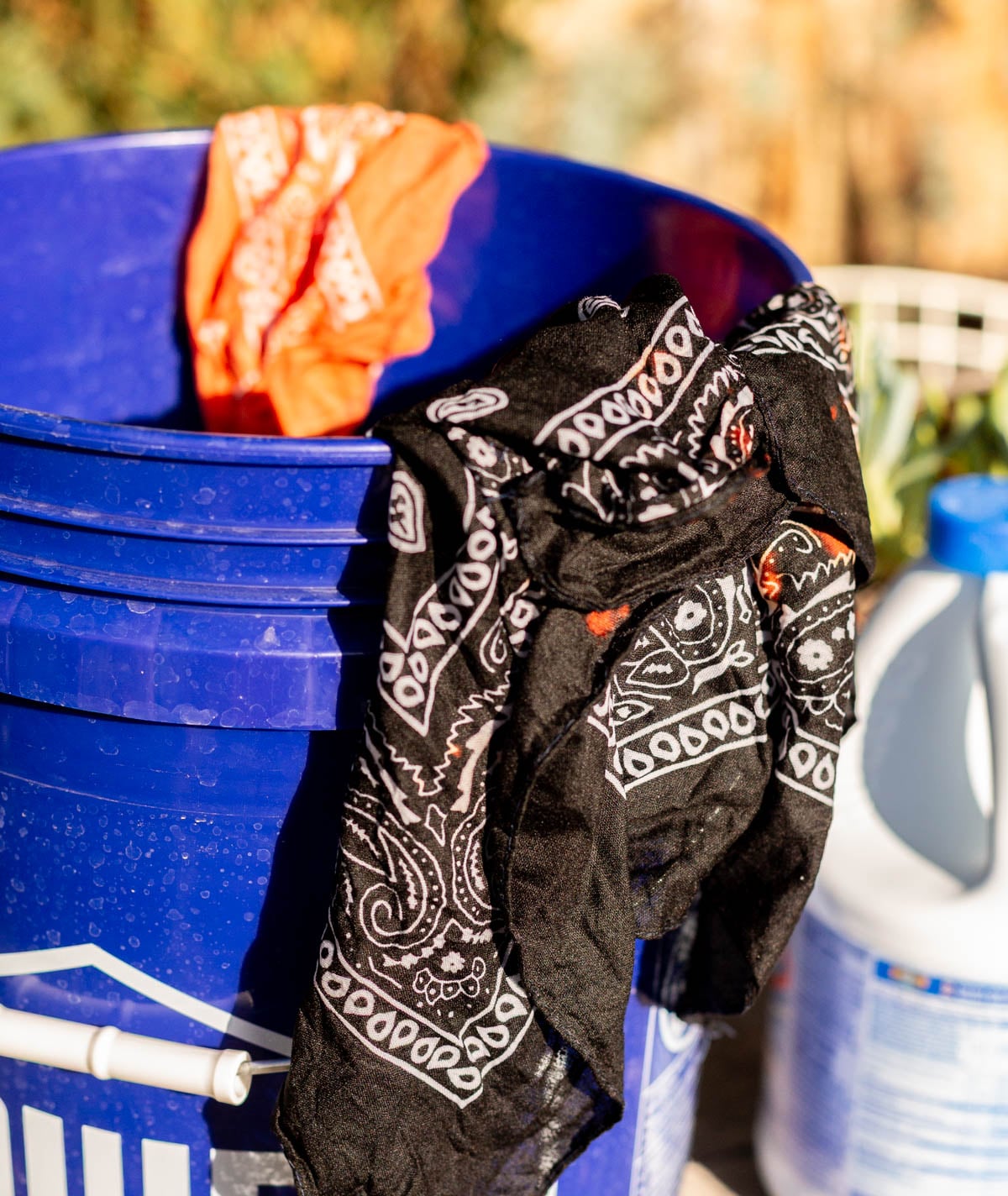
While bleach tie-dye techniques are well-documented methods for creating contrasting patterns on dark fabrics, this particular approach departed from standard practices by incorporating an additional dyeing step after the bleaching phase. Rather than relying solely on the bleached areas to create a pattern, the process used the bleach to lighten the base fabric to various shades of brown, tan, and muted orange before introducing a secondary dye to establish the final, harmonious earth-tone colors.
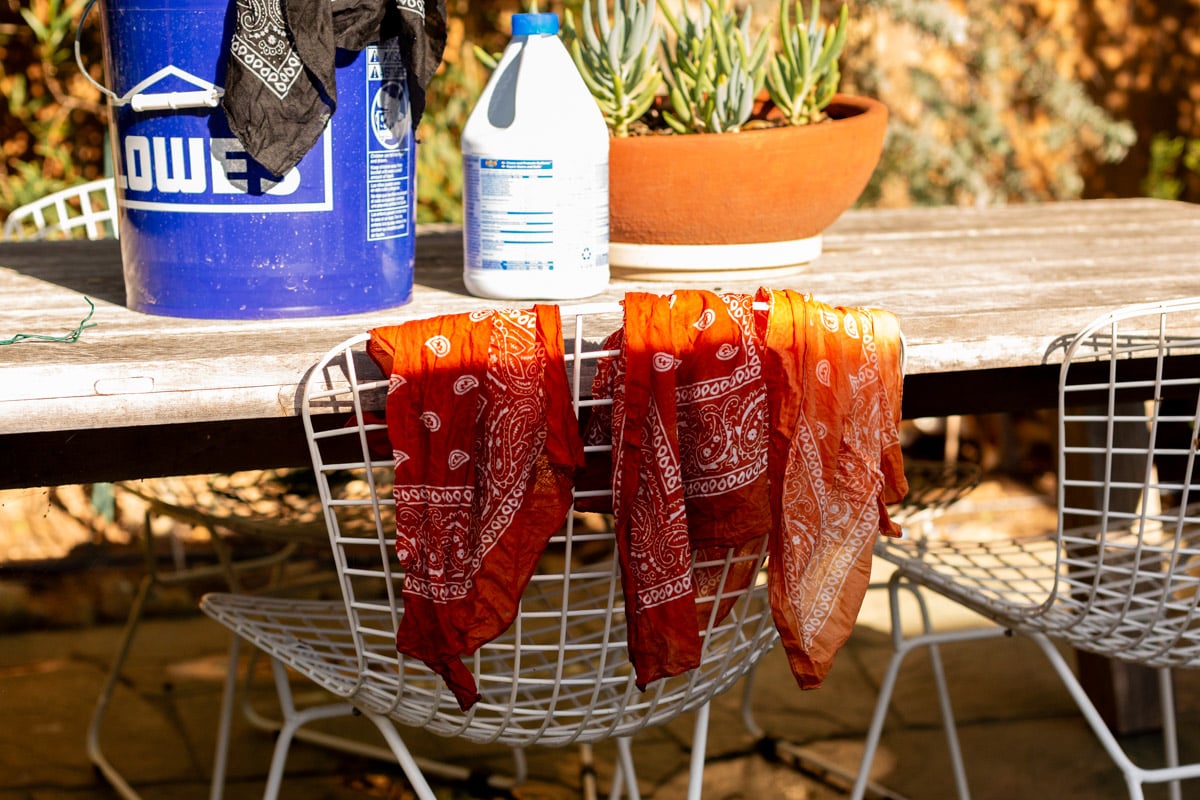
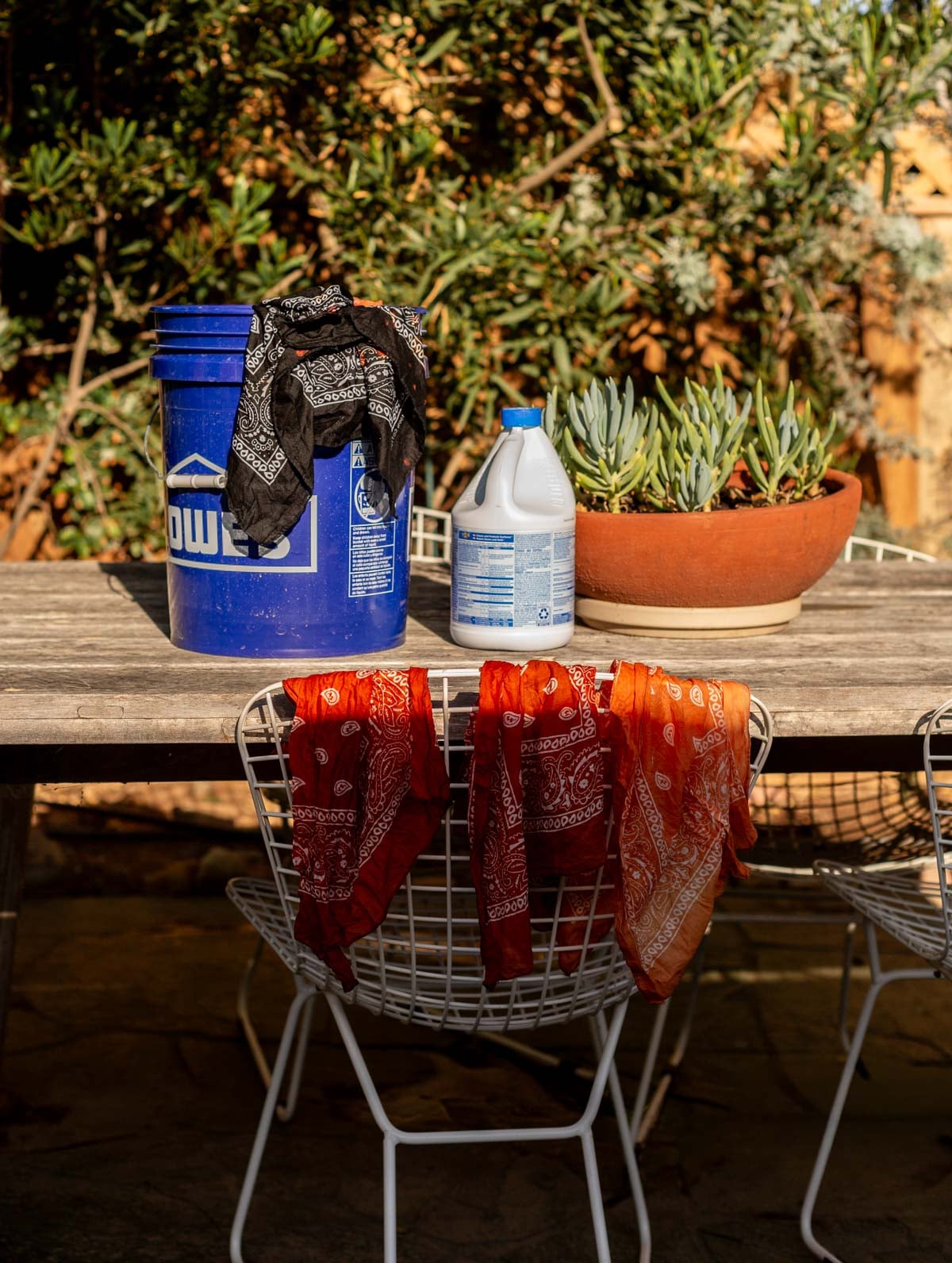
Executing the transformation safely and effectively requires careful adherence to fundamental textile-handling procedures. Because the process involves working with concentrated chemical agents, safety precautions are paramount. The initial phase must always take place outdoors or within a thoroughly ventilated environment to avoid the inhalation of harsh fumes, while protective gloves are necessary to prevent skin irritation during the handling of the bleach solution.
The process begins by thoroughly wetting the cotton bandanas with water, ensuring the fibers are completely saturated before excess moisture is wrung out. Pre-wetting the fabric helps promote a more even absorption when it encounters the chemical solution. A large container or bucket is then prepared with enough bleach to fully submerge the fabric.

Once the safety measures and materials are in place, the bandanas are dipped directly into the bleach solution. The chemical reaction with black cotton fabric occurs remarkably fast, often initiating a visible color transformation within thirty seconds to a minute. Monitoring the fabric closely during this brief window is essential, as leaving the material in the solution for too long will excessively degrade the cotton fibers and compromise the structural integrity of the textile.

As soon as the fabric shifts from black to various intermediate shades of brown and neutral tones, the bandanas are promptly removed from the solution. Excess bleach is wrung out, and the fabrics are immediately subjected to a thorough rinsing under cold water for one to two minutes to halt the chemical reaction. Following the rinse, the bandanas undergo a standard cycle in a washing machine and are dried normally to ensure all residual chemical agents are completely removed before the next stage.
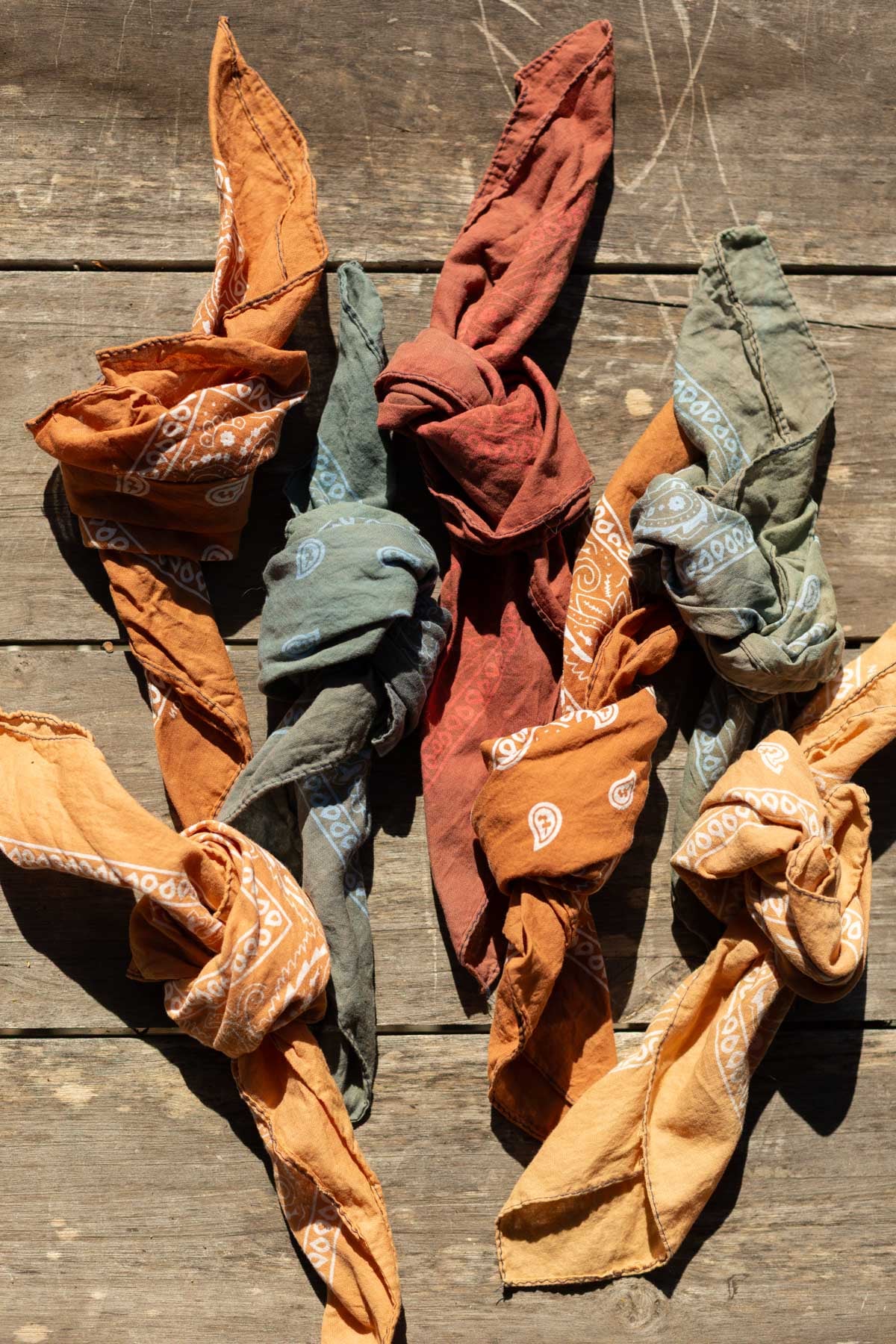
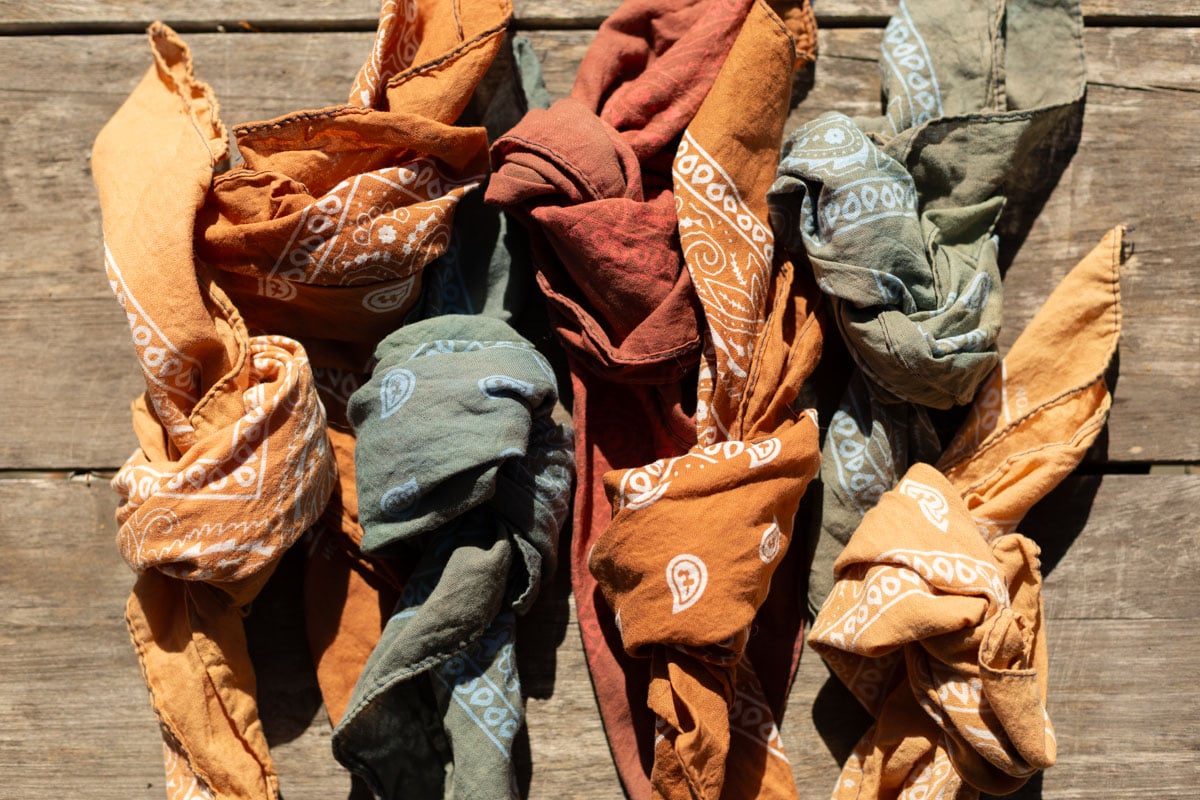
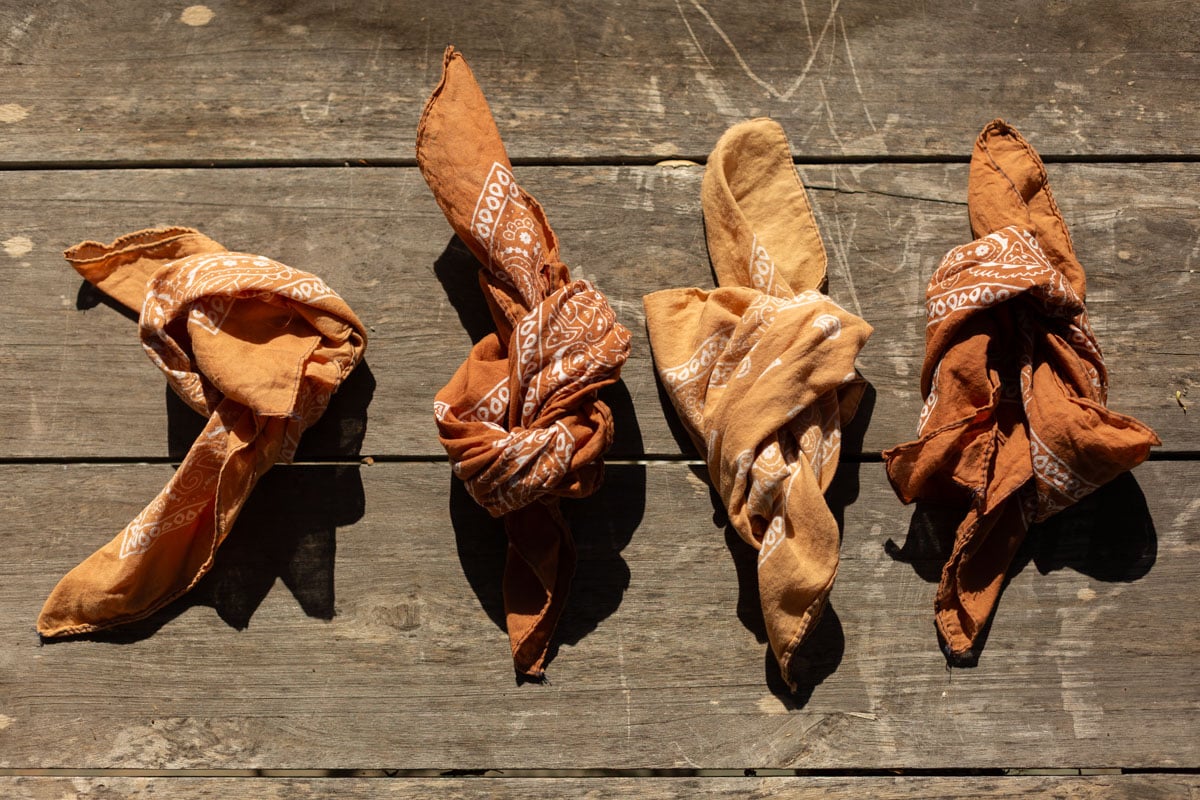
Once the bleached bandanas are clean and dry, they display a range of light brown, tan, and muted orange hues, depending on how long each piece remained in the solution. This variation in the bleached base actually enhances the final result, as it allows subsequent re-dyeing to produce rich, multi-dimensional earth tones rather than a flat, uniform color. Following standard textile dyeing methods, the neutralized bandanas can then be immersed in new dye colors to achieve the final dusty, organic shades desired for the project.
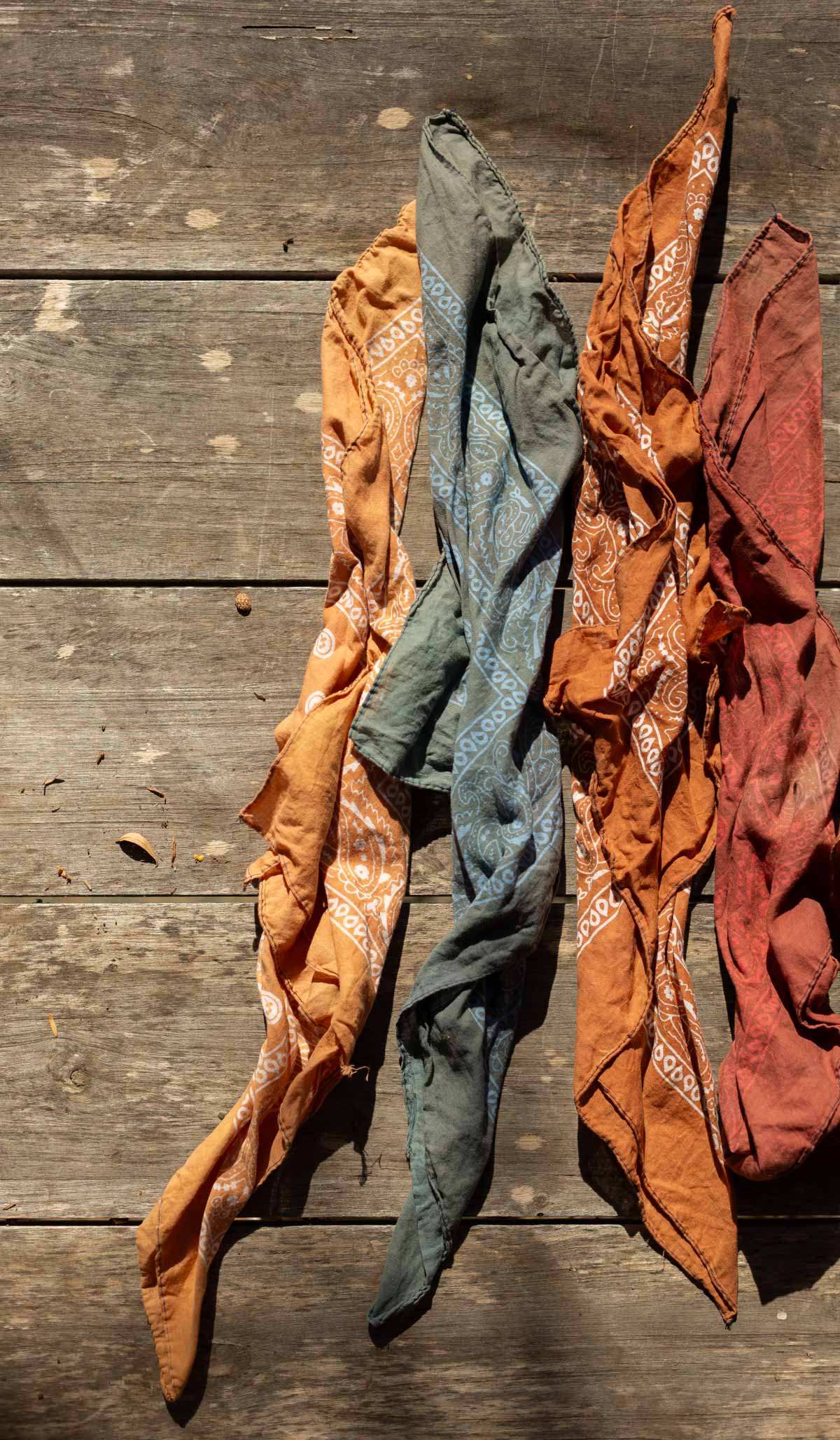
The practical applications for these newly transformed textiles extend far beyond basic crafting experiments. During the school camp party, the earth-tone bandanas served a dual purpose as decorative elements and functional table settings. Placed at each child’s seat, the bandanas functioned primarily as thematic cloth napkins that added to the rustic atmosphere of the event. To preserve the decorative items, complementary paper napkins were provided alongside them for actual use, allowing the children to wear or keep the clean fabric bandanas without staining them during meals.
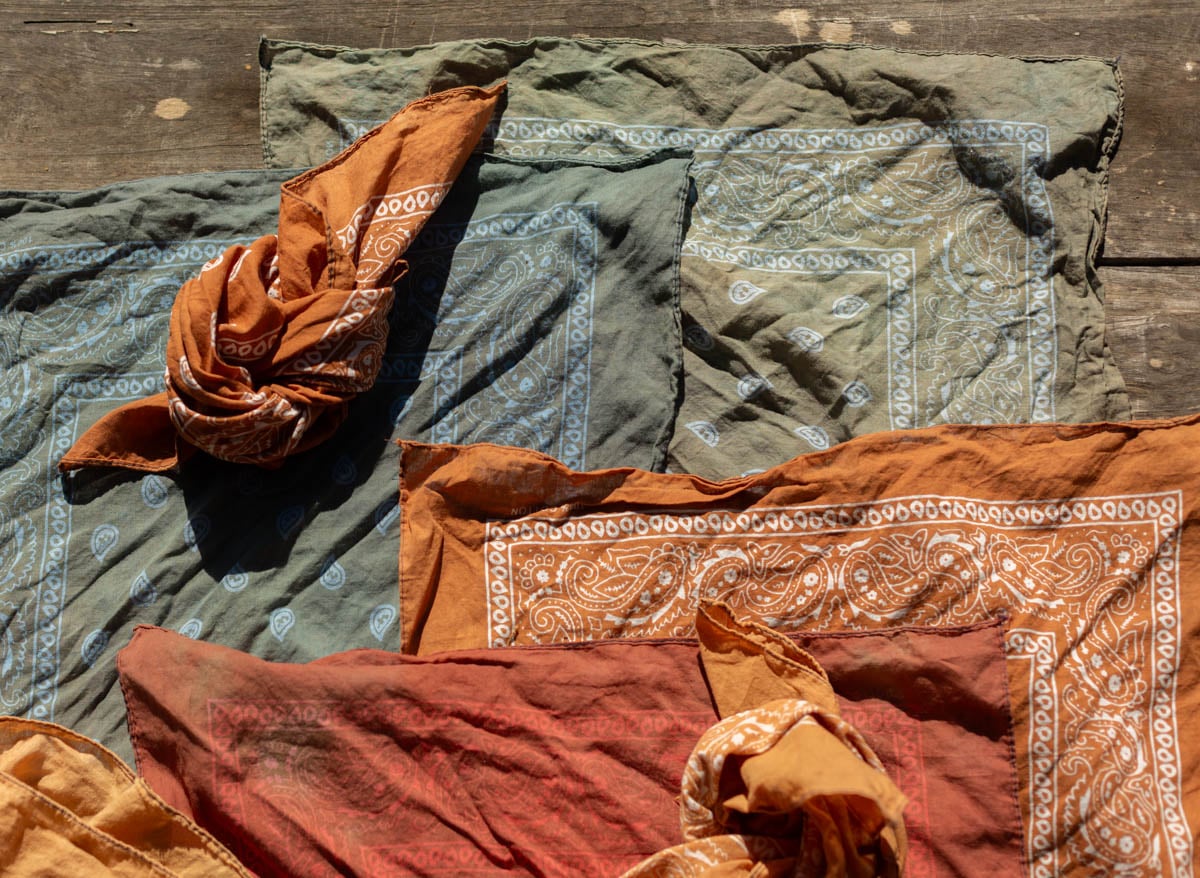
With a few bandanas left over from the school celebration, the organizer found additional uses for the leftover inventory. One of the upcycled accessories found a new life as a wearable item for a household pet. Although the dog’s reaction to wearing the garment was mixed, the muted, natural colors suited the pet accessory market well, demonstrating that the technique could easily be scaled for pet wear, clothing alterations, or other DIY fashion projects.
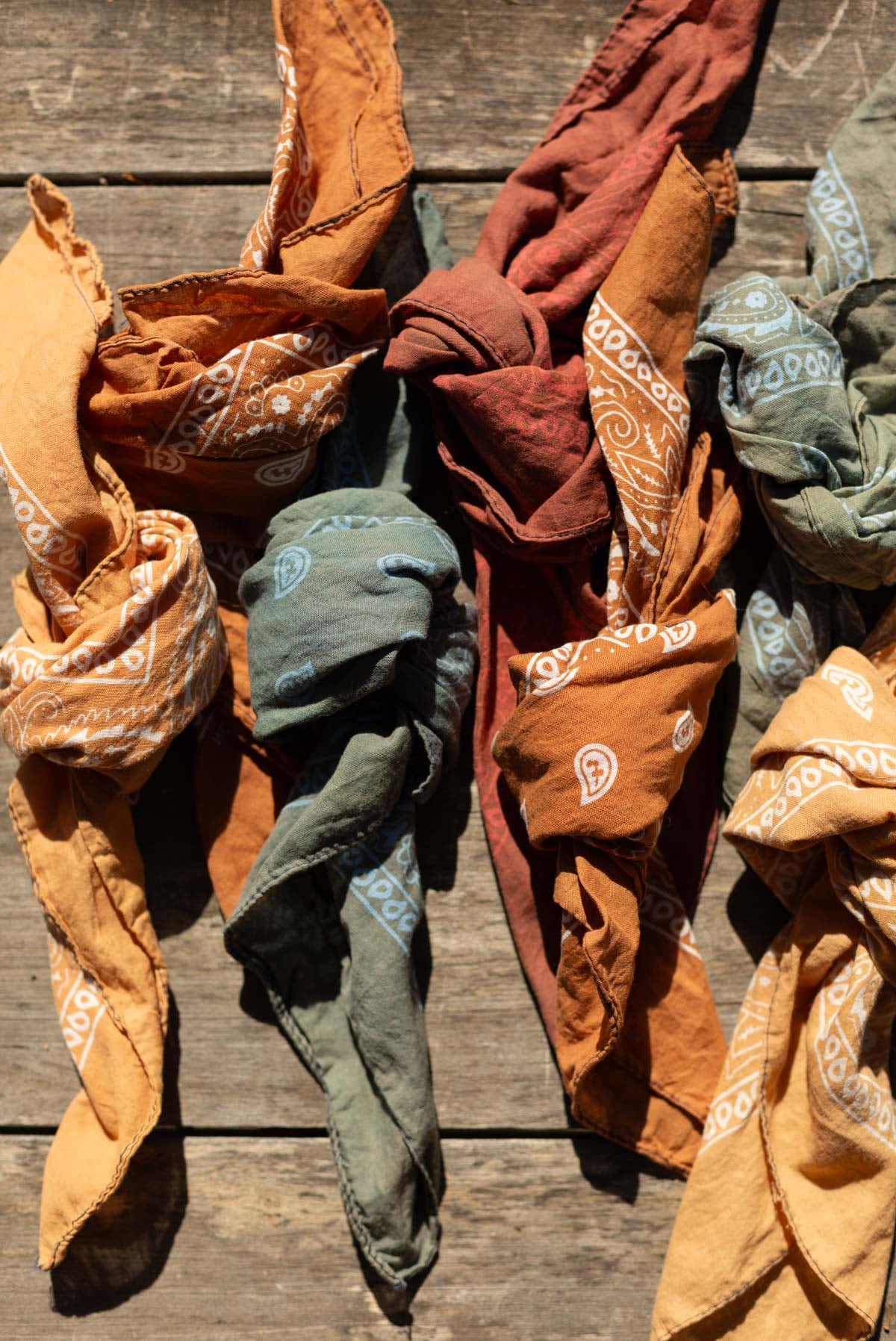
Ultimately, the project highlights how basic, low-cost materials can be successfully diverted from waste and reimagined through straightforward chemical and creative processes. By combining a quick initial bleach treatment with a secondary dyeing phase, crafters and event planners can bypass commercial restrictions on color availability and produce custom, organic textiles tailored to specific design needs using everyday household supplies.