Measuring just nine miles across, the island of Lismore in Scotland’s Inner Hebrides has long carried a name rooted in ancient ecclesiastical history. Known historically as Lios Mòr—meaning the "great garden"—the island was traditionally associated with the dawn of Christianity in Britain. However, tangible physical proof of its early medieval significance had largely eluded historians, existing mostly in written records, place-name evidence, and local folklore.
That narrative has now been dramatically rewritten. A series of archaeological excavations around the island’s 13th-century parish church have uncovered extensive burial grounds, early structural foundations, and rare evidence of elite precious-metal working. The findings demonstrate that Lismore was not merely a remote outpost of faith, but a thriving, sophisticated center of worship, learning, and specialized trade that likely rivaled the renowned monastery at Iona.
The groundbreaking investigation was spearheaded by the Lismore Historical Society, driven by the passion of local residents who successfully crowdfunded the ambitious project. Recognizing the need for professional expertise, the community organizers hired Dr. Clare Ellis of Argyll Archaeology to lead the field investigations.
"Lios Mòr, founded by Saint Mo Luóc in the 6th century, was known from historical records, place-name evidence, and local tradition, but there was very little archaeological evidence to confirm its character, extent, or significance," Dr. Ellis said in a statement detailing the excavation project.
The research was designed to answer a central historical question: whether the site of the later medieval cathedral on Lismore was also the foundational location of Saint Mo Luóc’s early monastery, and if so, what the true scale, nature, and status of that early settlement actually were.
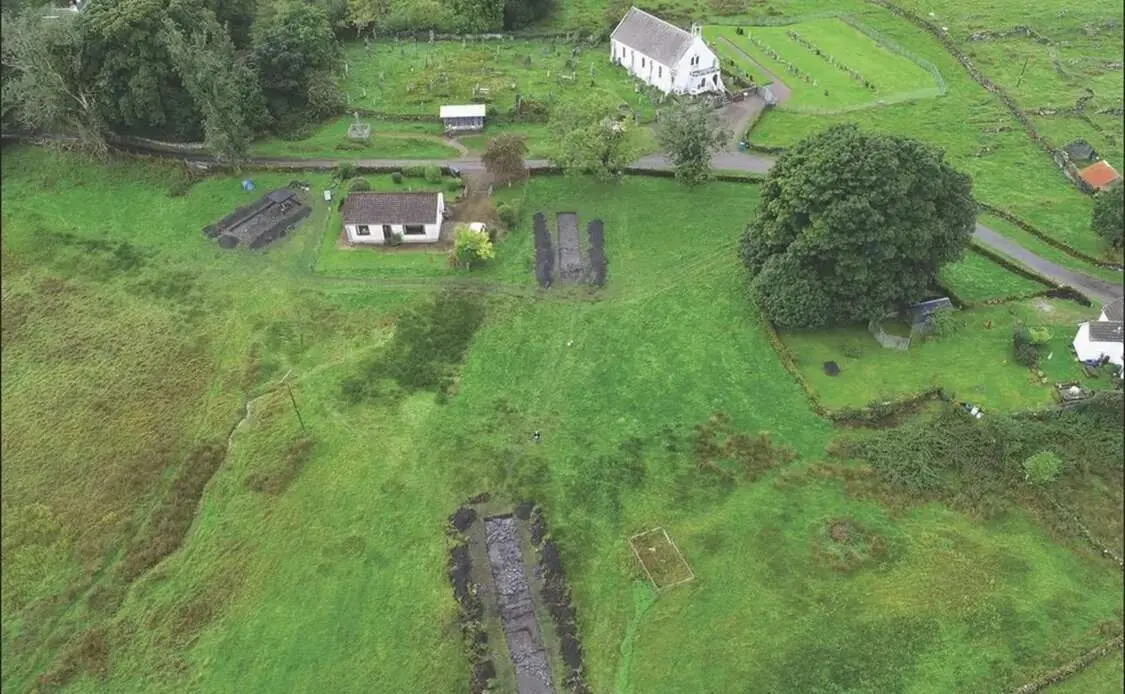
Working alongside academic partners, including Professor Gordon Noble from the University of Aberdeen, the archaeological team deployed a combination of geophysical surveys and targeted trench excavations. The results far exceeded initial expectations, unearthing three distinct categories of major discoveries that firmly place Lismore on the map of early medieval European ecclesiastical powerhouses.
Among the most significant finds were six distinct burials radiocarbon-dated to between 650 and 1040 CE. These graves were discovered in close association with large, intricately carved stone cross fragments, pointing to a high-status cemetery used over centuries by the community’s spiritual and civic leaders.
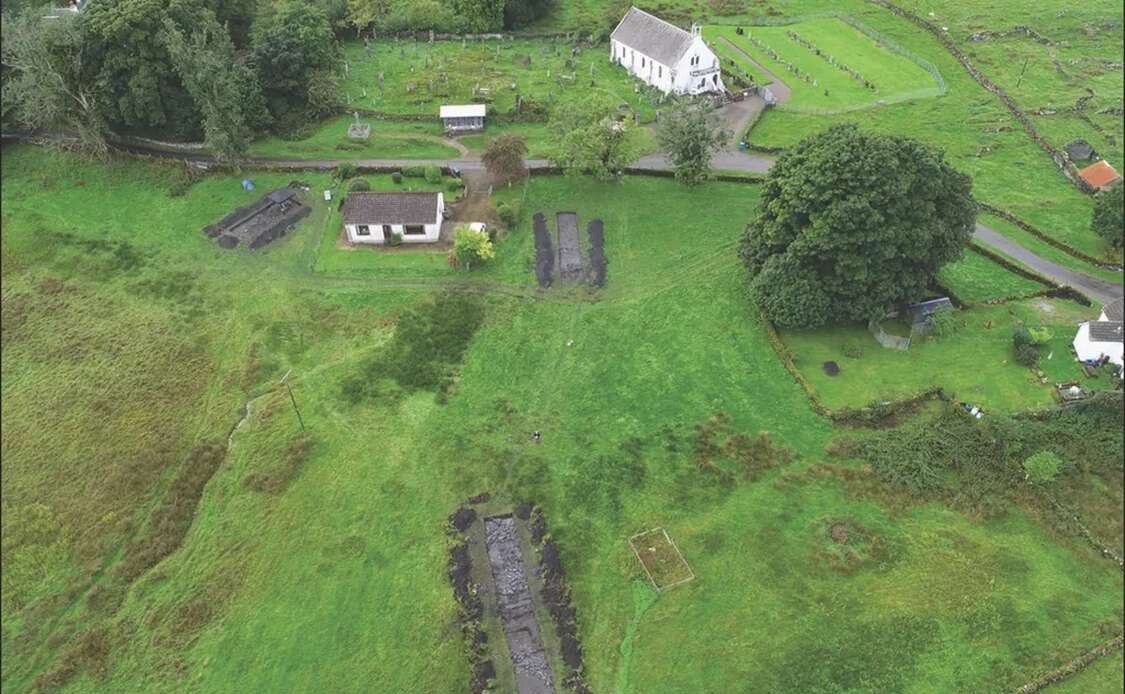
In a separate area of the dig, researchers identified the structural remnants of an early oval-shaped building featuring a meticulously laid limestone-paved foundation. Surrounding this structure were artifacts indicative of intensive daily life and specialized craft production, including handmade pottery and various toolmaking implements.
Perhaps the most astonishing revelation came from a trench that cut across a zone dedicated to high-status manufacturing. Soil analysis and physical recovery within this area yielded approximately 1,000 pieces of debris directly linked to precious metalwork. Archaeologists recovered tiny crucibles used to melt down precious metals—likely gold, silver, and copper—alongside fragments of the casts into which the molten materials were poured to create ornate objects.
During the early medieval period, Iona Abbey stood as one of the most famous Christian religious centers in Western Europe, acting as the beating heart of a monastic surge across the Gaelic-speaking kingdom of Dál Riata. This kingdom encompassed nearby Argyll, vast stretches of the Hebrides, and parts of County Antrim in Northern Ireland. The new discoveries from Lismore suggest that Lios Mòr operated as a peer to Iona, sharing in the same intellectual, spiritual, and economic networks that shaped Northern Europe during the medieval transformation.
The findings have profound implications for how historians understand the economic and social dynamics of early Scottish monasteries. Co-author Professor Gordon Noble noted that the sheer volume of productive activity indicates a thriving hub whose influence extended well beyond simple prayer and scripture.
Writing in their published research paper in the academic journal Antiquity, Professor Noble, Dr. Ellis, and their colleagues explained that these high-status manufacturing activities were presumably carried out within the secure boundaries of the monastic enclosure. However, the presence of items such as intricately crafted brooches suggests a level of interaction with secular elites.
In Ireland and contemporary Celtic regions during this era, monasteries frequently engaged in the production of secular trade goods. This crossover demonstrates a complex economic relationship between elite secular rulers and powerful ecclesiastical centers, where monasteries acted as industrial and commercial drivers as well as spiritual beacons.
The triumph at Lismore is viewed by participating experts not only as an academic milestone, but also as a testament to the power of community involvement in heritage conservation and historical research. A sizable portion of Lismore’s permanent population of roughly 170 residents contributed personal funds to make the excavations possible, turning a local curiosity into a globally significant archaeological revelation.
Bob Hay, a former island resident who played a pivotal role in organizing the funding and coordinating the army of local volunteers, emphasized the unique collaborative nature of the project.
"The discoveries at Lismore demonstrate the value of community-led archaeology in advancing academic research," Hay concluded, highlighting the dedication of the islanders. "Local volunteers and the Lismore Historical Society played a central role in investigating the site, helping to uncover evidence that has fundamentally changed understanding of one of Scotland’s most important early Christian centers."