This insight challenges conventional wisdom about learning, suggesting that the perennial anxiety readers feel over forgotten pages stems from a misunderstanding of how memory and comprehension actually function. Rather than relying on complex note-taking architectures or exhaustive flashcard systems, the key to retaining information may simply lie in expanding the foundational network of knowledge we bring to the page.
Reading More Equals Reading Better
A common point of tension among avid readers is the apparent dichotomy between consuming a high volume of books versus slowing down to read fewer works with greater depth. When Young and his team released a video detailing the "AHAB approach" to reading—a method that helped him plow through 105 books during an intensive learning project known as "Foundations"—the strategy drew criticism from corners advocating for quality over quantity. Detractors argued that an obsession with speed and volume sacrifices the deep reflection required for true understanding.
There is, admittedly, an element of truth to this critique. Glancing through a mountain of low-brow fiction or uninformative, sensationalist books will not yield the profound insights found in classical literature or rigorous philosophy. Yet, framing the issue as a rigid trade-off between the quantity of knowledge one possesses and its intrinsic quality creates an imaginary dilemma.
In practice, the most effective pathway to tackling harder, more sophisticated books is to read a wide variety of works, including those that are less dense but provide a stepping stone into more complex intellectual territory. Volume and depth are not adversaries; rather, a broad base of accessible reading materials creates the cognitive scaffolding necessary to comprehend more demanding texts later on.
What Sorts of Books Should You Read to Read Better?
If a genuine trade-off exists in the realm of reading, it is less about balancing the sheer number of pages against their perceived literary sophistication and more about prioritizing accuracy. The danger of compounding knowledge is that starting with misleading books—those that fail to represent the best available evidence or promote viewpoints held by very few credentialed experts—can trap a reader in a self-reinforcing echo chamber of misinformation. In worst-case scenarios, an individual consuming unchecked, inaccurate material can end up significantly less informed than someone who simply absorbs brief news segments from mainstream broadcasts.
This vulnerability to misleading material explains the value of textbooks and survey courses. These resources are specifically engineered to introduce topics by synthesizing the broad consensus of a given academic field. Among modern options, concise survey series such as Oxford University Press’s Very Short Introductions offer a compelling model. These volumes pack a surprising density of peer-reviewed information into a short format that remains accessible to non-experts. Particular standouts in this genre cover diverse subjects ranging from the complex science of sleep and geology to the intricate philosophy of Hegel.

The Paradox of Forgetting
Another widespread source of friction for readers is the anxiety generated by natural human forgetfulness. Recognizing how rapidly details fade from memory after finishing a book, many readers believe they must invest significant time into building elaborate, intricate note-taking systems before they dare open another volume.
Note-taking frameworks can certainly be wonderful tools. Over the years, avid learners have experimented with everything from sprawling, interconnected Zettelkasten systems to minimalist, single-page document summaries. For certain individuals, these methods yield exceptional results. However, for others, the administrative burden of maintaining the note-taking system itself becomes a heavy impediment to simply reading more books.
Similarly, an over-reliance on aggressive retrieval practice—such as transforming every read chapter into an endless deck of digital flashcards—can introduce friction. While rereading books multiple times is generally less effective than active recall, and practice remains essential for true mastery, the act of reading itself inherently involves retrieval.
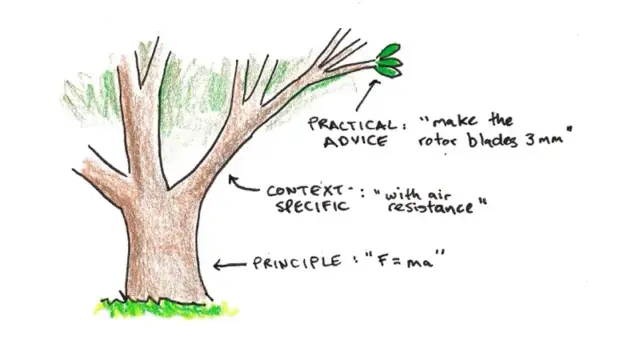
Modern research into the science of reading comprehension demonstrates that understanding text relies on retrieving prior knowledge just as much as it relies on decoding letters and sentences on a page. Reading is an active, dynamic cognitive process wherein the human mind constantly merges incoming textual information with pre-existing mental schemas.
Whether an individual utilizes elaborate mnemonics, flashcards, or sprawling digital archives, the fundamental rule of memory retention remains tied to prior knowledge. The key to remembering more is knowing more, and the key to knowing more is reading more. Knowledge compounds over time, and the most reliable way to get that intellectual flywheel spinning is simply to read more books.
Beyond individual reading habits, broader conversations within the productivity and creative communities continue to explore how people manage large-scale intellectual endeavors. Friend and fellow author David Kadavy recently released a new book titled Finish What Matters, which examines the psychological divide between perpetual starters and committed finishers on major projects. Discussions surrounding these behavioral archetypes offer additional psychological insights for individuals looking to see complex creative and educational endeavors through to completion.