Invisible, odorless, and found everywhere from natural wetlands and the digestive tracts of livestock to residential basement furnaces, methane has emerged as one of the most critical frontiers in the fight against global climate change. As the second most important contributor to the climate crisis after carbon dioxide, methane is a potent hydrocarbon that currently serves as the primary component of natural gas, a fossil fuel responsible for generating roughly 25 percent of the world’s electricity.

Composed of four hydrogen atoms bonded to a carbon atom, methane is abundant in nature and forms through both geological and biological processes. Geologically, it is typically created when heat and pressure act upon decomposing plant and animal matter over millions of years, forming the vast underground reservoirs that supply natural gas. It can also form deep underground without organic material through distinct inorganic pathways. Biologically, methane is generated through a process known as methanogenesis, in which specialized underwater microorganisms called archaea produce the gas as a byproduct of their oxygen-free respiration. This biological pathway accounts for methane generation in environments above ground, including natural wetlands and the digestive systems of insects and ruminant animals.
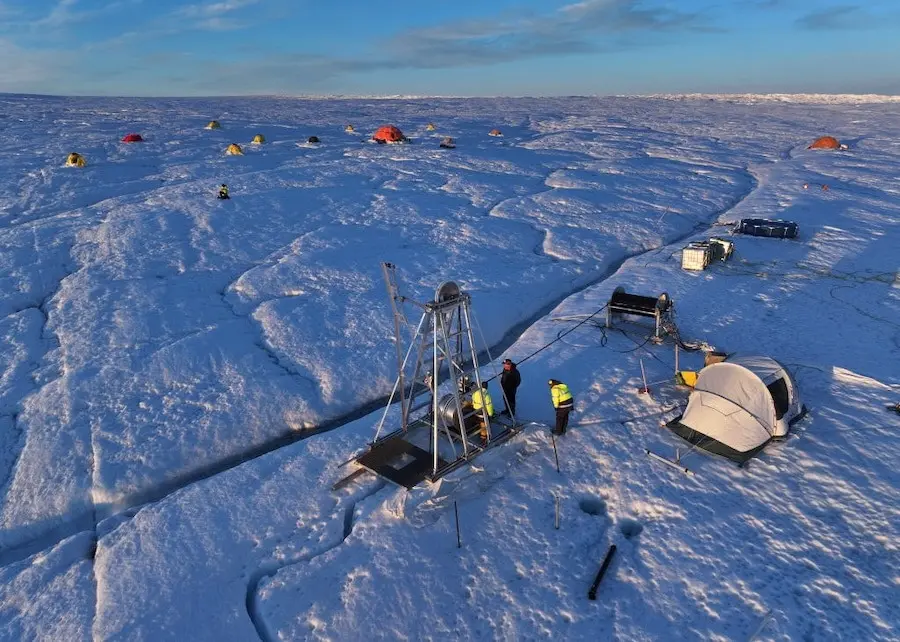
Measuring atmospheric methane accurately has long presented a challenge for scientists, who typically rely on two complementary approaches: bottom-up and top-down methods. Bottom-up assessments begin on the ground with localized sources and expand outward, calculating emissions either through direct facility measurements or by multiplying standard emission factors by the total number of emitting units, such as livestock heads or pieces of industrial equipment. Conversely, top-down approaches utilize atmospheric measurements captured by airplanes, high-altitude platforms, and increasingly sophisticated satellites.

As satellite technology advances, it continues to reveal super-emitting incidents that traditional bottom-up inventories routinely miss. For instance, when a company estimates its emissions based on standard equipment leak rates, it fails to account for the roughly five percent of extraordinary leaks responsible for more than half of all industrial leakage volume. Direct atmospheric and ground-based measurements have consistently demonstrated that official inventories can be severely underestimated, with one major study finding U.S. oil and gas emissions to be 60 percent higher than estimates provided by the U.S. Environmental Protection Agency.
When methane enters the atmosphere, it functions as a powerful greenhouse gas, absorbing outgoing thermal radiation from the Earth and redirecting it back toward the surface. Although natural sinks—such as soils and the troposphere, where the gas breaks down into carbon dioxide and water vapor—traditionally balanced natural emissions, human activities since the industrial revolution have accelerated atmospheric accumulation far beyond the capacity of these natural sinks. By 2023, atmospheric methane concentrations had surged by 265 percent compared to pre-industrial levels, reaching 1,934 parts per billion. Human activities account for roughly 60 percent of these emissions, driving approximately one-third of current global heating.

The urgency surrounding methane mitigation stems from a unique atmospheric profile: while it is vastly more potent than carbon dioxide, it has a much shorter atmospheric lifespan, lasting approximately 12 years compared to centuries for carbon dioxide. Over a 20-year timescale, methane traps 86 times more heat per unit of mass than carbon dioxide, a figure that drops to 28 times over a century. Consequently, the Intergovernmental Panel on Climate Change has calculated that global methane emissions must fall by roughly 34 percent by 2030 relative to 2019 levels to keep global heating within the critical threshold of 1.5 degrees Celsius above pre-industrial levels.
Human-caused emissions are driven primarily by three sectors: agriculture, fossil fuels, and waste storage. Agriculture accounts for roughly 40 percent of anthropogenic emissions, with livestock generating the vast majority through enteric fermentation—the digestive process of ruminant animals like cattle, sheep, and goats. Manure storage and rice cultivation in flooded paddies, which create ideal conditions for methane-producing microbes, represent other major agricultural sources.

The fossil fuel industry contributes approximately 35 percent of human-caused emissions through the extraction, processing, and transport of oil and natural gas, as well as coal mining activities. Venting and accidental infrastructure leaks release substantial volumes of gas, while massive super-emitter events—such as major pipeline leaks or poorly managed extraction sites—can release unprecedented quantities of the gas in a matter of hours. Landfills and municipal waste management systems account for another 20 percent of human-caused emissions, driven by anaerobic decomposition in wastewater treatment plants and solid waste sites.
Natural sources, including wetlands, oceans, wild animals, and thawing permafrost, comprise the remaining 40 percent of global emissions, with wetlands serving as the single largest natural source. However, rising global temperatures are triggering positive climate feedback loops, accelerating natural emissions from tropical and Arctic wetlands and destabilizing frozen permafrost soils that store massive quantities of ancient organic carbon.

Efforts to curb these emissions face additional hurdles from the expansion of fossil fuel infrastructure, particularly the global trade in liquefied natural gas. While proponents have long promoted natural gas as a cleaner transition or "bridge fuel" away from coal, mounting evidence suggests that uncounted methane leaks across the supply chain can render liquefied natural gas just as warming, or even more damaging, over the short term than the coal it replaces.
Beyond its role in driving climate change, atmospheric methane reacts with other compounds to generate ground-level ozone, a dangerous pollutant that damages human respiratory systems and harms agricultural crops. Reducing methane emissions therefore offers immediate public health benefits alongside rapid climate stabilization. While international agreements like the Global Methane Pledge have committed nearly 160 nations to cutting emissions by 30 percent below 2020 levels by 2030, translating these high-level commitments into concrete, real-world reductions across the energy, agricultural, and waste sectors remains an ongoing challenge for policymakers and industry leaders alike.