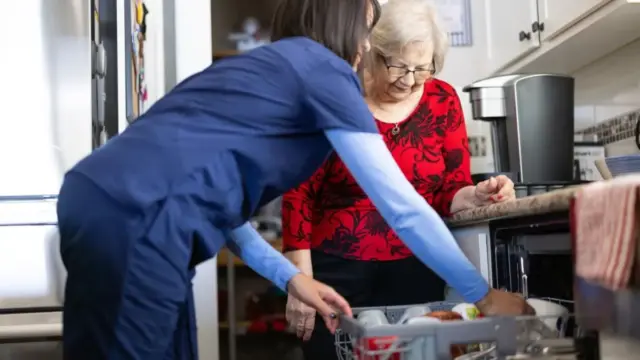

Meanwhile, a husband of 38 years has never once loaded the dishwasher correctly, leading his spouse to abandon hope and do it herself every single time. When grandchildren need treats for classroom birthdays, a daughter calls with a familiar script: "Mom, your cupcakes are always so much better than mine—would you mind?"
In modern sociological and relationship discourse, there is a specific term for this recurring dynamic: weaponized incompetence. While individual moments may appear minor or even complimentary on the surface, their cumulative weight over decades can leave women deeply exhausted and quietly resentful.
Weaponized incompetence describes a scenario where an individual performs a task poorly, or outright claims they are incapable of doing it, so that someone else will step in and take over the responsibility. This is distinct from traditional incompetence. The person in question is frequently more than capable of executing the task successfully. Instead, a manufactured inability becomes a strategic tool to offload labor. Whether the perpetrator is fully conscious of their manipulation or operating on autopilot, the result is the same: the burden shifts permanently to someone else.
What Weaponized Incompetence Looks Like
The phrase has historically been applied to the division of household labor between romantic partners, but researchers and family counselors note that its reach extends far beyond domestic chores. For women in midlife and beyond, weaponized incompetence often permeates the entire extended family network.
Consider a husband who consistently shrinks the laundry in the wash, following up the ruined clothes with the claim that there is something fundamentally wrong with the dryer. He quickly learns that a poorly executed chore can buy him a lifetime exemption from doing the wash. Similarly, an adult child who claims they cannot figure out how to select the right health insurance option knows with absolute certainty that their mother will step in and sort the paperwork out.
Parents, too, can fall into the trap. A parent who declares that managing dinner, homework, cleanup, and bedtime simultaneously is simply too much—stating that they are drowning—is often indirectly communicating that a portion of those daily responsibilities should be absorbed by someone else. In many multigenerational families, that designated relief valve is Grandma.
While the excuses span a wide spectrum, behavioral experts note they generally manifest through distinct channels. There is the deliberate botch, where a task is executed so poorly that nobody dares ask the person to do it again. There is the helpless shrug, accompanied by phrases like "I wouldn’t know where to start" or "You’re just so much better at it." There is the constant questioning, where every single step requires a text message or a phone call, rendering the management of the person far more labor-intensive than simply doing the job oneself. Finally, there is the standards trap: the task gets completed, but not according to the exacting standards of the primary organizer, who steps in to ensure it is done right. In this last scenario, the victim of weaponized incompetence is inadvertently feeding the cycle themselves.
Why Mature Women Are Especially Vulnerable
Societal conditioning plays a profound role in establishing these dynamics. Traditionally, women have received specific cultural messages as they navigate their formative years: that being competent equates to being useful, and being useful equates to being loved.
Countless women spend decades running households, raising children, and holding extended families together, often while simultaneously managing demanding careers. This environment creates fertile ground for weaponized incompetence to take root. A woman who has historically been the family anchor—the person who knows where birth certificates are stored, remembers every in-law’s anniversary, and can diagnose a sick infant with a single glance—becomes an easy figure to lean upon. In short order, leaning evolves into total dependency.
The transition into retirement and the empty nest phase can exacerbate these pressures significantly. Society frequently assumes that a retired woman possesses a limitless reservoir of free time. Consequently, her availability transforms into an unspoken communal resource. Adult children begin treating her as an on-demand provider of free childcare, household management, and personal assistance rolled into one. Meanwhile, her own personal plans, long-held hobbies, and fundamental need for rest are pushed to the margins of her life.
The Toll It Takes
The physical and emotional costs of chronic over-tasking are well-documented. Many women grapple with a slow-building resentment that is frequently compounded by guilt. Because they genuinely love their families and take pride in being needed, their internal frustration is often swallowed rather than expressed. Yet, swallowed resentment rarely dissipates; instead, it manifests as irritability, chronic sleeplessness, and a pervasive, invisible fatigue.
There is a tangible physical cost as well. The chronic stress of carrying an unequal mental and physical load is linked to elevated rates of anxiety, depression, and somatic health issues. These challenges arrive at a time in life when women in their second act are frequently navigating their own changing health needs.
Furthermore, many mature women belong to the sandwich generation, caught directly between aging parents who require support and adult children who continue to lean on them for daily management. Rather than addressing the imbalance, many choose to ignore the warning signs to keep the peace.
Perhaps the most insidious side effect is the erosion of a woman’s sense of self. When an entire family insists that she is the sole individual capable of executing tasks correctly, she eventually internalizes that belief. Her personal identity becomes inextricably linked to her utility to others. This dynamic prevents her from viewing herself as an autonomous individual with independent desires, and it can trigger severe psychological distress when age or circumstances dictate that she can no longer perform these duties at the same pace.
Distinguishing Incompetence From Needing a Hand
Relationship experts emphasize that not every request for assistance constitutes weaponized incompetence. Genuine inexperience exists. A husband who never learned to cook because his mother, and subsequently his wife, always handled culinary duties is not necessarily engaging in malicious manipulation; he may simply lack foundational skills.
To differentiate between genuine inexperience and strategic weaponized incompetence, experts suggest evaluating several behavioral indicators. True inexperience diminishes over time through practice and repetition, whereas weaponized incompetence remains conveniently stagnant. Individuals who are simply inexperienced are often competent in other complex areas of life; a corporate manager who claims total inability to operate a household appliance presents a contradiction worth examining. Additionally, the response to instruction reveals underlying motivations. Someone genuinely willing to learn will ask clarifying questions and retain the knowledge, while someone practicing weaponized incompetence will often grow defensive and hand the responsibility back. Finally, patterns matter. A single request for help with a specific project is understandable, but a chronic recurrence across multiple domains points toward an established behavioral pattern.
Breaking the Cycle
Reversing these entrenched dynamics requires persistence, patience, and a willingness to navigate discomfort in stages. Family counselors recommend addressing the pattern through measured communication, starting with calm observations rather than accusatory language.
Another critical component involves resisting the urge to rescue. When a task is executed poorly—or ignored entirely—the impulse for the primary organizer to step in and fix the outcome is often overwhelming. However, allowing a shirt to remain wrinkled or dishes to be loaded imperfectly creates the necessary natural consequences that prompt behavioral change. Handing a responsibility back with a calm assurance that the other person is capable of figuring it out signals a permanent shift in family rules.
Establishing clear limits on time and personal availability is equally vital. Many women enter retirement with the expectation of reclaiming their time, only to find it quietly consumed by the unmanaged expectations of others. Confronting weaponized incompetence is rarely about casting family members in a villainous light; in most cases, they have simply grown accustomed to comfort, which is notoriously difficult to surrender. Yet, for individuals who have spent a lifetime ensuring the comfort of everyone around them, reclaiming agency offers an opportunity to redefine their next chapter.