
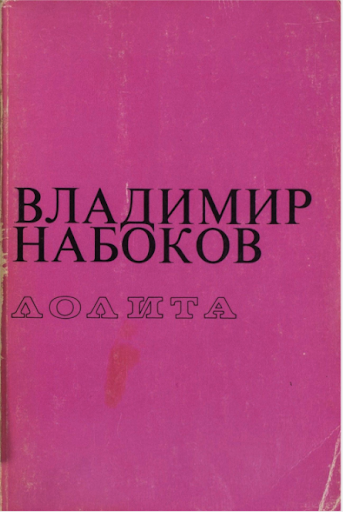
The cashier unfolded a plastic bag, clicked unhurriedly on a computer terminal, and stared at the screen. A credit card was extended, eager to bypass the bureaucratic friction and step outside to properly examine the carriage-and-horseman logo, the tiny photograph of a pince-nez-wearing Nabokov, and the delicate, pre-Revolutionary orthography printed within. But the cashier simply frowned, clacked his teeth, and delivered a verdict delivered with the inevitability of a law of nature: "This cannot be sold."
"I found it in the dollar bin," the prospective buyer protested, pointing downward as if the physical existence of the discount container might legally bind the store to the transaction.
The cashier merely nodded, already sliding the coveted volume out of sight beneath the counter. A final, futile argument—"I was about to buy it"—met with a flat explanation: "It is collector edition. Rare publishing."

The frustration was not merely about losing a bargain; it was rooted in the profound realization of what those books represented. They were artifacts of a publishing house that printed literature that technically wasn’t meant to exist, capturing a specific, romanticized longing built directly into its very name.
The story of Ardis Press begins decades earlier in Ann Arbor, Michigan, in 1969, unfolding like a classic literary romance. A Nabokov scholar and a Bulgakov scholar crossed paths in academia. By the time they founded Ardis two years later, Carl Proffer was thirty-two, a full professor who had already authored three scholarly books in a single year—two on Gogol and one on Nabokov. Ellendea Proffer was twenty-seven, an assistant professor of Russian in her own right.
Both had come to Russian studies almost sideways and by complete accident. Carl was a good-natured, tall, and unimposing figure, deeply beloved within their small academic department. Ellendea was poised and assured, commanding a fluent, unaccented Russian that ranked among the finest spoken by any foreigner in the field.
A year prior to launching Ardis, the couple spent six months traveling across the Soviet Union. During their stay, they met with underground poets, novelists, playwrights, and the widows of legendary, deceased writers. They encountered creative minds who earned their livings by day as manual laborers, night watchmen, and boiler-room stokers, only to spend their nights stitching together poetry and plays typed onto fragile, crumbling paper. These thin notebooks were bound together with the simple string typically used to tie up packages of kielbasa at local grocery stores. Returning to Michigan, the Proffers carried dozens of these smuggled manuscripts back with them.
"By the end of the visit Carl turned to me and said that we should start a little magazine," Ellendea recalled in her memoir.
The envisioned publication aimed to bridge a massive cultural gap, releasing both older Soviet writers who had vanished under heavy state censorship and contemporary voices who could never secure official publication channels within their home country. In 1971, Ardis achieved its milestone debut by publishing a pocket-sized facsimile of Osip Mandelstam’s Stone, meticulously reproduced from the original 1913 edition.
The press found its iconic visual identity by chance. While leafing through a typographical pamphlet created by Soviet graphic artist Farsovsky, Ellendea spotted a delicate drawing of an old-fashioned horse-drawn carriage. The image immediately reminded her of Alexander Pushkin’s famous description of translators as "the post horses of Enlightenment."
"This is our logo," she told Carl.
The publishing house took its name, Ardis, as a dual reference: it honored Nabokov’s novel Ada or Ardor, where the word designates the fictional family’s paradisial country estate, while also drawing on the ancient Greek root meaning the sharp tip of an arrow.
Operating directly out of their home bedroom, the couple printed initial runs of just a few hundred copies. The image of two American professors launching a radical Russian publishing venture straight from their kitchen table in the heart of the Cold War speaks volumes about their intellectual courage. From its inception, Ardis insisted on remaining strictly apolitical, dedicating itself purely to the preservation of literature. Yet, despite their careful neutrality, geopolitics inevitably caught up with them. The early years saw the release of small poetry volumes by Mandelstam and unperformed plays by Bulgakov.
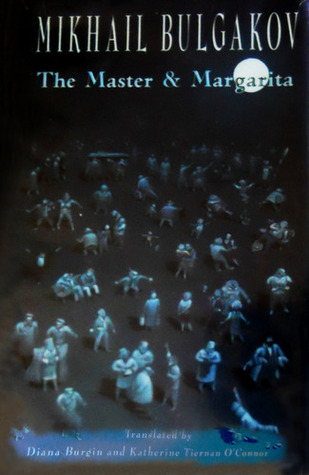
Eventually, the catalog expanded to include English translations—frequently executed by the Proffers themselves—including the first truly unabridged English translation of Bulgakov’s The Master and Margarita, breaking free from the heavily censored texts circulating in the Soviet Union. Later still came the celebrated facsimile editions of Nabokov’s novels, distinctively color-coded with bold, simple typography. These paperbacks quickly became coveted collector’s items on both sides of the Atlantic.
The pipeline of underground literature broadened further when Ardis began publishing original works. This included the early poetry collections and critical essays of Joseph Brodsky, as well as Sasha Sokolov’s debut novel, A School for Fools, which famously earned praise from a famously curmudgeon-like Vladimir Nabokov as "an enchanting, tragic, touching book."
The Proffers first encountered Joseph Brodsky during one of their annual excursions to the Soviet Union, visiting his notorious living quarters—a cramped room-and-a-half in a Leningrad communal apartment shared with his parents. Brodsky struck visitors as brilliantly complex: simultaneously charming and pompous, gracious and curt, deeply generous yet utterly unbearable. Ellendea later recalled that during their very first evening together, Brodsky casually held a phone conversation in Russian while squinting at his American guests to gauge how much of his vernacular slang they understood.
In 1972, only months after the founding of Ardis, the Proffers were back in Brodsky’s room when the Soviet government abruptly placed a call to the poet. In a state maneuver timed ahead of President Richard Nixon’s official state visit, authorities stripped Brodsky of his citizenship and forced him into exile. Carl Proffer immediately offered him a position as poet-in-residence at the University of Michigan. That spontaneous gesture ignited one of the most remarkable literary migrations of the twentieth century, carrying Brodsky from Venice, Vienna, and London to the Proffers’ Ann Arbor couch, onward to New York, and ultimately to the formal grandeur of Stockholm to accept the Nobel Prize in Literature.
Meanwhile, the Proffers maintained their annual pilgrimage to the Soviet Union, returning home each time with suitcases packed tight with forbidden manuscripts. Ellendea maintained a strict, informal production rule during those frantic years: "no blood on the final copy." Because their Varityper machine supported only five Cyrillic typefaces, Ellendea was frequently forced to cut out individual letters from Farsovsky’s graphic design pamphlet by hand, gluing them down piece by piece. Fixing typographical errors required a razor blade to physically scrape away paper letters, a meticulous process that routinely resulted in cut fingers and spilled blood. With no budget to hire outside designers, Ellendea personally engineered every iconic Ardis book cover.
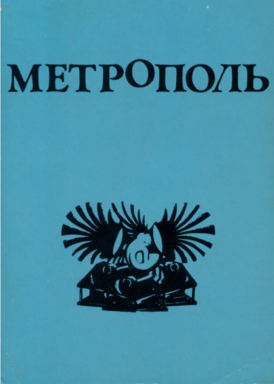
This suitcase-to-printer operation ran for eight years until 1979, when Ardis published Metropol, a smuggled, uncensored anthology featuring various banned Soviet writers. The Kremlin responded swiftly, permanently banning the Proffers from entering the country. Carl Proffer never saw Moscow again; he passed away from colon cancer just three years later at the age of forty-six.
While all literary enterprises eventually reach a chapter’s end, the timeline accelerated rapidly for independent publishing. Ellendea continued running Ardis for another eighteen years—initially on her own, and later alongside her second husband, Ross Teasley. However, the legendary editions most actively pursued by modern bibliophiles originated during the thirteen-year window when the Proffers operated the press together.
Today, the legacy of Ardis lives on primarily through its remarkable aftermath and the dedicated community of collectors scouring the globe for surviving copies. These paperbacks pop up unexpectedly behind glass display cases in independent shops across Wilmington, Delaware; Macon, Georgia; and Northfield, Vermont.
Although commercial publishers like Overlook Press acquired rights to select Ardis titles in English in 2002, and Ellendea parted ways with her personal library of Ardis editions back in the 1990s, the corporate afterlife of the press is secondary to its cult following. Online marketplaces frequently feature listings for rare Ardis paperbacks—Nabokov titles commanding high three-figure sums, occasional Brodsky volumes fetching low-to-mid four figures, and stray copies of lesser-known poets who proved too obscure even for dedicated specialists.
For readers unable to drop a month’s salary on a vintage paperback, the dream survives entirely in the realm of chance encounters. Somewhere in a dusty used bookstore in Fairview, Ohio, or Lewisburg, West Virginia, the search continues for a copy of Nabokov’s Mashenka that a customer is finally permitted to buy.