Today in Literary History
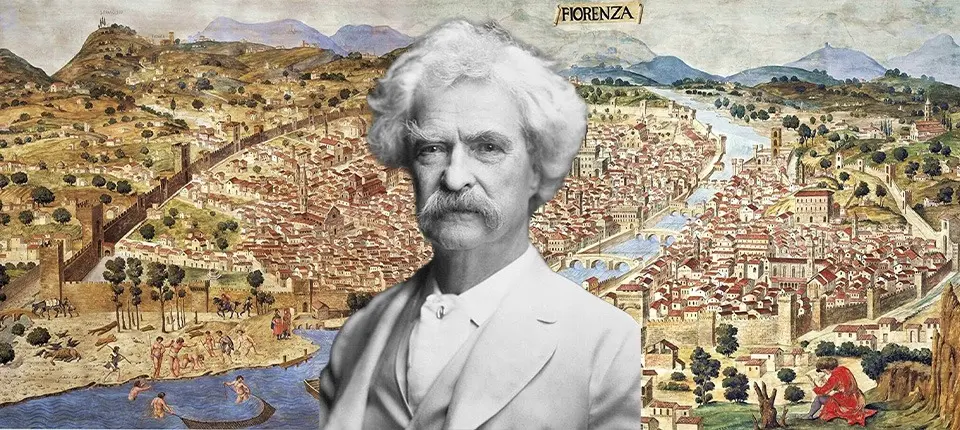
In historical milestones, today marks the anniversary of Mark Twain’s relocation to Florence, Italy, in 1903. The iconic American author’s move to the historic Italian city represents one of many chapters in a life defined by travel, biting social critique, and enduring literary creation. Twain’s time abroad often provided him with the critical distance necessary to evaluate American society with his trademark wit and philosophical depth.
Botany, Biography, and the Literary Universe
Moving from the hills of Tuscany to the misty moors of England, recent literary analysis invites readers to reconsider famous literary dynasties through an unexpected lens. When thinking of the Brontë sisters—whose darkly romantic novels captured the imagination of generations—readers are encouraged to examine their work through the lens of botany. This botanical perspective reveals how deeply embedded the natural world was in their creative consciousness, shaping the atmosphere and symbolism of their timeless stories.
Biographical and historical roots continue to inspire contemporary writers in profound ways. In recent reflections, author Joseph Luzzi discussed how he found vital creative inspiration through his mother’s storytelling, highlighting the enduring power of oral histories and familial legacy. Similarly, writers are exploring the complexities of regional and historical identity, such as the challenges and artistic rewards of writing about Syria’s Uyghur community from the perspective of a Chinese-American author, and how a deep fascination with Salem and The House of the Seven Gables helped spark a debut novelist’s creative vision.
Examining the Past: From the Confederacy to the Hindenburg
Historical revisionism and deep-dives into the archives form a major pillar of this week’s digital literary landscape. Critics and historians are tackling heavy political and cultural myths, offering a sharp reminder that the Confederacy was never a legitimate nation, dismantling the lingering narratives of the "Lost Cause."
Other historical explorations transport readers directly into moments of dramatic transition and tragedy. Readers can step aboard the legendary airship Hindenburg to examine what daily life was like on board before disaster struck the famous vessel. Medical and cultural history also intersect in fascinating ways, such as the examination of the real-life Edinburgh doctor who served as the inspiration for Arthur Conan Doyle’s legendary detective, Sherlock Holmes. Meanwhile, reflections on John Berryman’s university lectures shed new light on how the celebrated poet interpreted the early life and work of William Shakespeare, alongside himself.
Culture, Society, and the Modern Academy
Cultural critique this week spans a wide array of societal anxieties, artistic movements, and institutional shifts. Observers are asking why so many contemporary novelists are opting for nameless narrators, a stylistic choice that alters the intimacy and authority of modern fiction. In academic circles, the growing role of memoir is being celebrated as a vital new pedagogical tool for teaching complex discussions around race and gender.
At the same time, commentators are examining how emerging technologies interact with longstanding societal divisions. Analysts argue that as artificial intelligence transforms the fundamental structure of the modern classroom, it risks exacerbating existing inequalities, particularly within already segregated educational environments.
Discussions of culture also venture into surprising physical and sociological territories. Cultural essayists are exploring why modern society harbors such persistent unease regarding pubic hair and what these shifting attitudes reveal about broader views on sexuality. Other pieces examine the complex legacy of the Puritans and the paradoxical duality of American power, while agricultural and environmental critics suggest that the humble broiler chicken serves as a true biological symbol of our current geological epoch, the Anthropocene.
Global Voices, Poetry, and Arts Criticism
International perspectives and translated or globally focused works offer urgent engagement with contemporary crises. Writers and activists are documenting resilience amidst unimaginable devastation, highlighting how two sisters built a movie theater for the children of Gaza, and exploring how contemporary fiction allows Palestinian lives and stories to endure far beyond fleeting news headlines.
Artistic expression remains a powerful vehicle for processing historical and political trauma. Contributors are examining how artists channel the deep-seated violence of white supremacy into transformative creative works, while others reflect on the rise of the Communist Party of China as a dominant political force.
For music and literary enthusiasts, the week offers nostalgic journeys into mid-century nightlife, recalling what it was like to witness the incomparable Nina Simone perform live at the Village Gate in 1961. Discussions of craft also touch upon the practical realities of a writer’s life—from navigating the labyrinth of the American health insurance system to finding the perfect writing soundtrack to maintain creative focus.
As always, readers can explore a rich selection of new poetry, including Lindsay Turner’s evocative poem "Elevation" and Allen Guy Wilcox’s "At the Dinner Table at Night." With numerous reviews guiding readers through the latest literary releases, alongside current independent press fiction and nonfiction bestsellers, the literary internet continues to offer an expansive space for reflection, debate, and discovery.