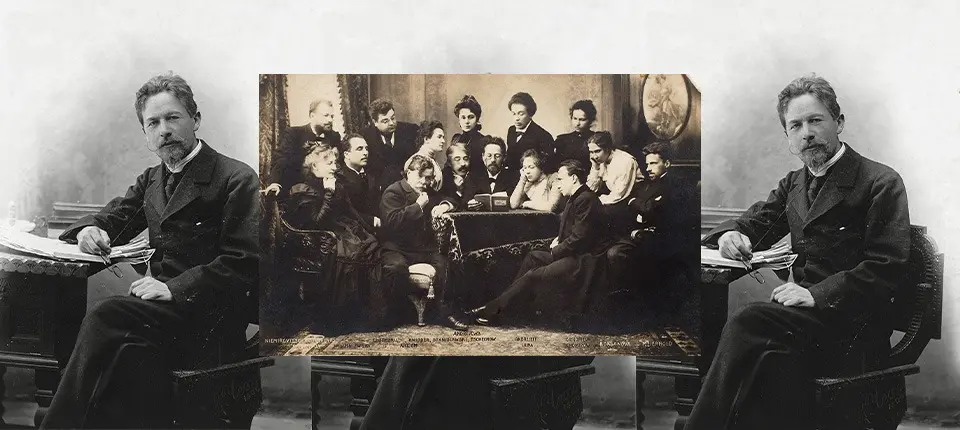
To anchor this week’s journey through the literary internet, it is worth looking back to a fateful evening in theatrical history. Today marks the anniversary of the 1896 premiere of Anton Chekhov’s The Seagull at the Alexandrinsky Theatre in St. Petersburg. Far from the celebrated masterpiece it is recognized as today, the production was an unmitigated disaster that left the audience cold and the playwright utterly crestfallen. The staging was plagued by miscasting and inadequate rehearsal, and the hostile reception stung Chekhov so deeply that he famously declared, "Not if I live to be seven hundred will I write another play." Fortunately for world literature, he broke that promise, leaving behind a legacy that continues to define modern dramatic art—a reminder that even the most enduring works can begin in profound failure.
That tension between initial rejection and eventual triumph echoes across many of the conversations happening in contemporary letters this week. On Lit Hub, Adam Johnson sat down with fellow acclaimed author Amitav Ghosh to discuss The Wayfinder, unpacking the myriad ways a single story can be told, fractured, and reconstructed. The dialogue touches on the broader responsibilities of the novelist in an era marked by rapid social and environmental upheaval.
The weight of global history and current crises remains a central preoccupation for essayists and critics navigating the complexities of our political moment. In recent commentary, writers have examined how the devastating conflict and genocide in Gaza have fundamentally reshaped the geopolitical and cultural contours of the Middle East, leaving scars on communities and altering international discourse for generations to come. This spirit of rigorous examination extends outward into historical injustices, such as Josefine Kals’s poignant remembrance of the late writer and professor Stephen Dixon, as well as an exploration of medieval Europe’s systemic, often overlooked persecution and slaughter of nonconformist women during historical witch hunts.
Closer to home, the forces shaping modern American life—from housing affordability to civil rights legacies—are receiving urgent literary attention. Amid widespread public frustration over soaring housing costs, analysts and economic commentators are pointing an accusing finger not merely at traditional supply shortages, but at greed-driven corporate algorithms designed to artificially inflate rent prices. Meanwhile, in the realm of biography and social justice, civil rights leader Al Sharpton has been reflecting on the enduring influence of his mentor, Jesse Jackson, while writers like Anand Giridharadas examine how figures like Sharpton work to shape and sustain enduring narratives of justice in America. The rich, complicated tapestry of American history is further illuminated by accounts like Biddy Mason’s—celebrating the Black matriarch who played a foundational role in building Los Angeles—and through photographic retrospectives like those of Jean-Pierre and Eliane Laffont, who captured the radical countercultural shifts of 1960s and 70s America.
The literary conversation naturally loops back to the craft of writing itself, exploring how books are conceived, marketed, and threatened by technological shifts. Bonnie Garmus, author of Peck & Peck, recently spoke with Jane Ciabattari about the delicate architecture of writing a coming-of-age novel centered around poets and poetry. Similarly, Will Maclean offered a candid look at the messy, unglamorous reality of "fucking up a notebook" to draft a novel, while writers like E. L. Shen shared how the act of writing helped them come to terms with the assassination of an ancestor, transforming personal grief into historical witness. For those looking at publishing industry trends, an acute paradox has emerged: major publishing houses are actively suing big tech companies over copyright infringements related to machine learning, while simultaneously embracing artificial intelligence tools within their own corporate pipelines.
The week’s digital pages also venture into unexpected thematic territories. Bonnie Jo Campbell curated a chilling selection of seven literary ghosts that just might be haunting unsuspecting readers, while other contributors explored the unlikely solace found in forming a relationship with a rescue raccoon, the unexpected history and hidden ecological dangers of preserving boglands and peatlands, and the curious cultural aversion to painting domestic walls white. Oksana Lutsyshyna offered a vital reading list for those seeking to understand the ongoing work of witnessing through new Ukrainian literature by Artur Dron, Andriy Lyubka, and Lena Lyagushonkova, just as Jonathan Cheng recommended five essential books for decoding North Korea’s pervasive cult of personality.
Whether pondering the deep cultural resonance of the Venetian ghetto through five essential texts, exploring the mechanics of writing great read-aloud books with The Wild Robot author Peter Brown, or diving into Eric Amling’s new poem "Cruise Control," the literary internet this week proves that storytelling remains our most vital tool for making sense of a turbulent world. As readers continue to parse through the Independent Press Top 40 Bestsellers in fiction and nonfiction, and critics highlight the best-reviewed books of the week, the underlying message is clear: whether writing from the deck of a superyacht in Monaco or trying to move past the endless, flattening stereotypes of rural American life, the written word continues to challenge, comfort, and provoke.