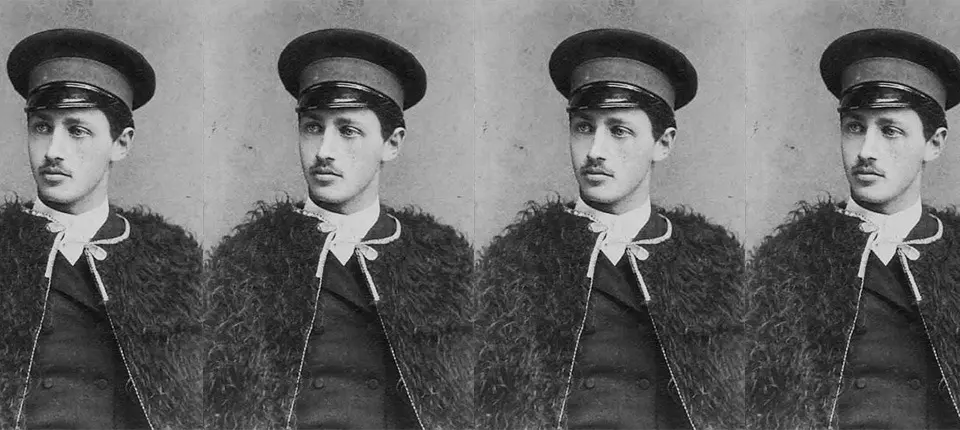
The conversation begins with history and milestones. Today marks the birth anniversary of Ivan Bunin, the celebrated Russian writer and poet who in 1933 became the first Russian to win the Nobel Prize in Literature. Bunin’s legacy of exile, precision, and profound melancholy serves as a fitting backdrop for a week marked by deep reflections on how literature survives conflict, technological shifts, and the erosion of language itself.
Among the most pressing discussions dominating the literary internet is the existential shadow cast by emerging technologies. In an incisive essay featured this week, writers and critics grapple with the encroaching reality of automated text generation, asserting that in an age dominated by artificial intelligence, the writer’s soul remains the singular, unreplicable element of true art. While algorithms can mimic structure and syntax, they cannot capture the lived experience of grief, joy, and mortal vulnerability that defines human storytelling.
This inquiry into identity and expression extends across cultural and linguistic landscapes. Observers have noted the shifting, dynamic language surrounding Latinx identity, examining how contemporary authors negotiate heritage, community, and representation on the page. Similarly, explorations of trans poetics delve into the inherent failures and triumphs of language when trying to capture gender non-conformity and the process of "becoming," illustrating how writers continually push the boundaries of grammar and vocabulary to articulate truths that standard language often struggles to hold.
Historical legacies and forgotten literary figures have also taken center stage. In a piece examining feminist activism and literary preservation, critics explore how pioneer Robin Morgan helped shape and protect the enduring legacy of Sylvia Plath. Plath’s work itself remains a subject of intense critical focus, with scholars revisiting the complex cycles of life, death, and rebirth that pulse beneath the surface of her poetry and prose. Meanwhile, the intellectual currents of early twentieth-century New York are brought back to light as critics revisit Ettie Stettheimer’s century-old novel Love Days, shedding light on an unsung work from a brilliant, unconventional American family.
Craft, genre, and the mechanics of writing continue to captivate working authors. Barbara Kingsolver recently pulled back the curtain on her physical routine, explaining why she prefers to write standing up—a small detail that underscores the physical toll and dedication required to produce enduring fiction. In another major interview, Lydia Millet sits down with Jane Ciabattari to discuss the intricacies of constructing a double novel centered on grief and loss, while Kristen Millares Young explores the labyrinthine themes of motherhood and marriage in her quest to examine modern womanhood.
Other writers reflect on how bizarre or traumatic life events bleed into their art. Nafissa Thompson-Spires shares how surviving a lightning strike fundamentally altered her sense of identity and subsequently influenced her fiction, while Adam Wilson offers candid notes on craft, reflecting on plot versus concept and sharing his steadfast refusal to ever write a protagonist who is a New York Yankees fan. Patricia Lockwood contributes to the poetic landscape with a characteristically striking and unconventional poem, "Sensual Songs for Eight-Year-Olds," pushing the boundaries of contemporary verse.
The global political sphere and its heavy toll on culture loom large over this week’s literary commentary. Ukrainian author and scholar Oleksandr Mykhed writes movingly about the destruction of Ukrainian books and libraries by Russian bombs, detailing what it means to write and try to preserve culture in times of total war. Shifting to the Americas, essays analyze how contemporary political convulsions in Brazil illuminate the broader global resurgence of the far-right, while other commentators examine the machinery of American deportation policy through the lens of an ongoing, undocumented war. Historical echoes resonate further with critical pieces drawing chilling parallels between Adolf Hitler’s 1933 electoral victory and the shifting political anxieties surrounding contemporary democratic institutions.
Non-fiction, biography, and historical deep dives offer readers windows into extraordinary lives. Historians and critics explore the decades-long, intellectually fierce friendship between Hannah Arendt and Mary McCarthy, mapping out a legendary correspondence defined by mutual respect and rigorous debate. In the realm of graphic narratives, critics trace a brief history of iconic women spies in comics, while sports and culture intersect in a look at the confident, complex performance delivered by Whitney Houston at Super Bowl XXV.
Archival discoveries and institutional histories highlight the unsung heroes who brought books to the masses. One remarkable historical feature details how a dedicated army librarian brought the joy and solace of literature to the front lines during World War II, proving that stories remain essential even in active combat zones. Meanwhile, across the Atlantic, the Frankfurt Book Fair’s prestigious Heinrich Maria Ledig-Rowohlt Translation Prize dinner brought together international translators and publishers to celebrate the invisible art of bringing books across linguistic borders.
Publishing trends, industry statistics, and reviews round out the week’s literary offerings. The Independent Press has released its Top 40 Bestsellers list for both fiction and nonfiction, highlighting the vibrant health and diverse offerings of independent publishing houses. For readers seeking guidance on their next read, critics have curated a definitive list of five essential book reviews to read this week, complemented by insights into the complex relationship between readers, writers, and editors—specifically examining how the editor’s hand shapes the vital bridge between a manuscript and its audience.
As these diverse threads demonstrate, the literary internet remains a bustling, rigorous marketplace of ideas where the ancient craft of storytelling continually adapts to meet the crises and curiosities of the modern world.