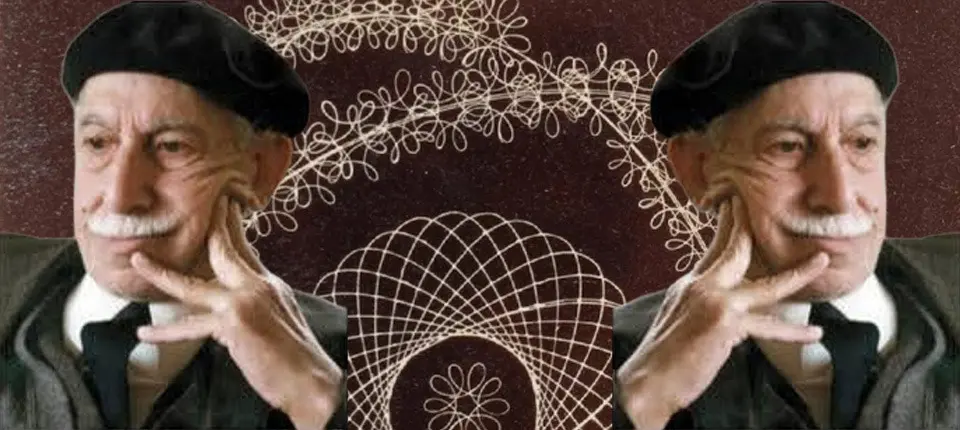
In the daily chronicle of literary history, today marks a significant anniversary that invites readers to revisit the monumental contributions of one of the Arab world’s most influential writers and thinkers. Specifically, today observes the birth anniversary of Tawfiq al-Hakim, who was born in 1898. As a pioneer of Arabic drama and the novel, al-Hakim fundamentally transformed the literary arts of his time, bridging classical traditions with modern theatrical techniques and philosophical inquiry. His enduring influence on literature, culture, and intellectual thought makes this date a notable moment for reflection within the global literary community.
To fully appreciate the significance of Tawfiq al-Hakim’s birth on this day in 1898, one must examine the broader historical and cultural context in which he emerged as a dominant literary voice. Born in Alexandria, Egypt, during a period of profound social, political, and cultural transition, al-Hakim grew up amid shifting paradigms under British occupation and a rising tide of national and intellectual awakening. His early life was shaped by a unique blend of traditional Egyptian culture and deep exposure to European, particularly French, literature and philosophy during his education in Cairo and later in Paris. This dual heritage would become the cornerstone of his artistic output, allowing him to navigate complex cultural dialogues with remarkable dexterity and intellectual depth.
Al-Hakim is widely celebrated as the founding father of the Egyptian and modern Arabic theater. Before his emergence, theatrical writing in the region was largely viewed as popular entertainment, often relying on translated European farces or light melodramas that lacked deep cultural resonance or high literary ambition. Al-Hakim revolutionized this landscape by introducing the concept of the "conscious theater" or theater of the mind. He recognized that drama could serve as a vehicle for profound philosophical debate, social critique, and psychological exploration. Works such as The People of the Cave (Ahl al-Kahf), published in 1933, demonstrated his ability to adapt classical motifs—in this case, the Islamic and Christian legend of the Seven Sleepers of Ephesus—into sophisticated existential dramas that questioned humanity’s relationship with time, destiny, and eternity.
Beyond the stage, al-Hakim made indelible contributions to the development of the modern Arabic novel. His semi-autobiographical masterpiece, The Return of the Spirit (Awdat al-Ruh), published in 1927, is often cited as a watershed moment in modern Egyptian fiction. The novel captured the collective national consciousness and the burgeoning spirit of independence leading up to the Egyptian Revolution of 1919, utilizing ordinary characters to symbolize the dormant soul of the nation awakening to its historical destiny. Through such works, al-Hakim demonstrated that the novel could be both deeply local in its cultural specificity and universally relevant in its emotional and philosophical scope.
As digital literary platforms continue to explore the archives of global literary history, remembering figures like Tawfiq al-Hakim serves as a vital reminder of the rich, diverse tapestry that comprises the international literary internet. Contemporary essays, academic retrospectives, and digital journals frequently revisit his plays and essays to analyze how his forward-thinking ideas anticipated many of the dilemmas facing modern societies. His exploration of the tension between East and West, tradition and modernity, and the individual and the state remains startlingly relevant in today’s interconnected world, where writers and intellectuals grapple with similar questions of identity and cultural exchange.
The ongoing digital discourse surrounding historical literary figures also highlights the ways in which translation and online accessibility are bringing classic works to new generations of readers. While al-Hakim wrote primarily in Arabic—and notably experimented with a unique literary style that bridged classical Arabic and the Egyptian vernacular—translations of his major plays and novels have ensured that his philosophical inquiries reach a global audience. Online literary magazines, digital archives, and cultural blogs frequently feature discussions on the challenges and triumphs of translating his nuanced dialogue and complex allegories into English and other languages, sparking renewed interest in his extensive bibliography.
In addition to his dramatic and narrative works, al-Hakim’s vast collection of essays, memoirs, and journalistic writings provides a fascinating window into the intellectual climate of the twentieth century. He was a prolific commentator on the arts, politics, and society, often using his platform to advocate for the independence and dignity of the artist. His reflections on the creative process and the role of the intellectual in times of crisis continue to inspire contemporary writers who navigate the complexities of cultural production in the digital age. By examining his life and career, today’s literary internet connects the rich heritage of the past with the vibrant conversations of the present, ensuring that the foundational architects of modern literature are neither forgotten nor overlooked.
As the literary community marks this historic birth anniversary, the digital sphere offers a myriad of ways for enthusiasts, scholars, and casual readers alike to engage with al-Hakim’s legacy. From digital retrospectives and academic analyses to virtual book clubs exploring translated works of twentieth-century Arabic literature, the ongoing celebration of authors like Tawfiq al-Hakim enriches the global literary conversation. Today serves not only as a remembrance of a singular literary giant born in 1898, but also as an invitation to dive back into the timeless texts that continue to shape our understanding of literature, culture, and the human condition.