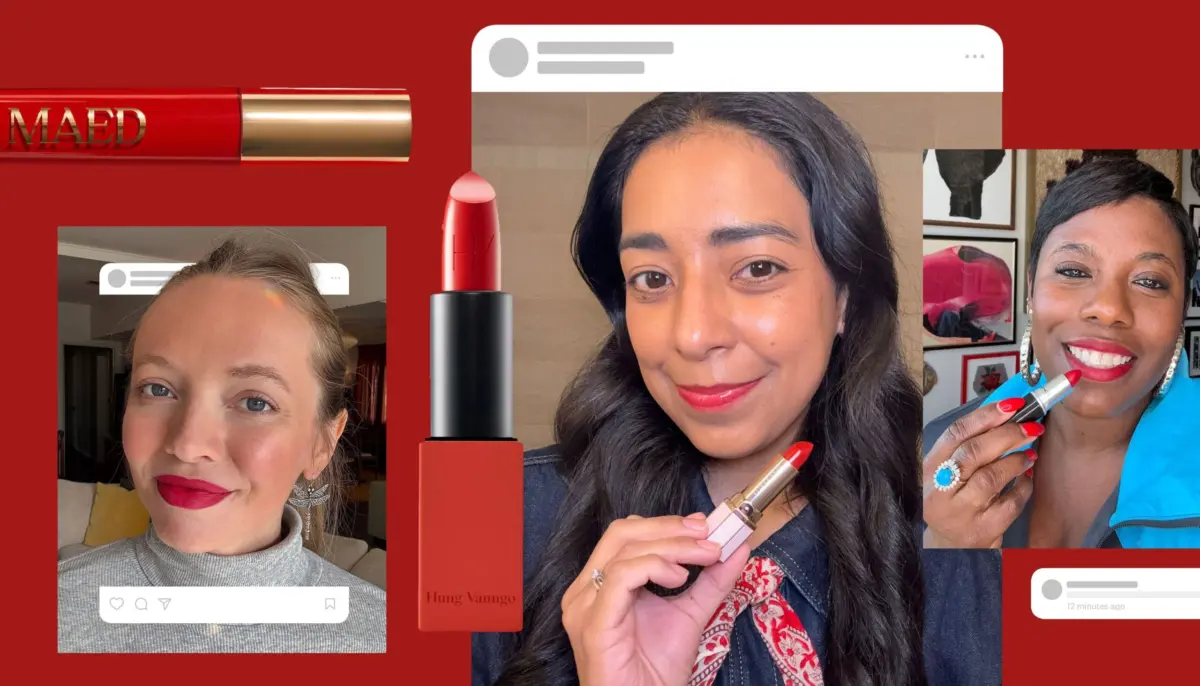
"The right red is the one that makes you feel good," says Los Angeles-based makeup artist Fiona Stiles, whose high-profile clientele includes Margot Robbie, Gabrielle Union, and Lily Collins.
Yet, for those looking to expedite their search for a signature red lip, industry professionals note that considering your skin tone and underlying skin undertone can serve as an invaluable roadmap. By understanding how different pigments interact with natural complexions, beauty enthusiasts can find shades that elevate their features rather than wash them out.
How to Choose the Best Red Lipstick for Your Skin Tone
Finding a red lipstick that harmonizes seamlessly with your complexion comes down to identifying whether your skin leans cool, warm, or deep, and matching those characteristics to the right undertones in a cosmetic product.
New York City-based makeup artist Diane Kendal previously explained to beauty editors that red shades infused with blue undertones offer remarkable benefits for cool-toned, fair-to-light-medium complexions. These particular blue-red hues tend to impart a more radiant appearance to the skin while simultaneously creating the optical illusion of whiter teeth.
For those with warm, medium skin tones, Kendal suggests pivoting toward vibrant orange-red shades. While they might initially appear intense in the tube, these warm pigments make olive skin truly glow by beautifully bringing out its underlying golden tones. Meanwhile, for individuals with deeper skin tones, Kendal recommends exploring red hues characterized by a prominent pink base, noting that these rich variations work in stunning harmony against dark complexions.
How to Make Red Lipstick Lasting and Smudge-Proof
Even the most carefully selected red lipstick can lose its pristine appearance after a few hours of wear, conversation, or dining. Fortunately, professional makeup artists have long relied on a handful of tried-and-true techniques to lock in color and ensure a seamless finish that lasts throughout the day or evening.
Decades-old industry wisdom, shared by New York City-based makeup artist Peter Phillips, continues to form the foundation of modern lip longevity hacks. The process begins with proper lip preparation. Because a lipstick application is only ever as smooth and seamless as the actual skin beneath it, experts advise starting by buffing away dry flakes. This can be achieved gently using a dedicated lip scrub or a damp washcloth. Following exfoliation, beauty enthusiasts should pat on a clear lip balm, allow a few moments for the product to sink deeply into the skin, and then gently blot away any excess moisture with a tissue.
Another professional staple for preventing unwanted smudging—particularly with high-pigment red shades—involves the strategic use of translucent setting powder. Phillips recommends a simple method to keep vibrant color locked in place without excessively drying out the delicate skin of the lips. By closing the mouth into a light smile, makeup wearers can gently dust a minimal amount of face powder over the lips using a fluffy brush. Experts caution against reapplying additional layers of heavy lipstick immediately afterward, as this can quickly lead to a cakey texture.
For those who find traditional matte long-wearing lipsticks excessively drying, satin-finish alternatives offer a viable middle ground. Because the luminous shine in these products is typically created by sophisticated pearl pigments rather than heavy moisturizing oils or drying waxes, they provide better staying power than creamy formulations without sacrificing comfort.
Is There a Red Lipstick That Looks Good on Everyone?
While industry experts universally agree that a red lip is accessible to everyone, they also emphasize that no single tube of lipstick will look identical on two different people. Factors such as individual skin undertones, natural lip color, and product finish heavily influence how a specific red pigment reads on the face.
"MAC Ruby Woo is absolutely a classic; that crisp blue-red can be beautiful across a wide range of skin tones," explains West Palm Beach, Florida-based makeup artist Tim Quinn. Meanwhile, Phoenix, Arizona-based makeup artist Jalia Pettis frequently relies on the expansive range of reds offered by brands like The Lip Bar and Charlotte Tilbury to meet the diverse needs of her clients.
Rather than committing to a single go-to shade for every occasion, professionals often recommend experimenting with a variety of textures and matching liners. Utilizing a lip liner that precisely matches the lipstick helps keep the red boundary crisp while extending overall wear time, whereas choosing a liner closer to one’s natural lip color creates a softer, more diffused edge. For those opting for sheer balms or lip stains, liner can be skipped entirely, as the intended aesthetic relies on a soft, blurred finish.
The versatility of the color red means that individual preferences and overall makeup balance play a crucial role. A bright blue-red might look like magic on one person, while a warmer red or a deeper, muted shade brings another’s entire face to life. Makeup artists note that someone who typically feels intimidated by a bold, opaque matte lip might fall in love with that exact same hue when formulated in a lighter, sheerer texture.
Editorial Testing and Industry Standards
Behind the product recommendations and trend analysis shared by professional artists lies a rigorous journalistic and editorial evaluation process. When major beauty publications test cosmetic products, editors examine every item from multiple angles to ensure maximum reliability and consumer guidance. This includes scrutinizing ingredient lists, evaluating brand efficacy claims, and referencing peer-reviewed scientific or dermatological studies when necessary.
To determine the best products on the market, publications rely on dedicated teams of in-house writers, editors, and industry contributors, alongside insights from leading professionals in dermatology, cosmetic chemistry, and professional makeup artistry. Performance assessments typically focus on core categories such as ingredient efficacy, packaging design, fragrance, texture, and overall product wear.
Ensuring that beauty recommendations resonate with a broad audience also requires diverse perspectives. Editorial teams that span a wide range of ages, skin tones, hair textures, genders, and backgrounds are better equipped to assess how products perform across different demographics. Rigorous testing on varied complexions and hair types remains essential for determining whether a beauty product truly delivers on its promises for every consumer.