
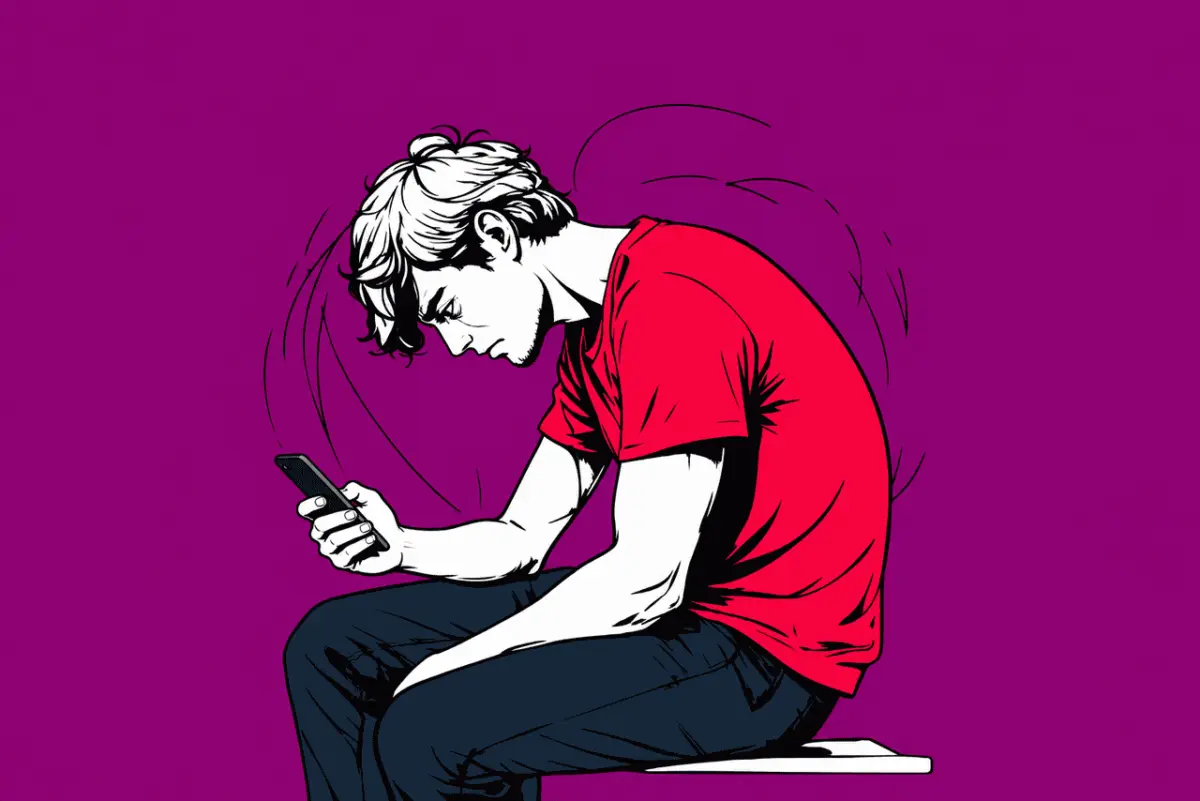
According to Fomichova, the habits many people rely on to decompress after a grueling day often do more harm than good. Instead of facilitating genuine recovery, common coping mechanisms—such as mindless digital scrolling, emotional avoidance, and treating rest as a luxury to be earned—frequently serve as temporary distractions that prolong nervous system strain. By examining her own life journey and the contrasting environments of her youth, Fomichova offers a compassionate blueprint for transitioning from superficial relief to authentic emotional healing.
The Contrast of Childhood: ‘Ice Castles’ Versus Warm Gardens
Fomichova’s perspective on balance and stress recovery was forged in the stark contrast between two distinct environments during her childhood. She describes her parents’ home as an "ice castle"—an orderly, beautiful, yet emotionally cold space where appearance took precedence over personal desire. Under her mother’s strict guidance, Fomichova was expected to focus solely on obligations rather than personal inclinations. Complaining was met with a standard refrain: "You have to endure it. That’s how everyone lives." Many nights ended in exhaustion and suppressed tears, laying the groundwork for a lifetime of emotional masking.
Conversely, her grandmother’s home offered an alternative sanctuary of warmth and creative freedom. Unconcerned with rigid tidiness, her grandmother filled her life with baking, sewing, gardening, and culinary experimentation, pursuing activities purely for the joy they brought. On warm summer nights, her grandmother slept in the garden beneath the stars, inviting Fomichova to join her—a gentle rebellion her mother never permitted.
"My grandmother wasn’t perfect," Fomichova reflects. "But she taught me something my nervous system has never forgotten: balance."
This early exposure to a life guided by inspiration rather than obligation taught Fomichova that home should be a sanctuary, not an extension of the daily race. When the day is stressful, she argues, the home environment must serve as a soft landing pad rather than another arena for performance. Simple acts—such as taking a warm bath, eating comforting food, wrapping oneself in a favorite blanket, or going to bed early—can serve as powerful, accessible pathways to healing.
The Digital Mirage: Why Mindless Scrolling Delays Recovery
One of the most pervasive obstacles to true recovery in the digital age is the urge to scroll through social media after a demanding day. While a few minutes on Instagram or Pinterest may feel harmless, Fomichova notes that this habit quickly morphs into hours of passive consumption, leaving the brain more overwhelmed than before.
"Our brains often look for distraction because slowing down means finally noticing how emotionally exhausted we really are," she observes.
The algorithmic feed, filled with endless recommendations and the opinions of strangers, floods the mind with unsolicited stimulation. Rather than relaxing, the user is subjected to a constant stream of content they never asked to see. To counteract this digital fatigue, Fomichova advocates for simple, low-stimulation rituals that return attention to the inner self. She recommends dedicating ten minutes to absolute stillness—whether by watching a sunset, sitting near an open window, taking a warm bath, or simply drinking a cup of tea.
For Fomichova, even a brief moment spent in a small green space near her apartment helps lower her heart rate and settle her thoughts. By choosing quiet reflection over digital noise, she finds that her mind naturally recovers its creative energy, proving that the nervous system thrives on silence rather than constant input.
Unmasking the ‘I’m Fine’ Culture
A significant portion of modern stress stems from emotional suppression. From a young age, many individuals are conditioned to wear masks of resilience, repeating phrases like "I’m fine" or "It wasn’t that bad" to minimize their struggles. Fomichova acknowledges that she wore this mask throughout her childhood to maintain the illusion that "everything is fine," as expected by her mother.
However, ignoring emotions does not make them disappear. Instead, they accumulate over time, manifesting as anxiety, irritability, exhaustion, or emotional numbness. Fomichova emphasizes that true healing begins with a simple, honest admission: "Today was hard."
Acknowledging difficult emotions is not a sign of weakness, but an act of courage. In her adult life, Fomichova has rejected the pressure to pretend. "If I need to cry, I cry," she says.

Crucially, she extends this emotional freedom to her daughter, teaching her that every feeling has a rightful place. By validating emotions rather than hiding them, individuals can prevent temporary stress from hardening into long-term psychological distress.
Stress as Information, Not Failure
Another common pitfall is the tendency to view stress as a personal failure or a sign of inadequacy. Fomichova urges a shift in perspective: stress should be treated as valuable information rather than a metric of weakness. It serves as a physical and emotional signal that boundaries have been crossed, workloads have become unsustainable, or rest is urgently required.
Recalling her grandmother’s humorous warning that trapped emotions are like "tiny worms" that "nibble at you from within," Fomichova emphasizes the importance of releasing stress daily. Rather than carrying yesterday’s tension into the next morning, she strives to approach each new day as a "clean sheet of paper."
Reclaiming Rest as a Biological Necessity
Closely linked to the misinterpretation of stress is the toxic belief that rest must be earned through continuous output. Many find themselves trapped in a cycle of completing "one more thing"—an email, a chore, an extra hour of work—before permitting themselves to pause. Because the finish line of productivity is constantly moving, rest is indefinitely postponed.
Fomichova warns that treating life as an endless race leads to robotic habits that consume time without producing meaningful fulfillment. "When you’re always running, you rarely notice where you’re actually going," she explains.
True well-being requires balancing creation with recovery, recognizing that rest is a non-negotiable biological necessity rather than a reward for labor. When Fomichova finally let go of these exhausting habits, she noticed a profound shift. Her nervous system settled, and her creativity returned with greater vitality. She transitioned from merely "producing" content for external expectations and algorithms to creating work that felt authentic and alive.
Real Recovery Over Instant Gratification
When confronted with overwhelming exhaustion, the temptation to seek instant comfort is powerful. Activities such as binge-watching, emotional eating, online shopping, or alcohol consumption offer immediate escape, but Fomichova distinguishes these quick fixes from genuine recovery. While not inherently harmful in moderation, they fail to address the underlying fatigue.
Genuine recovery, she argues, is often quiet and undramatic. It is found in:
- Achieving eight hours of uninterrupted sleep
- Engaging in a quiet walk or gentle movement
- Listening to music or reading
- Journaling and self-reflection
- Engaging in meaningful, authentic conversation
These practices do not offer an instant distraction; instead, they foster deep psychological healing by allowing the mind to process pain rather than mask it. For Fomichova, shedding her emotional mask was a multi-year journey that required patience and self-compassion. By choosing authentic recovery over superficial distractions, she has been able to nurture her nervous system and revitalize her creative work.
The Child Within: A Compassionate Approach to Healing
Ultimately, Fomichova asserts that recovering from a stressful day requires a fundamental shift in how we treat ourselves. She suggests a powerful mental exercise: imagining the exhausted adult self as a young child who has had a difficult day.
"Would I criticize her? Would I tell her she should have worked harder? Would I expect her to smile when she felt like crying?" Fomichova asks.
The natural response to a tired child is comfort—a warm drink, a soft blanket, and a safe space to rest. She argues that adults deserve the same gentleness and compassion.
In a world that demands constant speed, availability, and achievement, the most courageous act is often the decision to slow down. By prioritizing the nervous system and granting oneself permission to rest, it becomes possible to face tomorrow not with the residual weight of yesterday, but with the quiet promise of a fresh start. As Fomichova notes, self-worth does not depend on daily productivity, and sometimes, the bravest choice is simply to allow ourselves to recover.