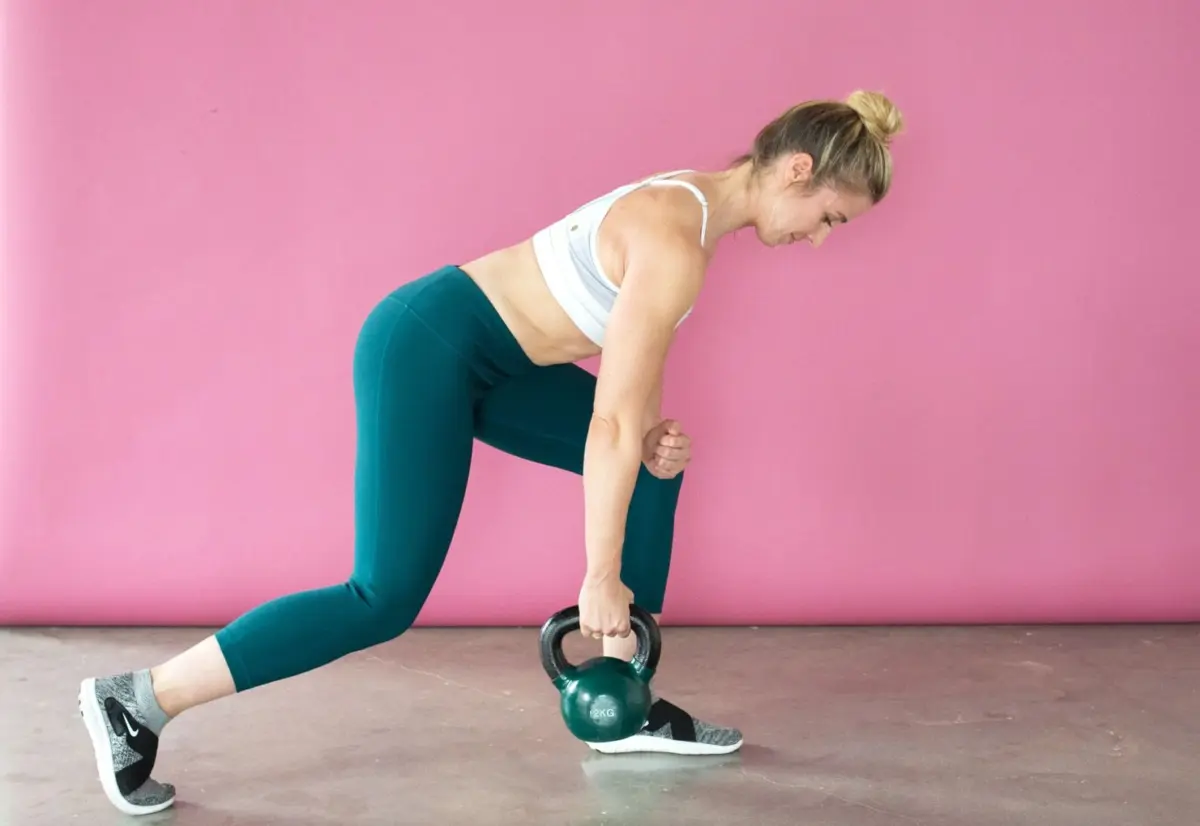
Designed to target the entire body through dynamic, functional movements, this minimalist approach helps build lean muscle mass, elevate the heart rate for cardiovascular benefits, and support bone density over time. The secret lies in the versatility of the equipment. For individuals working out at home or anyone looking to keep their fitness regimen simple and uncluttered, a single kettlebell goes a long way.

While dumbbells and kettlebells are frequently treated as interchangeable items in a home gym setting, fitness professionals emphasize that their unique structural designs serve entirely different purposes. A kettlebell features a thick handle attached to a weighted, ball-shaped base. This distinct configuration allows for sweeping, fluid, and ballistic movements—such as swings and rotational flows—that traditional dumbbells simply cannot replicate. Furthermore, when holding a kettlebell with the weighted ball positioned upward, exercisers encounter a distinct stability challenge. Because the center of gravity naturally pulls to one side or the other, the body’s stabilizing muscles must actively engage to resist that momentum, transforming a standard lift into a comprehensive core-strengthening exercise.
Lacee Lazoff, a prominent trainer at Fhitting Room in New York City, highlights the exceptional utility of this piece of equipment for modern exercisers. Kettlebells are noted for being versatile, highly portable, and remarkably demanding on the entire physical frame during almost every movement pattern. According to Lazoff, simply holding a heavy bell at the chest engages the core, back, arms, and shoulders intensely, turning basic postures into active resistance training.

To demonstrate how to take full advantage of this equipment, Lazoff designed a quick, highly effective workout routine centered around a single bell. The routine takes approximately 20 minutes to complete, though exercisers can extend that duration by incorporating longer rest intervals between circuits. Beginners or those entirely new to kettlebell training are advised to start with a lighter weight and move slowly, prioritizing flawless form above all else.
The philosophy behind the routine is rooted in functional fitness—training the body to perform the physical patterns required in everyday life. By organizing exercises into short intervals and dynamic sequences, the routine keeps the body in constant motion. This continuous flow elevates the heart rate while maintaining a careful balance between upper- and lower-body exertion. Moving fluidly with a kettlebell for a few minutes at a time demands a high degree of cardiovascular endurance alongside muscular strength, allowing exercisers to maximize the benefits of a condensed training session.

A closer look at the routine reveals the deliberate inclusion of bodyweight-only movements interspersed throughout the circuits. These transitional exercises serve a crucial physiological purpose, offering the grip, forearms, core, and shoulders a much-needed reprieve from the relentless demands of holding the weighted bell. Such strategic breaks help prevent premature fatigue, ensuring that exercisers can maintain proper posture and execution throughout the entirety of the session.
Moreover, the workout is structured entirely by time rather than rigid repetition counts. Lazoff explains that this time-based approach encourages individuals to concentrate on the quality of their movement rather than rushing to complete a specific number of reps. By focusing on controlled execution, participants reduce the risk of strain and ensure that every second under tension contributes meaningfully to their fitness goals.

Preparing for the routine requires minimal gear. Exercisers need just one kettlebell that feels medium-to-hard for their current strength level, alongside a lighter backup bell positioned nearby in case the primary weight proves too heavy or causes their form to deteriorate. The session is divided into a bodyweight-only warmup followed by four distinct kettlebell circuits.
The warmup phase is designed to prepare the joints and muscles for dynamic loading, utilizing mobility-focused movements such as the World’s Greatest Stretch, alternating lateral lunges, cat-cow stretches, and hip switches. These introductory exercises prime the hips, spine, and shoulders, ensuring the body is fully limber before introducing external resistance.

Once the warmup is complete, participants transition into the core working blocks, moving through the structured circuits using their chosen kettlebell. To ensure adequate recovery and maintain performance quality across all rounds, exercisers are encouraged to take anywhere from 30 seconds to two minutes of rest between each individual circuit, depending on their fitness level and current rate of perceived exertion.