This critical vulnerability became painfully apparent on February 6, 2023, when a series of catastrophic earthquakes devastated southern Türkiye and northern Syria. Amid the rubble and widespread destruction, the miracles of modern communication were abruptly absent as cellular and internet infrastructure was severely damaged or completely destroyed. Hundreds of miles away in Istanbul, a high school student watched the unfolding tragedy and decided to take matters into his own hands, embarking on a project to build a crisis-specific messaging application designed to work precisely when conventional networks failed.
Emirhan Durham, who was just a teenager at the time, approached the formidable engineering problem from a unique angle. Instead of relying on vulnerable cellular signals, expensive satellite connections, or standard mobile data, he turned to shortwave frequencies—a medium well-suited for transmitting messages out of damaged vehicles or collapsed buildings. However, rather than trying to distribute standalone walkie-talkies or specialized hardware to the public, Durham realized that the most ubiquitous shortwave communication technology in existence was already sitting inside billions of pockets: Bluetooth.
"I’ve been building Crisis Connect, an open-source project addressing communication outages during disasters, on my own since April 2025," Durham, who is now 17, explained to the Good News Network. "The idea grew out of the communication outages during the February 2023 earthquakes in Türkiye. The app is designed to help nearby phones exchange messages over Bluetooth when internet access or mobile networks are unavailable."
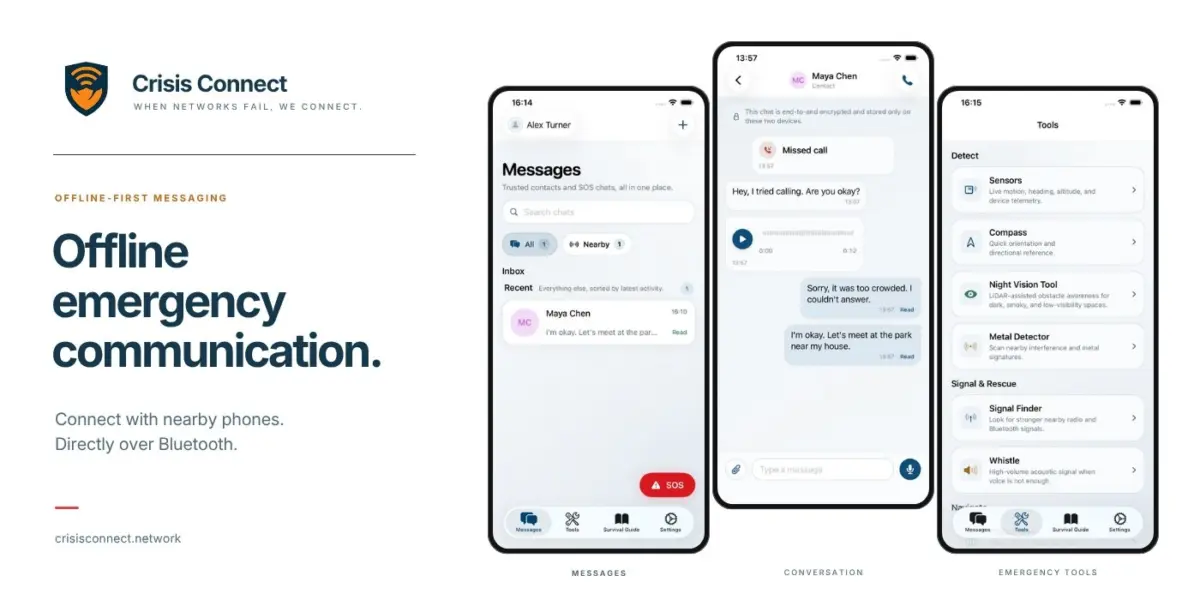
Writing in a dedicated blog post for the United Nations, Durham described Bluetooth as an untapped communication network that remains largely dormant until an emergency arises. His ultimate creation, named Crisis Connect, allows users to send messages and place calls over Bluetooth signals when traditional 4G and broader cellular communications are interrupted or completely disabled by natural disasters or other unforeseen crises.
The core mechanism behind the messaging platform relies on a sophisticated "mesh" network architecture. The application utilizes all available shortwave connections in a given geographic area to transmit a message by having it "hop" dynamically from one smartphone to another until it successfully reaches its intended recipient. Individual consumer smartphones act as local relays, allowing each Crisis Connect-enabled device to pass packets of information progressively closer to the ultimate destination. Through this decentralized approach, an entire neighborhood or isolated community can establish a localized communication web, helping neighbors stay in contact with one another even when the outside world is entirely cut off.
By default, this battery-intensive relay feature remains disabled to preserve device power during day-to-day life. However, in the event of an emergency, the mesh function can be switched on by the user. This not only helps individuals connect directly with their immediate family members, friends, local authorities, or professional rescue workers, but also empowers everyone within the network zone to connect with whomever they might need to reach for safety or coordination.
Durham readily acknowledges that the inherent nature of decentralized mesh technology requires a degree of proactive forward planning. Crisis Connect cannot provide retroactive assistance if individuals wait until their home has already collapsed before attempting to download and configure the application. Preparation must happen well in advance of any sudden emergency.
"The design starts before an emergency," Durham wrote in an article published on PreventionWeb, a disaster risk management platform maintained by the UN Disaster Risk Reduction program. "Users connect with family members, neighbors or teammates by scanning a QR code or establishing a nearby Bluetooth connection. Those connections are then designed to keep working when internet and cellular services are unavailable."
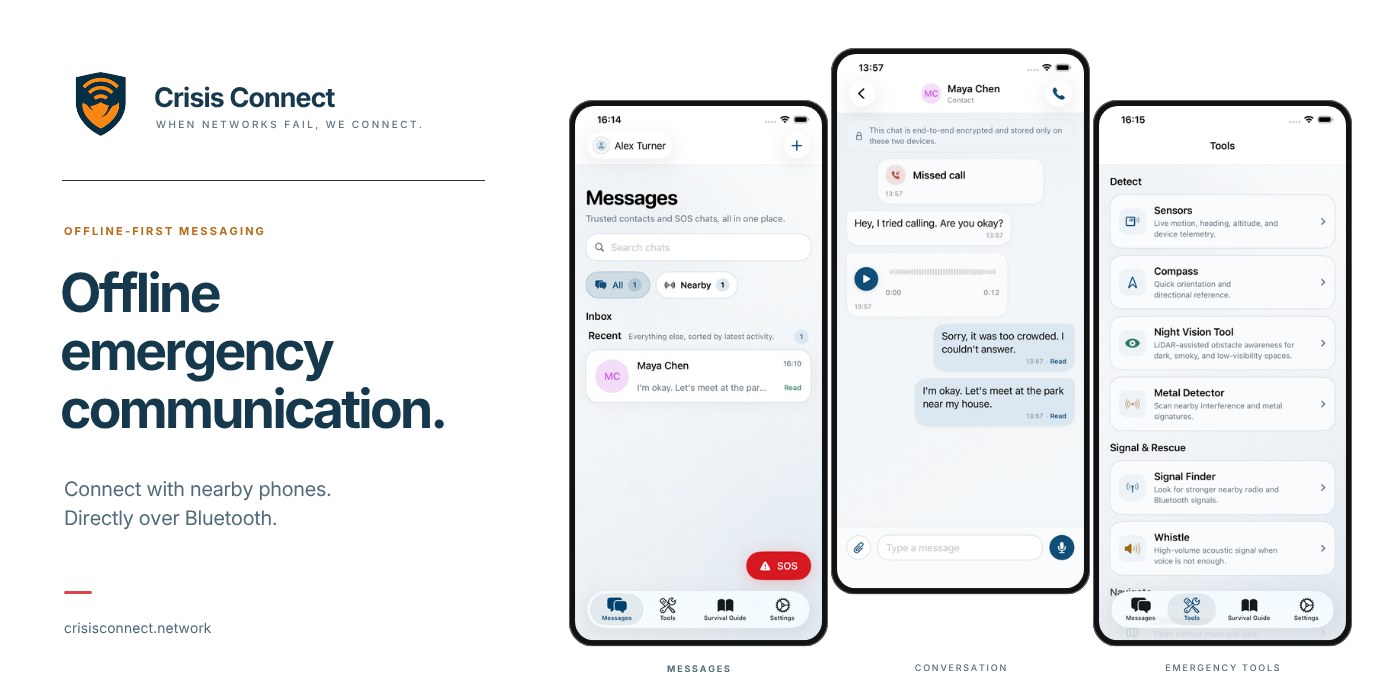
To maximize its utility in high-stress disaster scenarios, the application supports a range of vital rescue and emergency features. These include SOS beacons, a built-in compass, an ultra-high frequency digital whistle, live location broadcasting, and a specialized offline mode that continues to function seamlessly without relying on any central server infrastructure. The platform even incorporates a metal detector tool for specific rescue contexts. To address privacy and safety concerns inherent in a multi-hop public network function, all transmitted messages and calls are encrypted to reduce security risks for users.
Despite the impressive scope of his innovation, Durham remains remarkably grounded regarding what his technology can and cannot accomplish. He has cautioned that overpromising the capabilities of smartphone-based mesh systems, or underestimating the brutal physical and logistical challenges of active disaster zones, can ultimately undermine public confidence in the product and inhibit necessary technical improvements.
"Smartphone mesh communication will not replace satellite links, emergency radio or official early warning systems—nor should it try to," Durham wrote. "It can help fill a gap during the first hours after impact, when survivors need to reach nearby people and communication infrastructure is damaged, overloaded, or unavailable."
Crisis Connect is currently available as a free download on both the Apple App Store and the Google Play store. Furthermore, the complete open-source code has been made publicly available on GitHub, allowing developers anywhere in the world to examine, tweak, adapt, or improve the software to better serve their local communities. By placing this tool into the public domain, the young developer hopes to inspire further resilience engineering and ensure that communities worldwide are better prepared for the unexpected moments when the digital world goes dark.