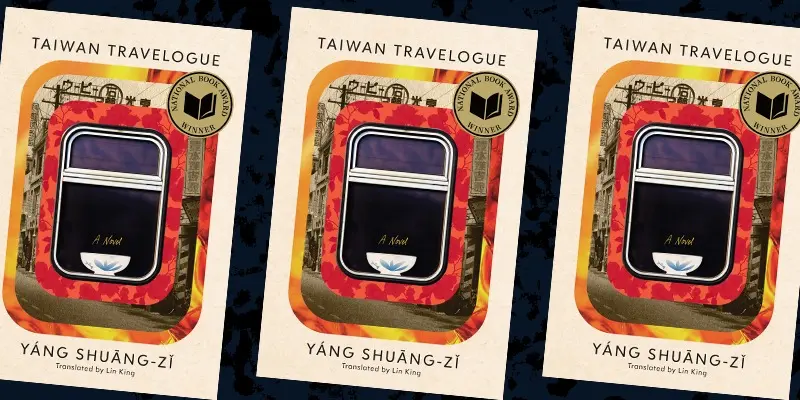
Despite these direct communications, the publisher reportedly moved forward, prompting King to escalate the matter through formal legal channels. As the sole copyright owner of the English-language edition of Taiwan Travelogue, King maintains that any third-language translation derived from her specific phrasing, structural choices, and creative adaptations constitutes a direct violation of her intellectual property rights. By taking the publisher to court, she aims to establish a firm legal precedent and force an industry-wide reckoning regarding the handling of translated texts.
In her public statement, King elevated the conversation far beyond a routine legal dispute, offering a profound and moving defense of translation as an independent art form. Rather than viewing a translation as a mere mechanical substitution of words from one language to another, King articulated the deeply creative nature of the work. She compared translation to cinematic adaptation, likening it to a filmmaker reinterpreting a literary text for the screen, or to a musical cover, such as Whitney Houston’s iconic rendition of Dolly Parton’s "I Will Always Love You." While the debate over whether one version is "better" than another may persist, King emphasized that the fundamental difference between the original and the translation is indisputable.
Expanding on this artistic defense, King described translation as a form of performance art. She noted that if a writer acts as a scriptwriter, the translator serves as the actor; if the writer is a composer, the translator is the musician; and if the writer is a choreographer, the translator is the dancer. Every artistic choice made by the translator during the rendering process actively shapes and influences the delivery, tone, and reception of the original work by an entirely new audience.
King also addressed the false binary often imposed upon literary professionals regarding whether they identify primarily as writers or as translators. Asserting that while not all writers are translators, all translators are fundamentally writers, she pointed out the immense creative labor involved in her own process. She explained that she personally selected every single word in the English text of Taiwan Travelogue from the vast and chaotic expanses of the English lexicon. Because of this creative ownership, the original author, Yáng Shuāng-Zǐ, cannot read her English version in the same way that King herself will not be able to read most forthcoming foreign translations of her own forthcoming novel. The translators handling those future editions will be the ones actively writing those books, not the original authors or the initial English translators.
This perspective was strongly reinforced by Yuka Igarashi, the Executive Editor at Graywolf Press, the publishing house responsible for releasing Taiwan Travelogue in the United States. Igarashi praised King’s inspired translation as a living demonstration of the exact point the translator has been arguing—that literary translators are writers in their own right whose copyrights demand absolute respect. Highlighting translators as vital artists, cultural mediators, and passionate advocates, Igarashi noted their indispensable role in facilitating the international dissemination of literature. Graywolf Press has thrown its full support behind King in her courageous effort to shine a much-needed light on the frequently overlooked, undervalued, and unacknowledged labor that translators perform behind the scenes of global publishing.
King has been careful to emphasize that her decision to pursue legal action is driven by principle rather than financial gain, a sentiment that will resonate strongly with anyone familiar with the notoriously modest economic realities of literary translation. Revealing the grassroots origins of the book’s journey into English, King shared that she originally volunteered her time without any compensation to translate Táiwān Màn Yóu Lù and personally pitch the manuscript directly to United States publishers. Describing her profession with characteristic candor, King wrote that translation is a notoriously poor business plan, explaining that she undertakes the arduous work simply because she believes deeply in the value of the books she champions.
Rather than focusing narrowly on a single contract or a solitary publisher, King’s lawsuit addresses the broader, systemic business practices that have quietly governed the translation sector for decades. She hopes that her legal challenge will disrupt the entrenched status quo that allows unauthorized, copyright-infringing relay translations to occur without consequence. Questioning the industry’s reliance on historical inertia, King challenged the validity of treating past norms as justifications for ongoing exploitation, writing that "it’s always been done this way" has never been a sufficient reason to continue infringing upon people’s legal and moral rights.
King concluded her public statement with a passionate and urgent call to action directed at publishers of translated fiction across the globe. Beseeching industry leaders to prioritize ethical conduct, she urged them to consistently ask for permission rather than relying on forgiveness after the fact. For those who profess a genuine love for international literature, King argued that the ultimate proof of that affection must be a steadfast respect for the rights of the translators who painstakingly rewrite these stories so that global audiences can read and enjoy them. The full text of King’s statement, along with further details regarding her ongoing advocacy, remains available for public view on her official Instagram page.