As the global financial landscape has been whipped around over the past several months, stakeholders, business leaders, and everyday investors have been left searching for clarity. With trade battles unleashed by unpredictable government policies, businesses have been forced to brace for sweeping operational changes. Currencies and interest rates have reacted in tandem, leaving long-term investors wondering about the future security of their retirement funds and portfolios. Reactions among the public have ranged widely, with some dismissing the volatility as a passing phase while others express deep concern over economic stability.
To understand the core of the issue, it is necessary to examine the fundamental mechanics of a tariff. At its most basic level, a tariff is a sales tax charged by a national government on goods imported from abroad. These fees are paid directly by the importing entity. This includes individual consumers who order products directly from overseas online marketplaces, as well as major corporations such as Amazon, Walmart, and Apple that import inventory by the shipload.
Despite claims regarding who bears the financial burden, tariffs are ultimately paid by the end consumer. When the cost of importing goods increases for a retailer, prices are inevitably raised to maintain profit margins. Furthermore, tariffs impact domestic industries directly. Major construction and infrastructure projects—ranging from new retail stores to industrial energy rigs—face significantly higher expenses due to taxes on imported steel, copper, lumber, and countless other components. Because modern housing construction relies heavily on materials sourced from multiple countries, these levies also contribute to a rise in real estate and housing costs.
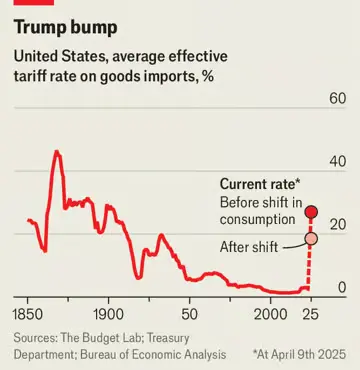
On average, tariffs function identically to broad-based sales taxes, resulting in higher prices across the board, slower overall economic activity, and reduced consumer spending power. While the revenue generated flows directly into government coffers to potentially fund national budgets or reduce deficits, the broader economic impact is often contractionary. Healthy government finances require a balanced mix of sales, income, and corporate taxes maintained at levels low enough to encourage productivity and long-term planning. However, the current tariff regime has introduced an unprecedented level of unpredictability, with extremely high rates announced as sudden threats, modified, and walked back on an almost daily basis.

Governments historically use tariffs to protect domestic industries from foreign competition. For instance, placing a heavy tax on imported automobiles grants a direct competitive advantage to domestic manufacturers, boosting their sales and profitability. While this benefits domestic producers and their employees, the broader consumer base typically suffers through higher prices and a reduced selection of goods. Such measures can sometimes serve strategic national interests, such as protecting domestic aerospace and defense manufacturers to ensure national security. In other instances, they are driven by political lobbying and the protection of specific industrial sectors.
Both political parties have utilized tariffs in attempts to appeal to key voter bases. Previous administrations implemented targeted taxes on imported solar panel components and manufacturing materials, despite the fact that cheap energy imports generally lower the cost of living and boost industrial efficiency over decades. While targeted tariffs can stimulate specific domestic sectors, such as prompting an automaker to hire more workers and expand factory production due to artificially reduced competition, the broader economy absorbs the cost. Higher vehicle prices ripple outward, increasing operational expenses for shipping fleets, logistics networks, and independent businesses, ultimately leading to a less efficient overall economic environment.
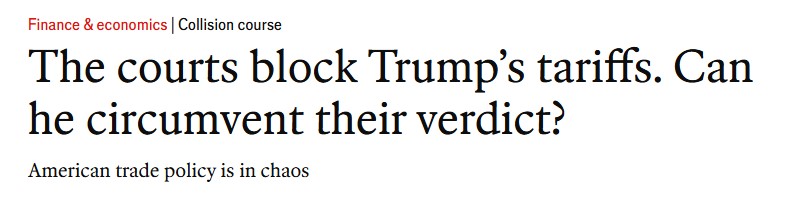
Economists generally agree that tariffs should be deployed sparingly because they frequently cause unintended economic damage, reduce overall employment efficiency, and slow economic growth. Yet, political rhetoric often frames tariffs as a direct mechanism for national wealth generation, focusing exclusively on short-term gains for protected sectors while ignoring the wider inefficiencies introduced across the broader economy.
This disconnect is clearly reflected in market behavior. Whenever announcements are made regarding increased tariffs, share prices routinely decline as business leaders and investors anticipate reduced corporate earnings. Conversely, news of paused or reduced tariffs triggers immediate market rallies. Because modern economic stability relies heavily on predictability, the constant threat of shifting trade policies introduces substantial friction into international commerce.
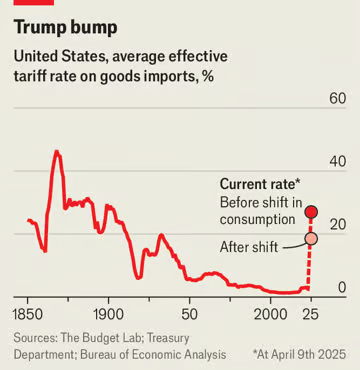
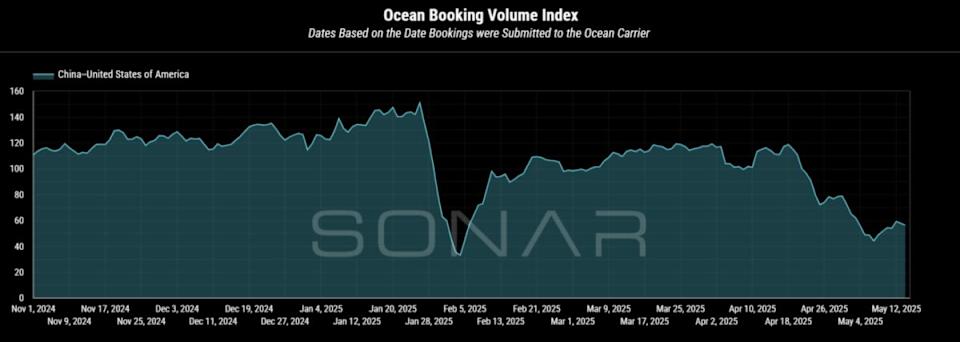
Despite the turbulence, the United States economy functions much like a massive cargo ship, possessing deep reserves and a vast inventory that takes time to alter direction. In the wake of early tariff threats, many importers rushed to place additional orders, stockpiling goods in advance. As a result, the immediate impact on retail prices was temporarily delayed. However, as subsequent import volumes dropped significantly and existing inventories dwindle, analysts warn that consumer prices and potential supply shortages are likely to emerge, affecting everything from everyday consumer goods to essential industrial machinery.
Looking forward, economic outcomes largely depend on how current trade disputes are resolved. If extreme tariff rates become permanent fixtures of economic policy, businesses will likely adapt through prolonged cost-passing, supply chain restructuring, and reduced long-term capital investment. Alternatively, if these measures serve primarily as aggressive negotiating tactics that ultimately yield a return to more stable, low-tariff trade agreements, the global economy can resume its trajectory of integrated growth.
Historical precedent suggests that international prosperity is deeply tied to open borders and minimal trade restrictions among friendly nations. Just as domestic commerce thrives across open state lines without internal trade barriers, international cooperation in the exchange of goods and services fosters broader economic health.
As the situation continues to evolve, market observers emphasize the importance of maintaining a long-term perspective. While modern media consumption is heavily driven by sensationalized headlines designed to capture attention and provoke emotional reactions, underlying economic fundamentals often tell a different story. For long-term investors, navigating periods of high volatility requires distinguishing between short-term political posturing and enduring structural economic realities.