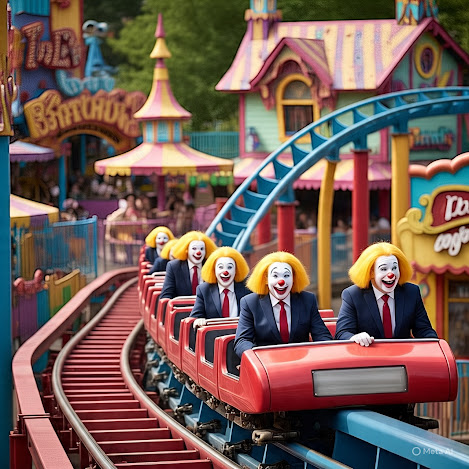
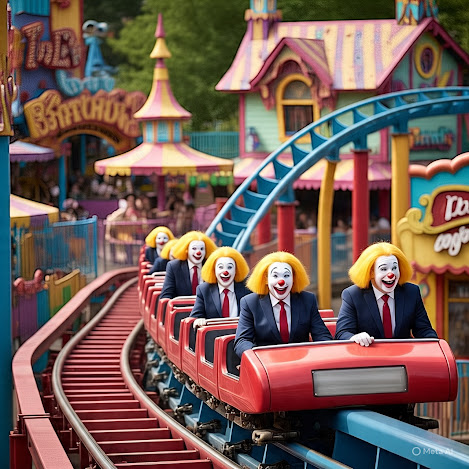
Back in February 2025, the market appeared to cap off a multi-year climb, immediately stepping onto a financial roller coaster characterized by steep drops and rapid recoveries. While market volatility rarely comes with a single, neatly labeled explanation, economic observers agree that the primary catalyst this time around has been the aggressive deployment of worldwide tariffs by the United States government. As the global financial ecosystem has been whipped around like a circus tent in a hurricane, stakeholders across the country have been left struggling to interpret the long-term consequences for early retirement funds, corporate supply chains, and household budgets.
Although the ultimate outcome of the worldwide trade battle remains unresolved, the immediate results are already visible across the economy. Businesses are actively bracing for massive regulatory and financial shifts, foreign exchange currencies and interest rates are reacting in real time, and everyday investors are questioning what the future holds. Public sentiment among everyday observers spans the entire emotional spectrum, ranging from dismissive assurances that the trade disputes are a passing noise to apocalyptic warnings of impending economic ruin.
To understand the core of the issue, financial experts point to the fundamental definition of a tariff, which is simply a sales tax charged by the government on goods imported into the country. These taxes are paid directly by the importing entity. For individual consumers, this means paying extra when ordering items directly from international vendors. For large-scale operations, corporations like Amazon, Walmart, and Apple pay these taxes by the shipload when bringing products across borders.
Ultimately, however, the economic burden of tariffs is not shouldered by foreign nations or multinational conglomerates. It is passed down directly to the end consumer. When a retailer’s cost of goods increases due to import duties, prices inevitably rise to maintain corporate profitability. Tariffs also strike companies at the foundational level of capital expenditure. If a major home improvement retailer wants to build a new retail location or an energy corporation needs to construct an oil rig, taxes on imported steel, copper, lumber, and countless other components inflate the total cost of these construction projects. Furthermore, these duties drive up the cost of residential housing, given that the vast majority of building materials originate from international sources.
On a macroeconomic level, widespread tariffs function identically to any broad-based sales tax, raising prices across the board. The general effect is a systematic slowing of the economy and a reduction in consumer spending power. On the fiscal side, the collected tax revenue flows directly into government coffers, potentially bolstering the national budget and reducing the deficit.
Economic theory dictates that governments require tax revenue to function, utilizing a balanced mix of sales, income, and corporate taxes to fund operations. The core principle of sound fiscal policy is that tax levels should remain as low as possible while keeping public infrastructure running smoothly, and they must be fair and predictable to incentivize labor and long-term business planning. Critics argue that the current tariff regime flies in the face of this principle by relying on random, extraordinarily high tariff threats that are altered or walked back on an almost daily basis.
While tariffs are traditionally deployed to protect domestic industries from foreign competition—such as placing taxes on imported vehicles to grant local automakers a competitive advantage—the broader economic toll is often steep. Using the automotive sector as a hypothetical example, a heavy tariff on foreign cars forces some consumers toward domestic alternatives to save money. This boosts domestic sales, leading to increased hiring, factory expansion, and localized job growth.

However, this localized boom comes at a severe cost to the rest of the economy. Every other consumer is forced to pay higher prices for potentially inferior products. Increased vehicle prices mean logistics companies must spend significantly more to maintain and expand their delivery fleets, driving up shipping costs and retail prices for everyday goods. Startups and medical innovators find themselves operating in an increasingly expensive and inefficient environment, reducing the likelihood of breakthrough developments. Furthermore, freed from the immediate pressure of direct international competition, protected domestic manufacturers lose the incentive to innovate and streamline operations, resulting in a slower overall trajectory despite higher profit margins.
This overarching dynamic is precisely why mainstream economists overwhelmingly agree that tariffs should be deployed sparingly. They consistently generate unexpected economic damage, decrease overall employment, and slow national growth, though policymakers occasionally deem those costs necessary for strategic sectors like food security or national defense.
The current political strategy behind the aggressive use of tariffs has confounded many traditional economists. Policymakers promoting sweeping tariffs frequently focus exclusively on first-order effects—such as domestic manufacturers hiring additional workers—while entirely ignoring the systemic inefficiencies and higher costs imposed on the rest of the nation. Share prices consistently drop when large tariffs are announced, reflecting the reality that corporate profitability will decline, and recover just as quickly when those threats are paused or reduced.
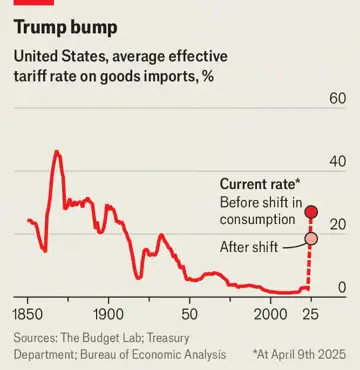
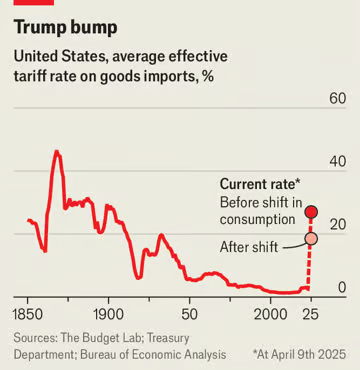
Even without extreme figures that have circulated in policy discussions, current tariff levels remain substantially higher than historical averages maintained over the past 75 years. The modern American economy is structurally built around exceptionally low tariffs and relative freedom of international trade.
Despite the implementation of these new trade barriers, the immediate impact on retail prices has been buffered by the sheer scale of the domestic supply chain. Operating much like a massive ocean ship with an immense inventory, the American economy requires considerable time to change directions. When trade tensions initially escalated, importers rushed to place additional orders and stockpile goods before the duties took full effect. Consequently, the nation has continued to run on this accumulated inventory, while actual import volumes have dropped significantly.
As stockpiles dwindle and fewer goods enter the country, market analysts anticipate that price increases and potential shortages could surface across various sectors. While consumers may easily absorb higher costs or find alternatives for non-essential imported novelties, losing access to critical tools and heavy machinery carries severe economic consequences.
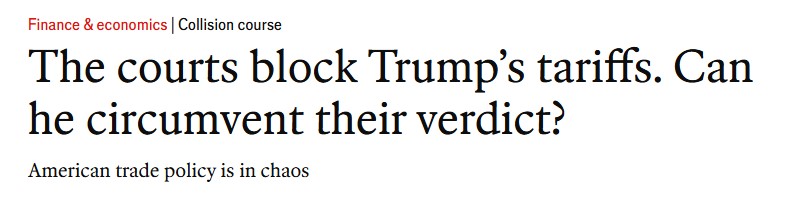
Historical precedent suggests that current trade disputes will eventually resolve, though the precise path forward remains uncertain. In a scenario where high tariffs become permanent fixtures of economic policy, businesses would be forced to restructure supply chains, driving up long-term inflation and reducing purchasing power. Alternatively, if the tariffs function primarily as aggressive negotiating tactics designed to extract trade concessions, the economy will likely revert to a baseline of low tariffs and open exchange.
The historical prosperity of the United States is deeply rooted in an enormous domestic market featuring open borders and zero trade restrictions across fifty states. Similarly, friendly nations worldwide derive mutual benefits from the free exchange of goods, services, and human capital through collaborative respect and shared economic growth.
Reflecting on the financial turbulence of recent months, market resilience has proven notable. Following sharp initial corrections, stock indices have steadily climbed back toward all-time highs as investors price in the expectation of a diplomatic truce and a return to stable international trade. Long-term investors who resisted the urge to panic and lock in losses during the height of the volatility have largely recovered their positions, reinforcing the principle that systematic, long-term market participation remains the most reliable strategy through periods of political and economic noise.