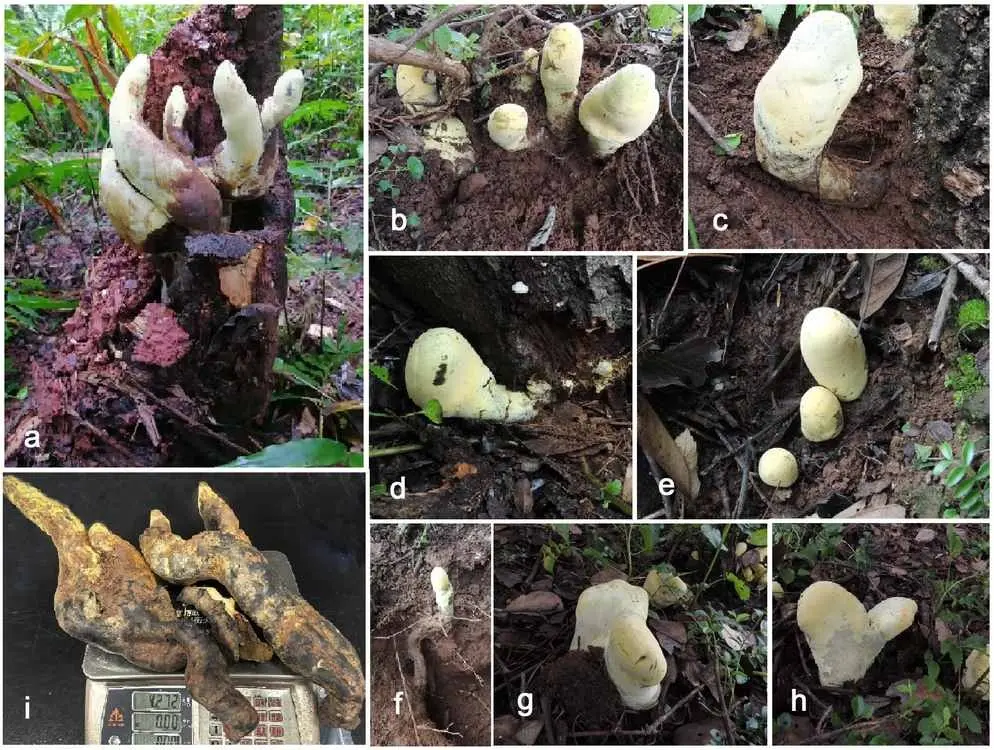
This remarkable specimen was brought to light by researchers hailing from China, Thailand, and Mexico. Their rigorous analysis revealed that this organism is not merely a new species or a new genus; it constitutes an entirely new family of fungi situated within the vast phylum of Ascomycota.
Detailed genomic analysis of the organism suggests that this evolutionary lineage first emerged approximately 65 million years ago. This timeline is strikingly close to the catastrophic Cretaceous-Paleogene mass extinction event that famously wiped out the non-avian dinosaurs. In the wake of this global upheaval, vast new ecological niches for wood-decomposing fungi—a specialized habitat that D. rex continues to inhabit to this very day—suddenly opened up across recovering forested landscapes.
"This remarkable species represents a new fungal family, Dianjunaceae, and provides a rare window into the evolution of extreme fungal body forms," said Dr. Indunil C. Senanayake, an associate professor at the Germplasm Bank of Wild Species of the Kunming Institute of Botany in China and the corresponding author of the study, which was published in the journal Frontiers in Fungal Biology. "The discovery illustrates how much fungus biodiversity remains to be discovered in East Asian forests."
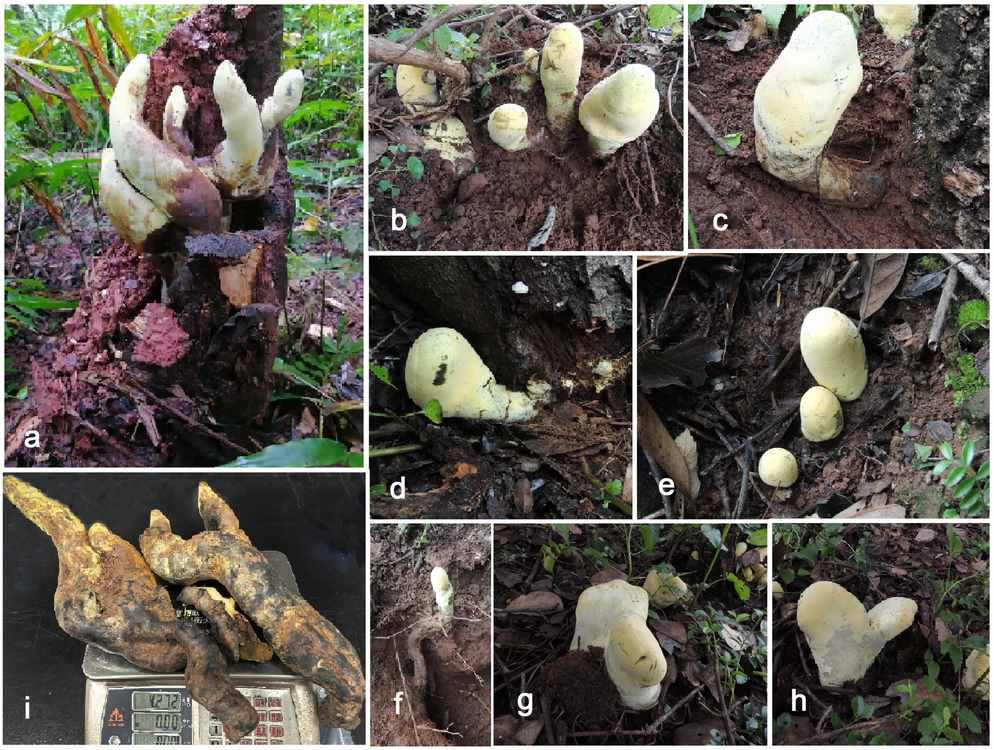
The discovery unfolded during intensive fieldwork conducted across a complex mosaic of temperate coniferous forests and tropical rainforests in China’s Yunnan province. Botanists and mycologists from the Kunming Institute encountered large, pale, whitish fruiting bodies, known scientifically as stromata, firmly attached to the woody roots of the Chinese cork oak.
To understand the nature of this organism, the research team collected the fruiting bodies and successfully cultivated spores in a laboratory setting to study the morphology of the fungus, while simultaneously sequencing its full genome. The genetic data, when paired with meticulous morphological analysis, confirmed that the newly established family Dianjunaceae belongs within the order Xylariales. Further genetic comparisons revealed that the closest known relative to D. rex is Graphostroma platystoma, an organism that decays dead hardwood throughout the Northern Hemisphere and forms its own isolated family, Graphostromataceae.
By deploying a "molecular clock" analysis—a technique that compares the DNA of the new species against the genomes of hundreds of other fungi with well-established evolutionary ages—the researchers calculated that the Dianjunaceae lineage branched off roughly 65 million years ago. This date places the origin of the family a mere one million years after the Cretaceous-Paleogene extinction event, aligning the birth of this fungal lineage with a period of massive ecological transition on Earth.
"This timing raises an intriguing possibility. After the mass extinction, forests experienced dramatic changes, including the sudden availability of large amounts of dead plant material," Dr. Senanayake explained. "For wood-associated decomposing fungi, such environmental disruption may have created new ecological opportunities."
To understand the sheer scale of D. rex, it helps to examine the phylum to which it belongs. Comprising more than 64,000 documented species, Ascomycota represents the largest and most diverse group of fungi on the planet. Unlike traditional mushrooms that produce spores on gilled caps, ascomycetes typically release their spores from tiny, sack-like structures contained within or on the surface of their unique fruiting bodies.
Though the casual observer might not immediately recognize an ascomycete by name, humanity interacts with this group daily. Alongside beneficial molds and yeasts responsible for producing bread, beer, wine, penicillin, and specialty cheeses like Stilton, Roquefort, Brie, and Camembert, the phylum also encompasses culinary treasures such as morels, truffles, cordyceps, and dead-man’s fingers.
Conversely, the same phylum includes species responsible for significant agricultural and medical challenges, such as Dutch elm disease, chestnut blight, powdery mildew, histoplasmosis, ergot, and Aspergillus fumigatus, which is a frequent cause of respiratory infections in humans. Yet, standing apart from all these microscopic or modestly sized relatives, D. rex dwarfs them all, establishing itself as a true titan among fungi.
Even within its own phylum, the physical dimensions of D. rex are unprecedented. Until this discovery, the record-holders among ascomycete fruiting bodies typically measured between 20 and 30 centimeters in height—roughly half the size achieved by the King of Dian.
Addressing why D. rex evolved to reach such uncommon proportions, Dr. Senanayake pointed toward reproductive advantages in dense forest environments. "A fruiting body which towers above surrounding vegetation and debris could have better dispersal of spores by wind in dense forests," he hypothesized. "However, such a large structure requires substantial energy investment, suggesting that this strategy likely evolved only where the ecological benefits outweighed the costs."
While animals like sharks, sea turtles, and crocodilians are widely celebrated for remaining relatively unchanged from an evolutionary standpoint over hundreds of millions of years, certain plant lineages have similarly endured, shading both prehistoric dinosaurs and modern humans. Prominent examples include the living fossil Ginkgo biloba and the ancient evergreen groves discovered in Australia. Now, D. rex demonstrates that fungi, too, harbor ancient lineages that continue to thrive in specific, undisturbed ecological refuges.
Looking ahead, the research team anticipates that further scientific explorations in subtropical China will yield additional fungal discoveries.
"This region combines exceptional habitat heterogeneity, climatic stability, and complex biotic interactions that promote fungal diversification," Dr. Senanayake noted. "Historically, however, fungal diversity in these ecosystems has been underestimated due to logistical difficulties in field sampling, the seasonal and cryptic nature of fungal fruiting, and a historical emphasis on economically important fungi."