
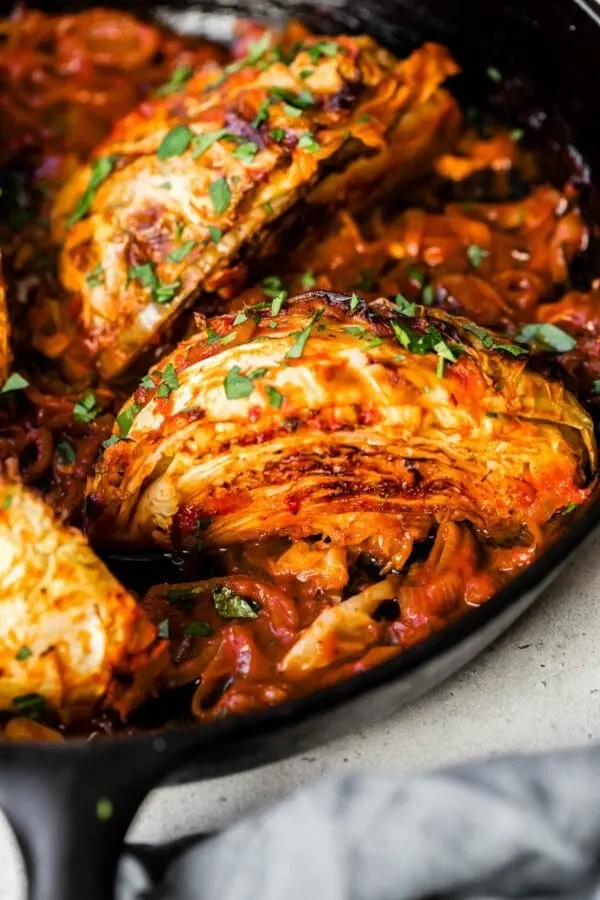
By searing whole cabbage wedges until caramelized and simmering them low and slow in a savory bath of tomato paste, white wine, and aromatic shallots, this easy skillet preparation transforms firm, tight leaves into a silky, tender side dish. The finished creation offers all the comforting flavor notes of classic stuffed cabbage rolls without the labor-intensive assembly or heavy meat fillings, proving that simple produce can yield sophisticated dining results.
Melting Cabbage
The concept of "melting cabbage" refers to the dramatic physical transformation that occurs when dense cruciferous vegetables undergo gentle, slow braising in a flavorful liquid. As the cabbage simmers under a tight cover, its tough fibrous structure breaks down completely, resulting in layers so soft they practically yield to the dull edge of a fork.
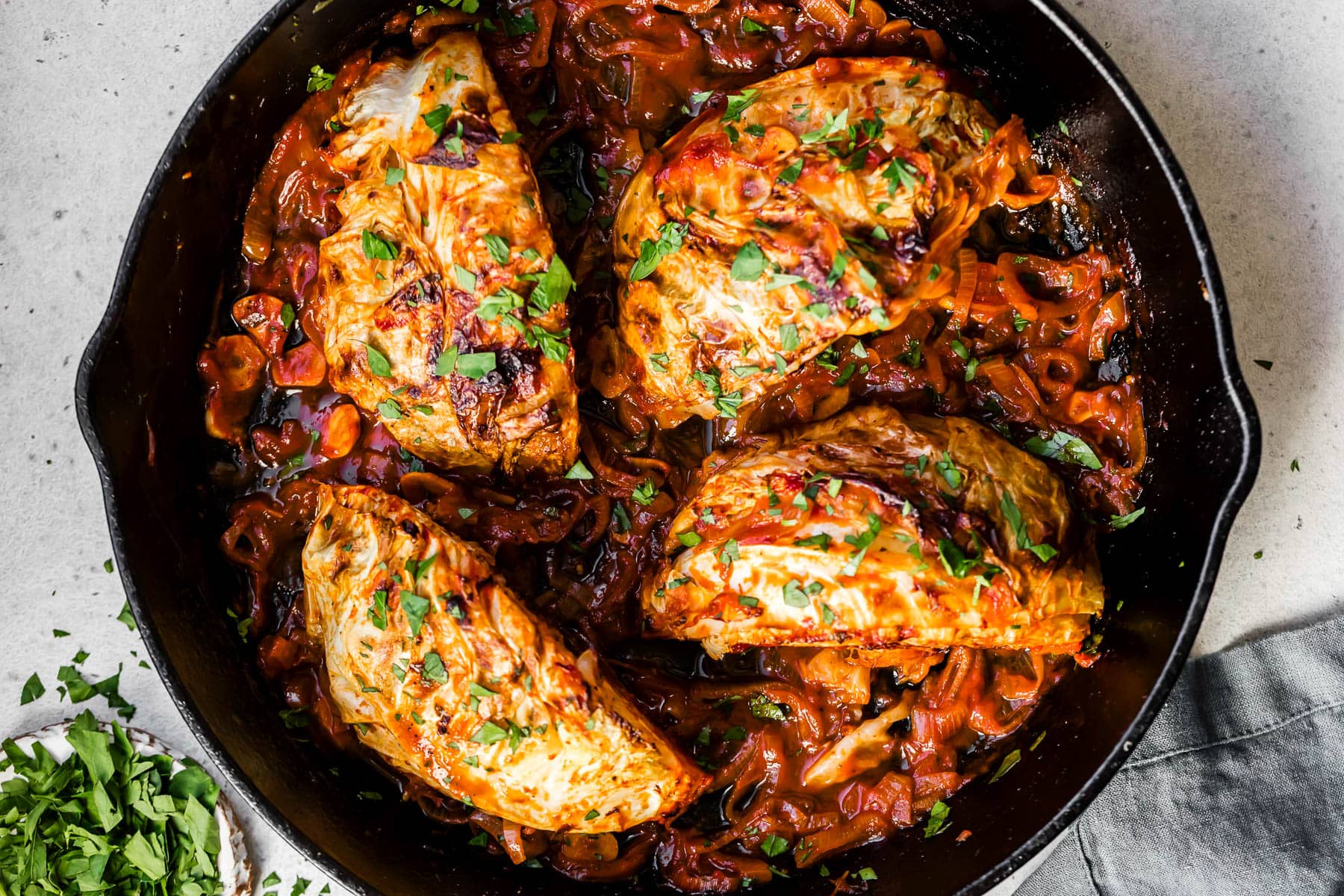
This specific preparation draws direct inspiration from traditional meat-stuffed cabbage rolls, capturing their signature savory profile in a streamlined, meatless skillet format. The braising liquid—a rich reduction of tomato, white wine, and shallots—seeps into every layer of the cabbage, allowing the vegetable to soak up deep umami and bright acidity as it cooks down.
Because melting cabbage bridges the gap between a light vegetable side and a rich, saucy dish, it fits seamlessly alongside a wide variety of main courses. It pairs exceptionally well with hearty roasted meats, including roast chicken infused with rosemary and lemon, bacon-wrapped pork tenderloin prepared in an air fryer, or a wholesome turkey meatloaf enriched with zucchini. To complete the plate, serving the braised cabbage with a side of buttermilk mashed potatoes creates an ideal vehicle for absorbing the extra tomato-wine gravy from the skillet.
Why This Braised Cabbage Recipe Works
Cabbage remains one of the most underrated vegetables in the produce aisle, rarely considered as a standalone hot side dish outside of casual slaws or soups. This braised cabbage preparation succeeds by solving the common challenges associated with cooking brassicas—namely, avoiding watery textures and bland flavor profiles.
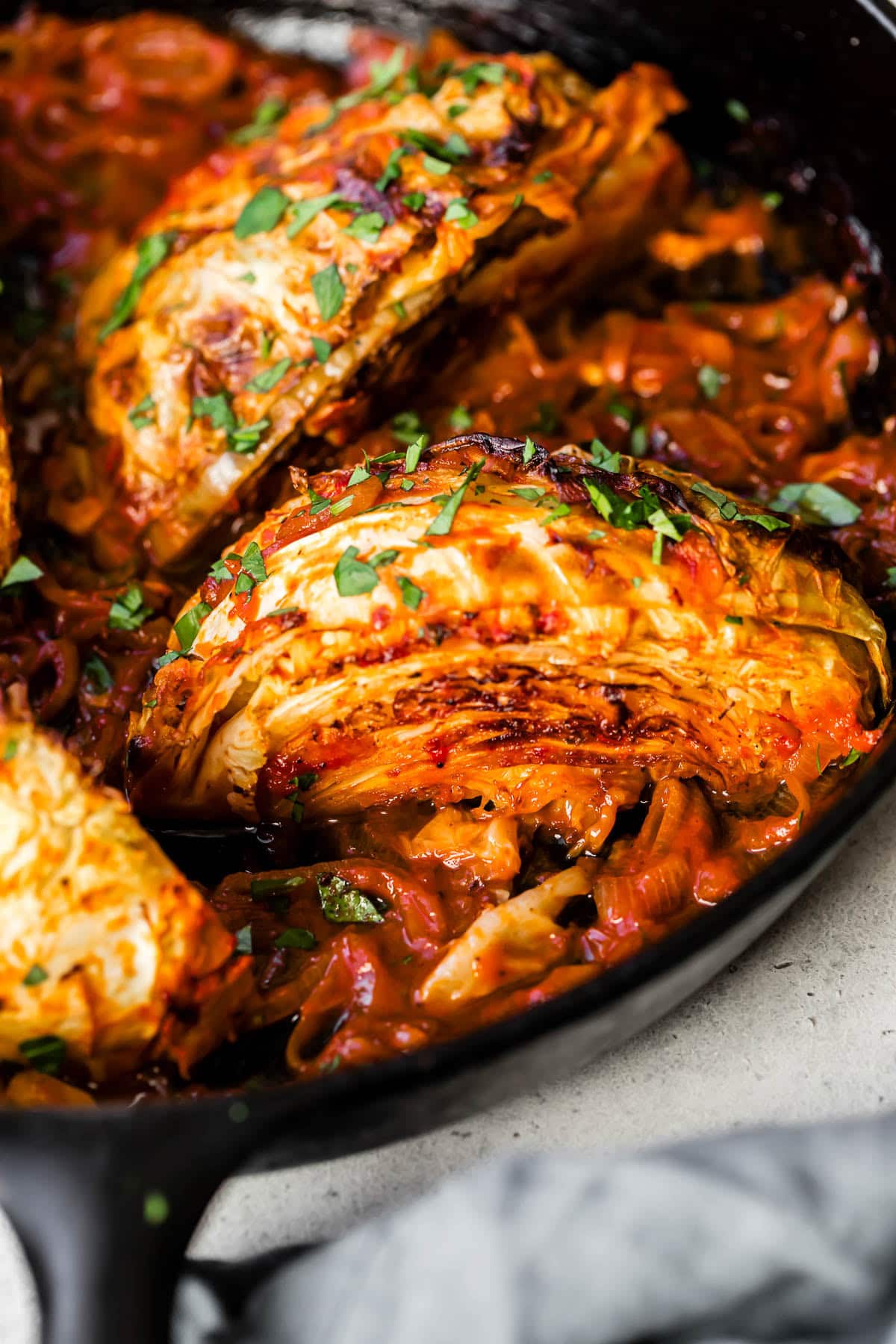
The recipe works primarily because it employs a dual-cooking technique: initial dry-heat searing followed by wet-heat braising. High-heat browning caramelizes the natural sugars on the outer surface of the cabbage, developing complex, nutty notes that raw or boiled cabbage simply cannot achieve. Once the base flavor is established, gentle braising softens the tough inner core, allowing the complex savory liquid to penetrate deep into the center of each wedge.
Beyond its culinary appeal, cabbage is an exceptionally economical, shelf-stable, and nutrient-dense ingredient. Utilizing simple culinary techniques to elevate a standard head of cabbage allows home cooks to create restaurant-quality side dishes at minimal cost, offering a satisfying, elevated option for weeknight dinners and special occasions alike.
Ingredients You’ll Need
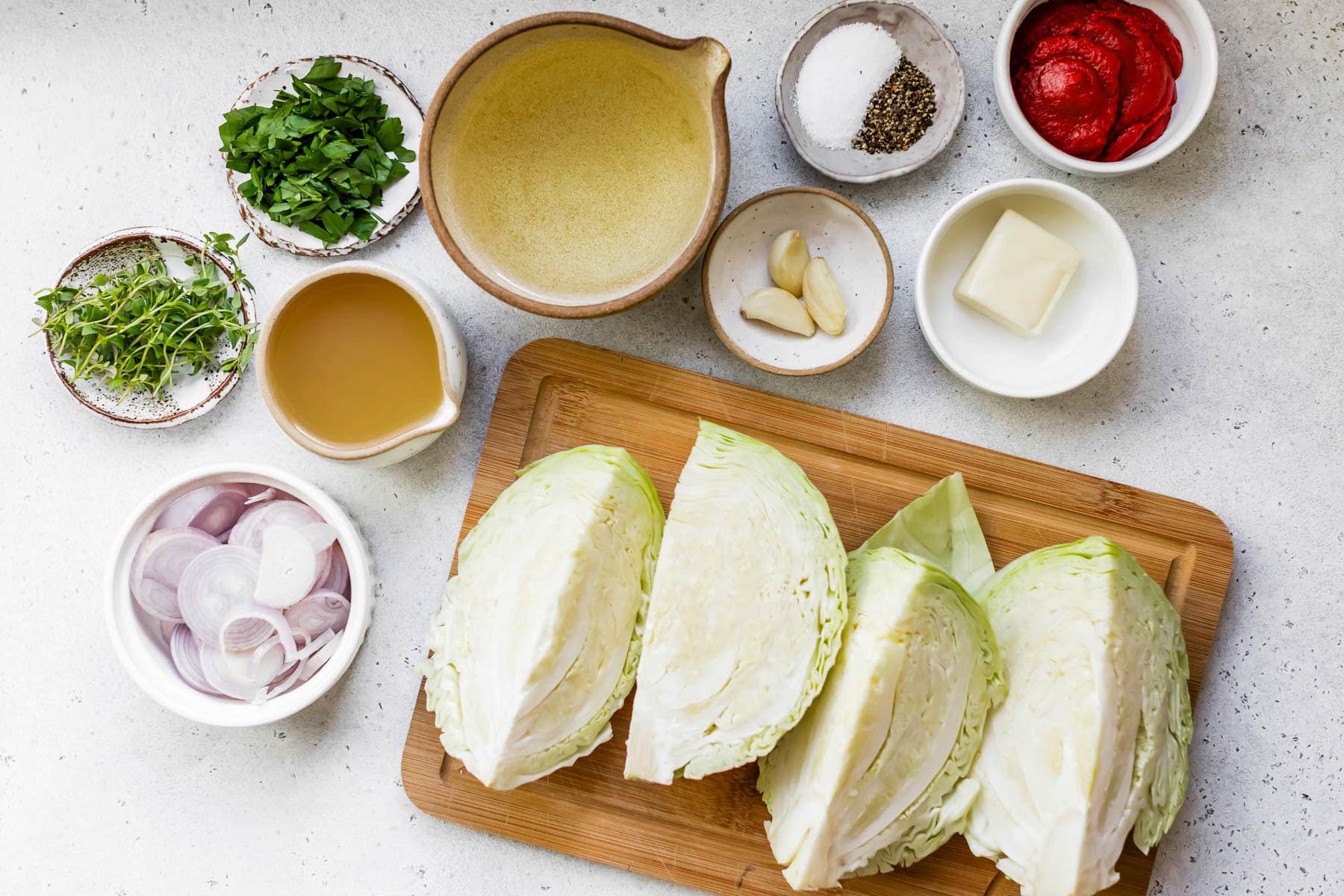
Because fresh cabbage possesses a naturally mild, slightly sweet taste, building a bold braising liquid is essential for infusing the vegetable with flavor. The foundation of the dish begins with a full head of green cabbage, cut into intact wedges to hold the leaves together throughout the cooking process.

Butter is used to sear the cabbage edges, providing a rich base that aids in browning. The aromatic background relies on finely sliced shallots, which cook down to deliver a subtle, sweet onion note. The liquid components consist of double-concentrated tomato paste for intense savory depth, white wine to add acidity and lift browned bits from the pan, and low-sodium broth to provide the necessary moisture volume for simmering.
From a nutritional perspective, braised cabbage offers a remarkably balanced profile that aligns well with light, health-conscious eating. A single serving—calculated as one-fourth of the total recipe—delivers approximately 167.5 calories, 6 grams of total fat (3.5 grams of saturated fat), 15.5 milligrams of cholesterol, and 643.5 milligrams of sodium.
The dish is particularly notable for its fiber content, providing 7 grams of dietary fiber alongside 22 grams of total carbohydrates, 5 grams of protein, and 10.5 grams of naturally occurring and recipe sugars. This high fiber density makes the side dish filling and satisfying while remaining light on calories.

How to Make Braised Cabbage
Executing this braised cabbage dish requires minimal active preparation, requiring approximately 10 minutes of hands-on prep time followed by 45 minutes of cooking. In total, the dish comes together in just 55 minutes, delivering four generous portions.
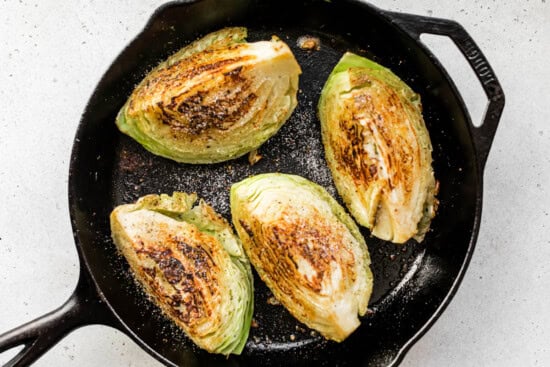
The process begins by trimming away any damaged outer leaves from the cabbage head and cutting the core into uniform wedges, keeping a portion of the core attached to each wedge so the leaves remain intact. Butter is melted in a large skillet over medium-high heat. The cabbage wedges are laid flat in the pan and seared undisturbed until the bottom surfaces develop a rich, golden-brown char. They are then carefully turned to brown the opposite sides before being temporarily removed to a plate.
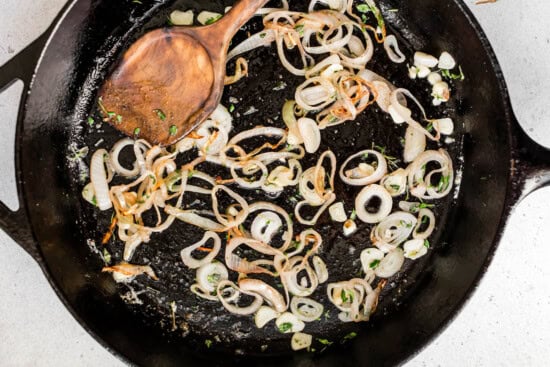
With the skillet still hot, the sliced shallots are added directly to the remaining pan butter and sautéed until soft and translucent. Double-concentrated tomato paste is stirred into the shallots, allowing it to toast slightly in the pan drippings to unlock deeper flavor.
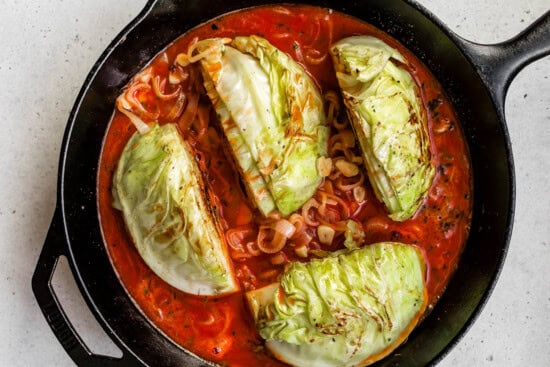
Next, white wine is poured in to deglaze the skillet, scraping up any caramelized bits clinging to the bottom. Broth is whisked into the pan to form a smooth braising sauce. Finally, the seared cabbage wedges are returned to the skillet, nestled into the liquid, covered tightly with a lid, and allowed to simmer gently over low heat until the leaves turn soft, translucent, and meltingly tender.
How Much Liquid Do You Need to Braise Cabbage?
Achieving the proper texture in braised cabbage depends on maintaining an accurate balance of liquid within the skillet. Unlike boiling, where ingredients are fully submerged, braising relies on shallow liquid immersion combined with trapped steam beneath a closed lid.
To braise cabbage effectively, the pan should contain enough tomato-wine broth to submerge roughly the bottom half of the cabbage wedges. This depth ensures that the lower portion of the cabbage absorbs flavor directly from the bubbling liquid while the upper portion steams softly under the lid.
Because burner temperatures and skillet seals vary, home cooks should monitor the pan occasionally throughout the 45-minute cook time. If the braising broth reduces too rapidly—causing the bottom of the skillet to become dry or dark before the central cores of the cabbage wedges are fully tender—additional moisture must be introduced. Adding a splash of fresh water or additional broth loosens the reduction, prevents scorching, and maintains the ideal moist environment required to achieve a true melting texture.
Variations
The fundamental technique of braising cabbage accommodates several easy substitutions based on pantry availability and dietary preferences:
- Cabbage Selection: Standard green cabbage can be swapped for red cabbage. Red cabbage offers a slightly earthier flavor profile and a vibrant purple color, though it may require a few extra minutes of braising due to its denser leaf composition.
- Aromatic Alternatives: If shallots are unavailable, half of a small red or yellow onion, finely sliced, serves as an excellent replacement to build the savory aromatic base.
- Tomato Modifications: Double-concentrated tomato paste, typically sold in tubes, is preferred for its intense sweetness and low moisture content. If using standard canned tomato paste, adding a tiny pinch of granulated sugar or brown sugar helps neutralize excess acidity and mimics the sweet depth of concentrated varieties.
- Wine-Free Option: Cooks looking to skip the white wine can substitute an equal amount of additional broth. To preserve the characteristic brightness of the sauce, simply add one tablespoon of white wine vinegar or red wine vinegar alongside the extra broth.
Braised Cabbage Serving Suggestions
Braised cabbage serves as a comforting, flavorful addition to dinner menus across every season, pairing particularly well with classic comfort foods and roasted proteins.
When served alongside a rosemary and lemon roast chicken, the bright tomato-wine sauce cuts through the savory meat, creating a balanced meal. The sweet caramelization of the cabbage also pairs exceptionally well with pork dishes, such as bacon-wrapped pork tenderloin. For home cooks planning easy weeknight dinners, pairing braised cabbage with a light turkey and zucchini meatloaf provides a nutrient-dense, low-calorie dinner option.
Regardless of the primary protein selected, serving braised cabbage with a side of buttermilk mashed potatoes ensures that every drop of the rich, reduced tomato sauce can be enjoyed.
Storage and Meal Prep Tips
Braised cabbage is an ideal candidate for meal prep, as its texture and flavor profile hold up remarkably well over time. Once cooked, leftover cabbage wedges and sauce should be cooled completely before being transferred to an airtight container. Stored properly in the refrigerator, the dish retains its quality for four to five days.
During refrigeration, the cabbage leaves continue to absorb the ambient flavors of the tomato, wine, and shallot sauce, often making leftovers even more flavorful on the second day.
To reheat, place the cabbage wedges and sauce back into a skillet over low heat, adding a splash of water or broth to loosen the gravy, and cover until heated through. Alternatively, individual portions can be reheated gently in the microwave.
Expanding Your Cabbage Repertoire
The success of melting cabbage highlights a broader shift toward transforming humble, budget-friendly vegetables into memorable culinary features. With its exceptional nutrient density, high fiber content, and minimal calorie count, cabbage offers endless flexibility for home cooks looking to diversify their vegetable side dishes. Mastered techniques like searing and braising provide a reliable template for making simple, plant-forward cooking both nutritious and thoroughly satisfying.