
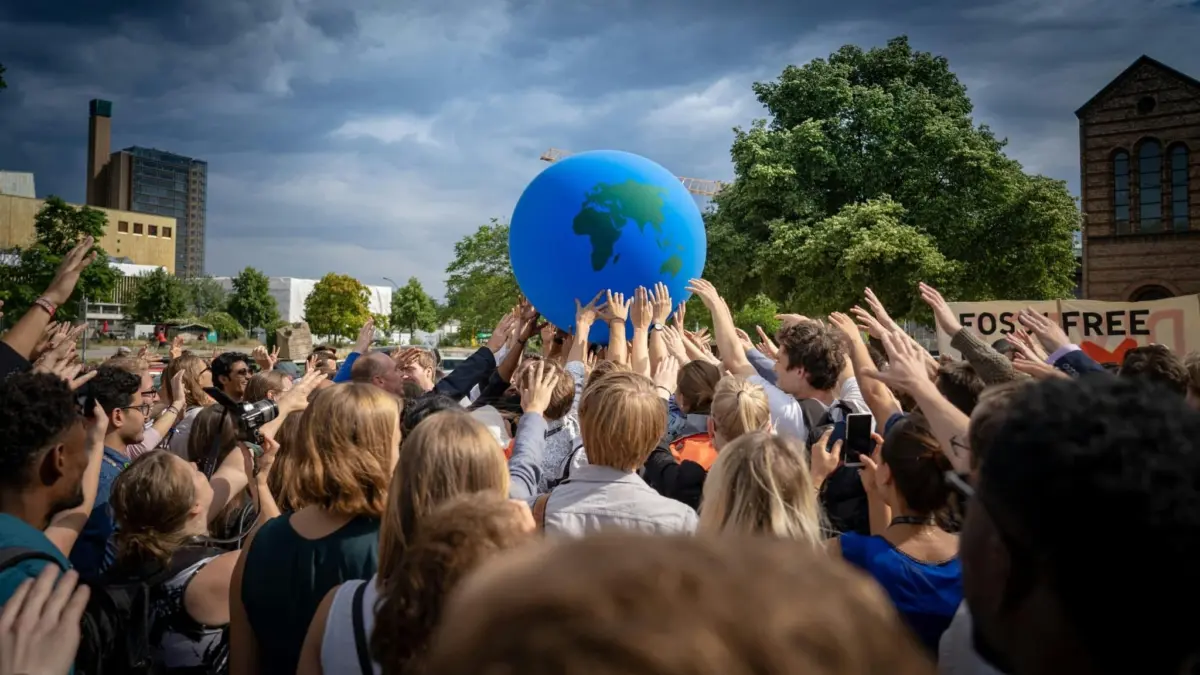
Yet, despite widespread feelings of disenfranchisement, everyday people are far from powerless. History demonstrates that regular citizens possess a powerful instrument to compel systemic change, one that has been utilized for over a century. This mechanism does not require running for public office, donating capital that working families cannot spare, or engaging in exhausting ideological debates across holiday dinner tables. It is known as the general strike.
What is a General Strike?
At its core, a general strike is an organized collective event in which working people deliberately withhold their labor to pursue specific demands from those in positions of political and economic power. On a localized level, a strike might occur within a single company or industry, where employees refuse to report to work until leadership addresses critical grievances such as adequate healthcare, fair financial compensation, and guaranteed workplace safety standards.
On a broader societal scale, a general strike involves entire communities pausing their labor, consumer spending, and general participation in the economy until sweeping social or political demands are met. The objective is to disrupt the continuous flow of capital, thereby demonstrating the indispensable value of the workforce to governing bodies and corporate entities alike.
Academic research underscores the remarkable efficacy of this approach. Studies conducted by political scientist Erica Chenoweth have revealed that non-violent mass campaigns, including general strikes, are twice as likely to achieve their objectives as armed conflicts. This data highlights that non-violent protest is not only the more ethical and sustainable option, but it also stands as one of the most potent instruments for creating structural change in modern society.
Participating in such an organized movement places agency back into the hands of ordinary individuals, proving that collective economic withholding remains a formidable tool. In contemporary society, organized labor actions frequently center on pressing topical issues ranging from economic inequality to corporate accountability. However, the foundational utility of a general strike extends far beyond any single issue; it serves as a broad framework through which governing bodies can be persuaded to address diverse societal concerns, reinforcing the reality that consumers and workers constantly cast economic ballots with their daily purchasing decisions.
Rules and Levels of Participation
Executing a general strike effectively requires careful planning and varying degrees of disruption, depending on individual circumstances. Ideally, the overarching goal is for the circulation of money to halt in the most disruptive manner possible. In a theoretical scenario, this means total cessation: no one reports to traditional workplaces, and no consumer spending occurs within the broader economy.
However, absolute cessation is rarely feasible for every individual given the economic realities of modern life. For workers who cannot simply walk off their jobs without immediate financial jeopardy, the next viable option involves utilizing accrued sick leave, vacation time, or other forms of paid time off. By leveraging existing benefits, employees can participate in the economic slowdown while maintaining a degree of financial security.
When individuals must report to work, a secondary method of participation involves strictly curbing discretionary spending. For necessary purchases, participants are encouraged to redirect their funds toward local, single-location establishments rather than large multinational chains, while actively sharing resources and trading services within their immediate neighborhoods. While small local businesses are not automatically exempt from ethical scrutiny, prioritizing community-based commerce serves as a constructive default during periods of economic non-cooperation.
Beyond immediate workplace actions, supporters often implement complementary strategies to maximize the collective impact of a strike. These measures are designed to sustain community resilience while amplifying the economic pressure placed on institutional decision-makers.
Cultivating Long-Term Personal Power and Resilience
The capacity to participate in a sustained general strike is frequently a matter of socioeconomic privilege, largely dictated by an individual’s financial runway and ability to forego regular income. Recognizing this reality, labor organizers and community advocates emphasize that building long-term personal and collective power requires intentional lifestyle adjustments well before any strike action is formally declared.
Maintaining a robust emergency fund is one of the most fundamental steps toward achieving this resilience. Financial advisors typically recommend setting aside three to six months’ worth of essential living expenses. For a household requiring three thousand dollars monthly to cover basic needs, this translates to an emergency reserve of nine thousand to eighteen thousand dollars. The accumulation of such savings directly correlates with an individual’s capacity to weather a missed paycheck without facing immediate destitution, thereby expanding their ability to engage in prolonged labor actions.

Equally important is the deliberate cultivation of community ties. A united neighborhood possesses far greater resilience than isolated individuals striving independently. Establishing strong local connections—ranging from knowing one’s immediate neighbors to organizing mutual aid networks—creates a durable social safety net that functions autonomously from institutional systems.
This ethos extends directly into the realm of self-sustainability. Developing the capacity to meet basic survival needs independently or cooperatively makes communities considerably harder to control or subjugate. Small, incremental actions can significantly reduce reliance on corporate and governmental systems. Simple practices such as cultivating domestic food sources, establishing rainwater collection systems, and collaborating with neighbors for shared services like childcare insulate households from the immediate shocks of an economic shutdown without requiring a complete transition to off-grid living.
Concurrently, curbing modern consumerism is increasingly viewed as a necessary cultural shift. Reevaluating personal consumption habits not only generates immediate financial savings but also redefines an individual’s relationship with the broader economy. By intentionally reducing unnecessary acquisitions, participants free up financial resources and build the psychological discipline required to navigate periods of economic scarcity or voluntary withholding.
Engaging with organized networks provides another vital pathway for involvement. Platforms such as national strike coordination organizations allow individuals to connect with regional chapters, providing secure channels to learn about local resources, community support initiatives, and synchronized actions. These digital and physical spaces serve as critical infrastructure for grassroots organizing.
Finally, participation in smaller-scale, one-day strikes helps acclimate the general public to the logistical and psychological demands required for longer, sustained labor actions. Modern consumer society is engineered around convenience, making even brief disruptions to daily routines uniquely challenging for individuals unaccustomed to scarcity. By engaging in short-term labor withdrawals, participants effectively build a collective muscle of resistance, learning how to plan ahead, access alternative community resources, and adapt to temporary discomfort.
Through these deliberate steps—combining financial preparedness, community solidarity, conscious consumption, and incremental practice—individuals transition from passive observers of the sociopolitical landscape to active participants in shaping their collective future.