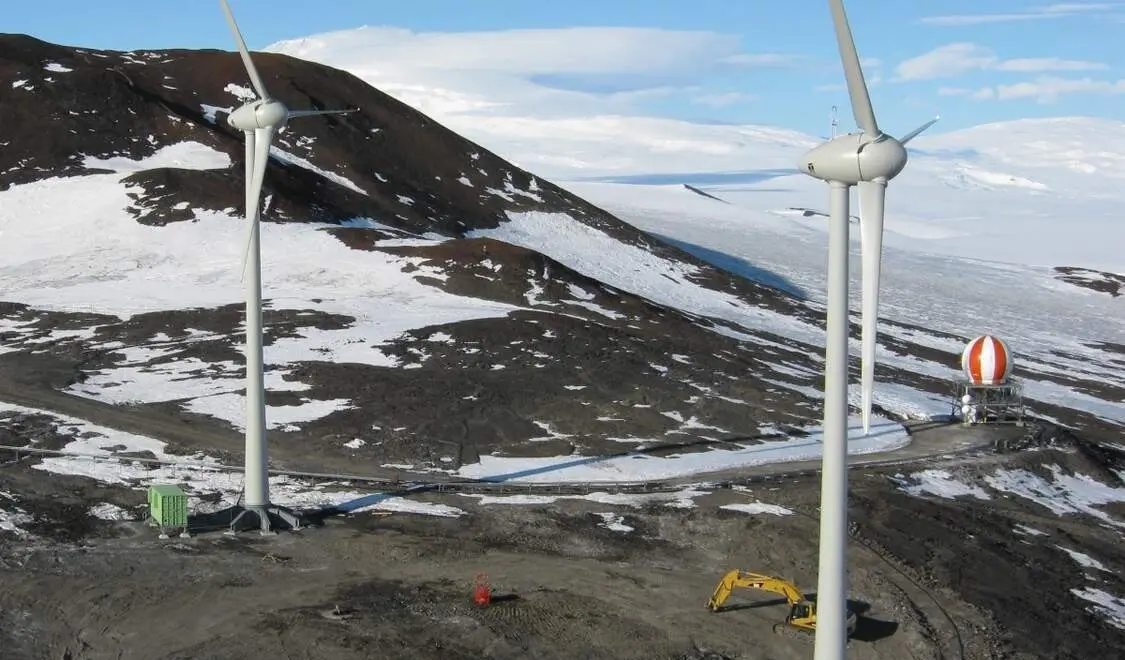
Powering America’s McMurdo Station and New Zealand’s Scott Base, the groundbreaking wind energy project has proved beyond a shadow of a doubt that advanced renewable installations can not only survive but thrive in one of the most hostile environments on Planet Earth.
The ambitious project was brought to life by Meridian Energy, a prominent New Zealand renewable energy firm. For decades, traditional diesel generators served as the absolute sole source of electrical power for both research outposts. However, transporting thousands of gallons of heavy fuel down to the southern pole year after year imposed a massive financial draw on international scientific research funding while simultaneously generating significant carbon footprints in a pristine ecosystem that scientists were actively working to protect.
Engineering for the End of the Earth
Designing a renewable energy grid for the long Antarctic winter is an extraordinary undertaking, as the region offers no quarter for weak machinery or poorly tested components. Meridian’s engineering team quickly realized they needed a novel, highly resilient design for the wind turbines to withstand the ferocious katabatic winds that routinely barrel down from the polar plateau.
Project managers recall that each turbine had to be bolted onto Ross Island’s volcanic Crater Hill much like a spider clinging to a rock face. A specialized set of support legs were deeply drilled directly into precast concrete blocks. These blocks were anchored into what engineers refer to as "Antarctic cement"—a naturally occurring, permanent mixture of local water and gravel that freezes solid in perpetuity under sub-zero conditions.
To combat the region’s fearsome winds, the turbines were engineered to operate without traditional gearboxes and transmissions. This innovative design choice effectively eliminated common mechanical problems associated with cold-weather oil viscosity and friction, while also dramatically reducing the total number of moving parts prone to failure. Every single component was robustly manufactured from specialized materials capable of withstanding ambient temperatures plunging down to -30 degrees Celsius.
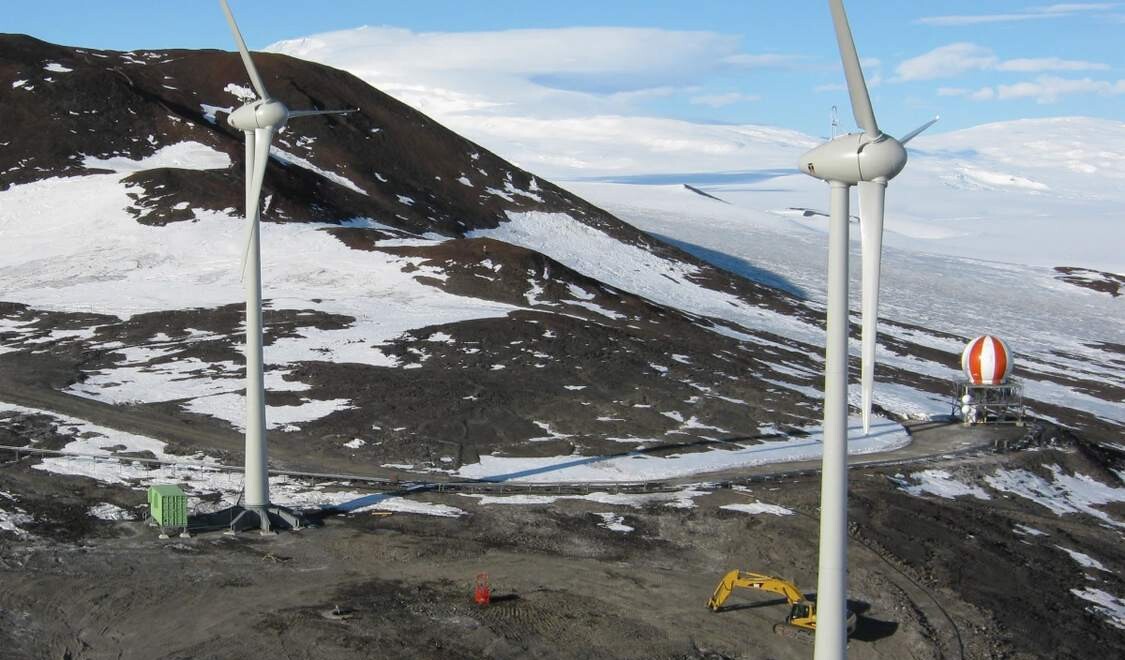
Furthermore, geographic isolation presented a unique set of logistical constraints. The only maritime vessels capable of navigating the treacherous sea ice down to Ross Island could only make the journey during the fleeting window at the very end of the Antarctic summer. This meant that unless the turbine components could be assembled with miraculous speed, they would be forced to sit in crates through months of total darkness during the bitter winter until construction crews could return the following summer. This strict operational limitation imposed severe size restraints on the initial design phase: every single piece had to be modular enough to fit neatly inside standard shipping containers.
A Lasting Environmental and Financial Impact
Despite weathering every obstacle thrown their way, the purpose-built Enercon E33 turbines—each capable of delivering 330 kilowatts of clean electricity—have successfully operated for 15 years in grueling Antarctic service. During the rare occasions when the wind drops and the turbines cannot generate sufficient power, the stations’ traditional diesel generators seamlessly step in to make up the difference.
For the dedicated scientists, technicians, and support staff living and working at Scott Base and McMurdo Station, the wind farm has allowed institutions to substantially trim operating overhead while simultaneously cutting greenhouse gas emissions. Over the course of the project’s lifespan, it is estimated that roughly 1,200 tons of carbon dioxide emissions have been prevented from entering the atmosphere—a poignant achievement for researchers whose life’s work involves tracking and measuring the accelerating impacts of global climate change.
Looking Ahead to a Renewable Future
As the current turbines edge toward the formal conclusion of their operational lives around 2030, planning is already well underway for the next chapter of Antarctic renewable energy. Under a collaborative power-sharing agreement between the United States and New Zealand, the aging turbines are scheduled to be replaced by a modern, larger, and more powerful wind generation system paired with advanced battery storage technology.
Demonstrating the ongoing commitment to sustainable polar operations, construction teams successfully completed the foundational work for the first of these next-generation wind turbines during the recent 2024/2025 summer field season. As international partnerships continue to push the boundaries of what is possible in remote frontiers, the pioneering spirit of the Ross Island Wind Farm will continue to illuminate the path forward for clean energy integration in Earth’s most extreme environments.