While stock market volatility often lacks a single, neatly labeled explanation, the primary driver behind the recent turbulence appears remarkably straightforward: the implementation of aggressive global tariffs. As the financial landscape has been whipped around like a circus tent in a hurricane over the last several months, individuals with a stake in the domestic economy have been left wondering how to interpret the shifts.
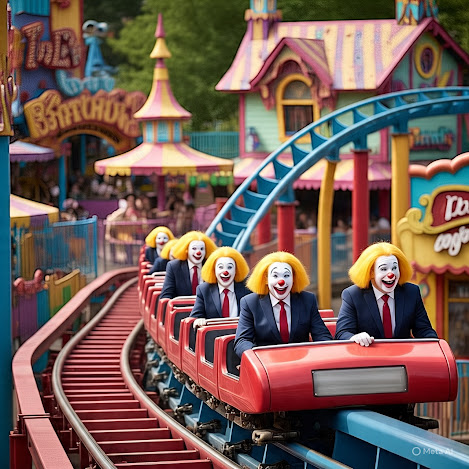
As the outcome of the worldwide trade and tariff battles unleashed by an unpredictable administration remains uncertain, the tangible results are already becoming apparent. Businesses are bracing for massive structural changes, foreign exchange rates and interest rates are actively reacting, and everyday investors are questioning what the future holds for their long-term early retirement funds. Surveying groups of peers and investors, reactions span a wide emotional spectrum, ranging from dismissive perspectives that view the situation as a passing trend to catastrophic predictions of financial ruin.
To find clarity amid the noise, it is helpful to return to foundational economic principles and address the most basic question at hand: what exactly is a tariff? In economic terms, a tariff functions simply as a sales tax charged by the federal government on goods imported into the country. These taxes are paid directly by the entity handling the importation—whether that is an individual consumer ordering a specialty item directly from an overseas manufacturer, or major corporate retailers like Amazon, Walmart, and Apple bringing in merchandise by the shipload.
Ultimately, however, these tariffs are not paid by foreign nations or multinational corporations; they are paid directly by the end consumer. If a retailer’s cost of goods increases due to import taxes, prices are inevitably raised to maintain profit margins. Beyond retail goods, tariffs directly impact heavy industries and construction. If a major home improvement retailer wants to build a new storefront or an energy corporation needs to construct an oil rig, tariffs on imported steel, copper, lumber, and countless other components drive up project costs. These increased expenses cascade down into the housing market, as the vast majority of modern building materials rely on international supply chains.
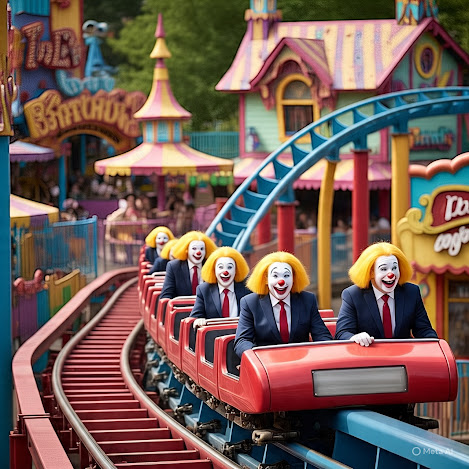
On average, tariffs function identically to any broad-based sales tax, resulting in higher prices across the board. Just like traditional taxation, the overarching macroeconomic effect is a deliberate cooling of the economy and a reduction in consumer spending power. On the fiscal side, the collected revenue flows directly into the government’s coffers, which can theoretically help fund the national budget and reduce the deficit. Nevertheless, governments inherently require tax revenue to function, meaning a balanced mix of sales, income, and corporate taxes is standard practice. The critical factor is that these tax levels should remain as low as possible to keep the country running efficiently while offering enough predictability for individuals and businesses to plan for the future.
This predictability is precisely where the current tariff regime encounters friction. The administration’s approach of throwing out exceptionally high tariff numbers as threats, only to walk them back and alter them on a near-daily basis, introduces profound uncertainty into commercial planning.
While the broader economic fallout leans heavily toward disruption, policymakers typically implement tariffs with the stated goal of protecting domestic industries. For instance, placing a punitive tax on imported vehicles grants domestic manufacturers a direct competitive advantage, allowing them to capture higher profits. While consumers generally lose out through elevated prices and reduced product selection, domestic automakers and their industrial employees benefit in the short term. Such measures can be deployed strategically for national defense purposes—such as protecting domestic aerospace manufacturers to ensure a secure supply of fighter jets—or they can emerge from political lobbying by powerful industrial sectors seeking to shield their balance sheets from foreign competition.

Crucially, this protectionist impulse is not confined to a single political party. Past administrations from both sides of the aisle have utilized tariffs to court specific voting blocs. One notable example includes taxes levied on imported solar panel components, which were subsequently increased under successive administrations. Such policies block cheap, clean energy components that could otherwise lower energy costs and boost domestic industrial competitiveness for decades. Artificially restricting the flow of affordable energy provides no clear long-term benefit to the broader economy.
To understand the employment argument often used to justify tariffs, consider a hypothetical tax on imported automobiles. If the tax is set high enough, many buyers will pivot toward domestic alternatives to save money. Consequently, domestic automakers see increased sales, leading them to hire more workers, expand factory output, and potentially invest in new technologies.
Yet, this localized boom comes with a heavy macroeconomic trade-off. Every other sector of the economy must absorb higher costs for transportation and equipment. Delivery fleets spend more on logistics, forcing companies to pass those costs onto consumers. Emerging startups and technological innovations face a slightly more expensive and less efficient operating environment. Furthermore, liberated from robust international competition, domestic manufacturers face fewer incentives to innovate, leading to slower long-term efficiency gains even as short-term profits rise.
This overarching dynamic explains why mainstream economists overwhelmingly agree that tariffs should be deployed sparingly. They almost invariably cause unexpected economic damage, diminish overall efficiency, and slow down economic momentum, though specific security concerns can occasionally justify the costs.
The persistent confusion surrounding the current administration’s enthusiasm for tariffs stems from rhetoric that positions these trade barriers as a mechanism for national wealth generation. Proponents focus narrowly on first-order effects, such as a domestic factory hiring additional workers, while ignoring the widespread efficiency losses felt across the rest of the economy. Financial markets reflect this reality instantly: when large tariff increases are announced, share prices tumble because corporate leaders and investors recognize that earnings will inevitably decline. Conversely, when tariffs are paused or dialed back, equities rebound.
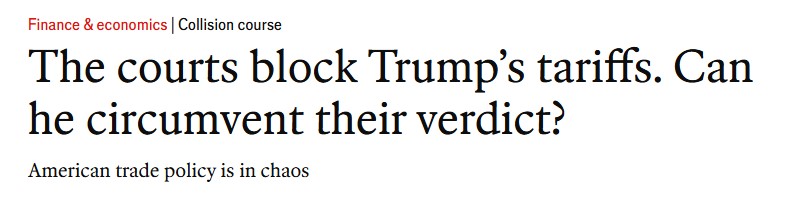
Because tariffs operate as a national sales tax rather than a precise strategic weapon, market participants frequently interpret the threats as high-stakes negotiating tactics designed to extract concessions from trade partners. Regardless of the underlying strategy, the consequence is an economy acutely sensitive to the shifting whims of a single executive office—a dynamic that tests the traditional constitutional separation of powers among independent branches of government. Legal challenges from various institutional quarters have already begun playing out in the judicial system as courts evaluate the executive authority to impose sweeping trade restrictions.
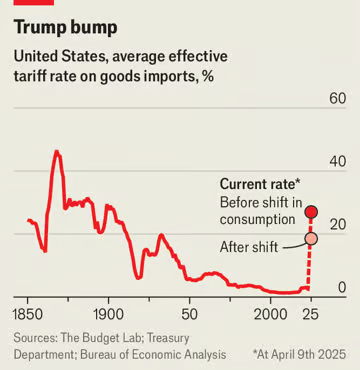
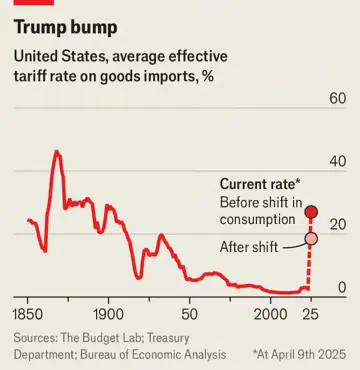
Despite recent dramatic proposals, the baseline of the United States economy remains anchored to decades of historically low tariffs and relatively free international trade. While the financial media highlights rapid policy shifts, the broader economic apparatus functions like a massive cargo ship with an extensive inventory buffer. Importers routinely stockpile goods ahead of anticipated tariff implementation, delaying the immediate impact on retail shelves.
As existing stockpiles are depleted and import volumes decline, the downstream effects are expected to manifest as price increases and potential supply constraints on essential machinery, tools, and consumer goods. The ultimate trajectory of the current economic climate remains open-ended, with outcomes hinging on whether the high tariffs become permanent fixtures or ultimately serve as temporary negotiating leverage that gives way to restored trade agreements.
Ultimately, market observers and individual investors are reminded that the foundational resilience of the economy often outlasts political friction. While media headlines frequently alternate between extreme optimism and acute panic, historical precedent suggests that open markets, collaborative international trade, and democratic institutional checks provide a stable long-term foundation for sustained economic growth.