For those who have tuned out the daily financial drama to focus on everyday life, the current artificial intelligence story centers on rapid technological leaps, massive corporate capital expenditures, and widespread speculation over how automation will reshape labor markets. Yet, beneath the surface of these technological advancements lies a deeper psychological narrative about market volatility and human fear.

Financial commentators and investors worry that the mania surrounding artificial intelligence is moving too fast, setting the stage for a severe market correction. This dynamic holds particular resonance for early retirement advocates and veterans of previous economic cycles who witnessed firsthand how the late-1990s tech boom launched early careers, only for the subsequent crash to threaten job security and personal stability. As questions mount regarding this latest investment cycle, long-time financial commentators are taking to conference stages—such as the recent Camp FI Midwest event and upcoming gatherings like the Bogleheads conference—to contextualize current market anxieties against historical precedents.
Will the AI Bubble Ruin Our Retirement?
Having achieved over two decades of financial independence and early retirement, veterans of the movement are frequently asked how they manage to sleep at night amid continuous global uncertainty. Observers immersed in the 24-hour news cycle often point to a litany of pressing concerns: volatile geopolitical leaders, persistent inflation eroding purchasing power, escalating national debt levels, and simmering international conflicts threatening global stability.

However, a retrospective look reveals that these worries are merely modern iterations of anxieties that have persisted for generations. Examining concerns from twenty years prior, during the economic landscape of 2006, uncovers a remarkably similar set of fears. Back then, markets worried about different political figures, escalating conflicts in the Middle East, surging national debt, and inflation. Instead of an artificial intelligence bubble, investors fixated on the looming housing market bubble. Rather than automation displacing office workers, public discourse centered on manufacturing and tech jobs being outsourced overseas. Society even wrestled with the concept of "peak oil," fearing that fossil fuel demand would permanently outstrip supply—an outcome that ultimately reversed course entirely.
Despite the profound anxieties of 2006, the subsequent two decades witnessed the Great Financial Crisis, driven by irrational exuberance over real estate and high leverage in mortgage-backed financial instruments. While that downturn represented the most severe economic contraction since the Great Depression, its long-term impact on diversified portfolios tells a different story. In the grand arc of the market, even a major crash appears as a temporary dip when viewed alongside decades of sustained economic growth. A long-term investment in the broader market through those turbulent years still yielded substantial gains, weathering subsequent disruptions such as the 2020 pandemic crash.

Parallel to market performance, broader global indicators demonstrated substantial human progress over the same twenty-year period. Extreme poverty rates experienced significant declines, infant mortality rates were drastically reduced, and clean energy adoption accelerated as solar panel technology became vastly more affordable. Solar power generation now accounts for the vast majority of new energy capacity added globally, while electric vehicle adoption continues its upward trajectory. These developments suggest that focusing energy on optimism and tangible progress often yields better outcomes than succumbing to predictions of doom.
The Core of Economic Prosperity
Financial media outlets frequently capitalize on fear by spinning alarming narratives about market overvaluation, government debt, and technological disruption. Yet these fear-mongering accounts often overlook a fundamental economic reality: true prosperity does not originate from financial systems or stock market tickers, which are ultimately human-invented abstractions represented by digital numbers.

Instead, genuine prosperity stems directly from productivity. The capitalist system is inherently volatile, prone to cyclical booms and busts driven by human sentiment. Beneath the choppy waves of the financial markets, however, real people perform actual work, solve complex problems, and develop innovative inventions. If a financial system experiences a catastrophic failure because market participants lose confidence in existing asset valuations, society has historically demonstrated the capacity to reset the system, adjust the metrics, and resume productive labor.
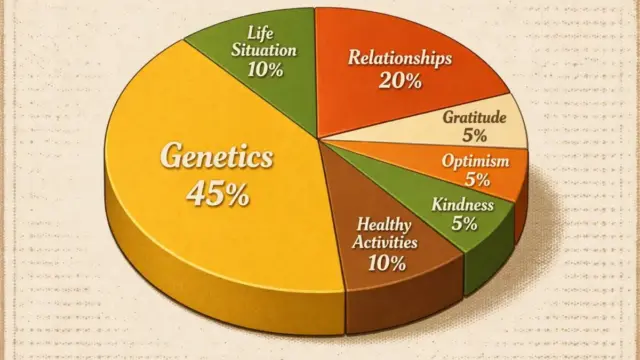
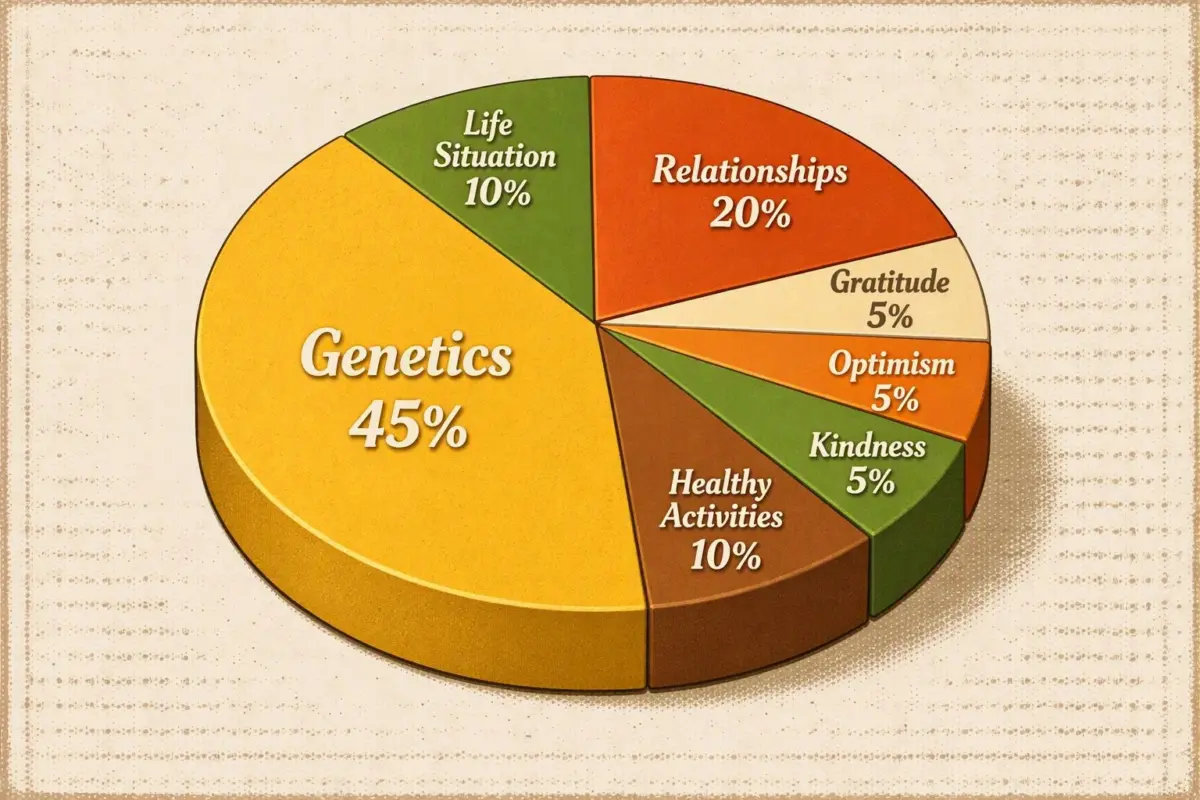
Economic growth, the standard of living, and the viability of long-term financial independence rely entirely on high productivity. Once a society achieves a certain baseline standard of living, human happiness ceases to scale purely with material wealth. Beyond satisfying basic needs, overall life satisfaction depends heavily on non-financial factors, including strong personal relationships, maintaining an optimistic philosophy, engaging in physical activity, and cultivating a sense of purpose.

Understanding and Overcoming Financial Fear
Despite the empirical evidence supporting long-term economic resilience, many individuals—including those who have achieved financial security—remain gripped by fear regarding an uncertain future. This pervasive anxiety is largely a product of human evolution. As biological organisms, humans evolved as sophisticated danger-detection machines designed to protect against immediate physical threats.
When immediate survival risks like predators, disease, and starvation are mitigated, the human brain does not simply turn off its vigilance mechanism; instead, it shifts the goalposts. Once food security and social belonging are achieved, anxiety pivots toward financial preservation, social status, neighborhood aesthetics, or complex tax strategies. This psychological phenomenon demonstrates that modern fear is often disconnected from objective physical danger.

Overcoming this underlying anxiety requires self-awareness and an examination of personal history. Fears related to financial scarcity often stem from childhood conditioning or generational trauma inherited from family members who lived through historic economic depressions. By identifying the root causes of these fears and evaluating worst-case scenarios objectively, individuals can replace passive worry with active problem-solving. Action breeds confidence and resilience, transforming the unfamiliar into the manageable.
Furthermore, managing mental health requires auditing one’s daily information diet. Continuous exposure to curated, sensationalized news stories can poison mental well-being. Human beings are biologically wired to solve problems actively through physical and mental engagement, ideally in open environments, rather than passively consuming alarming media indoors. Aligning daily behaviors with fundamental human needs—such as regular movement, continuous learning, and positive social engagement—substantially reduces existential dread.

Artificial Intelligence as an Experiment
Applying this framework of resilience to contemporary concerns reveals that the rapid rise of artificial intelligence should be viewed not as an existential threat, but as a large-scale socioeconomic experiment. While technological shifts inevitably introduce uncertainty, an examination of technological history highlights significant potential upsides alongside clear disruptions.
Artificial intelligence functions essentially as a highly advanced cognitive tool, capable of boosting efficiency and productivity on a massive scale. Just as previous technological revolutions—such as the advent of the internet and the proliferation of smartphones—displaced certain traditional job roles while simultaneously creating entirely new industries and economic sectors, artificial intelligence is reshaping the modern labor market. While entry-level administrative, financial, and technical roles face immediate transformation, the broader economy stands to benefit from lower service costs and enhanced productive capacity.

Ultimately, technological innovations like artificial intelligence present individuals with choices. They can serve as catalysts for panic and doom-scrolling, or they can act as triggers for continuous learning, adaptation, and personal growth. As financial independence advocates emphasize, navigating an uncertain future successfully requires recognizing that fear is an internal emotional response to be managed, rather than an accurate reflection of external reality. Everything of value in life lies just beyond the barrier of fear, waiting for those willing to engage with the world through action, optimism, and resilience.