
For veteran financial commentators and early retirement advocates, this cycle of exuberance and subsequent dread is a familiar script. Having navigated the tech boom and bust of two decades ago—an era that initially supercharged early career paths before threatening personal financial stability and legal residency applications—long-term observers are uniquely positioned to evaluate today’s market psychology. Addressing these widespread concerns requires looking past the daily financial media noise to examine the structural reality of economic growth, technological disruption, and the deeply ingrained human tendency toward fear.

Will the AI Bubble Ruin Our Retirement?
The psychological weight of market volatility often manifests in fundamental questions about the safety of retirement savings. Conversations with peers frequently reveal a deep-seated anxiety regarding the stability of the global financial ecosystem. Observers watching the 24-hour news cycle are easily overwhelmed by a continuous stream of alarming headlines, ranging from geopolitical conflicts and rising national debt to persistent inflation and the looming specter of artificial intelligence disrupting the labor market.

Yet, historical perspective offers a powerful antidote to immediate panic. A retrospective look at the economic landscape of 2006 reveals a strikingly similar catalog of anxieties. Two decades ago, society wrestled with towering national debt, persistent inflation, escalating conflicts in the Middle East, contentious political leadership, and fears of economic displacement—though the prevailing concern then was the outsourcing of jobs to India and China rather than automation through AI. Furthermore, widespread panic over "Peak Oil" predicted that rising fossil fuel consumption would inevitably outstrip supply and doom global economies, a scenario that was ultimately upended by technological innovation.

Despite the severe disruptions of the Great Financial Crisis that followed—sparked by irrational exuberance in the housing market and excessive financial leverage—long-term market data demonstrates remarkable resilience. A balanced investment portfolio weathering both the 2008 crash and the subsequent market turbulence of the 2020 pandemic has historically experienced significant long-term growth. Beyond financial markets, broad global indicators over the past twenty years demonstrate substantial human progress, including a sharp decline in extreme poverty, a halving of infant mortality rates, and a massive economic shift toward clean energy, marked by a dramatic drop in solar panel costs and the rapid rise of electric vehicles.

Prosperity, Productivity, and Human Happiness
Examining the core drivers of economic health reveals that real prosperity is not fundamentally anchored in the abstract numbers of the stock market or the financial system, but rather in tangible human productivity. Market capitalism is inherently volatile, characterized by choppy waves and dramatic swings. However, beneath the surface turbulence, real people continue to perform real work, invent new tools, and solve complex problems.

The financial system itself is a human invention; if a market system faces systemic failure due to speculative excess, historical precedent shows that economic structures can adapt, reset, and resume production. The underlying tools of productivity—technology, human ingenuity, and labor—remain intact.

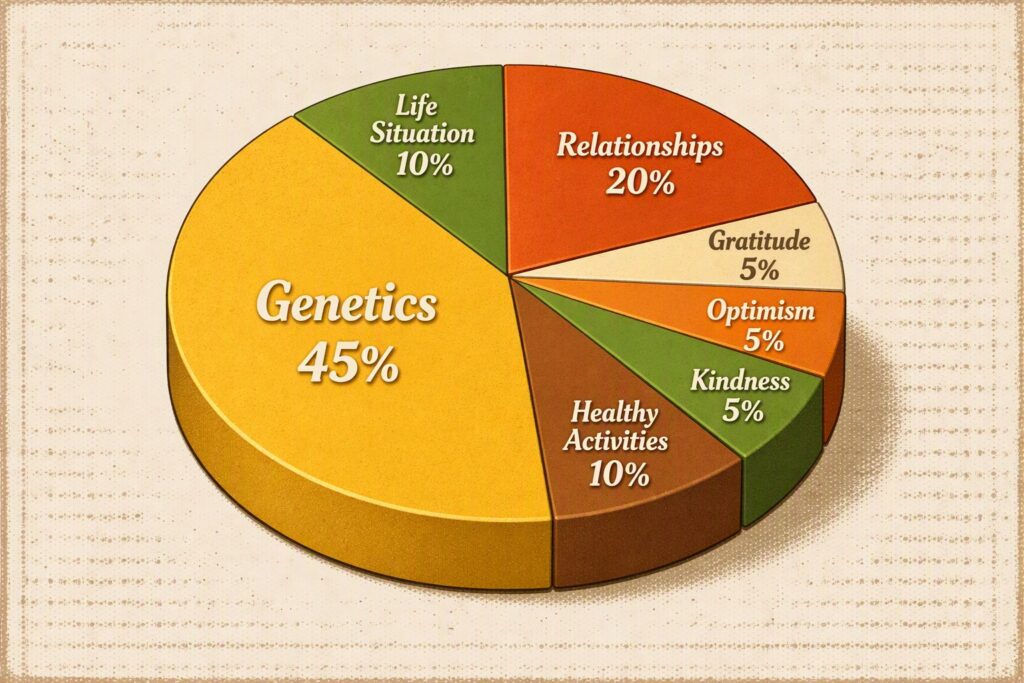
At the same time, human well-being relies on factors far beyond baseline economic output. Once a society achieves a certain standard of living, additional wealth yields diminishing returns in terms of overall happiness. Psychological research and life experience suggest that happiness is primarily driven by non-monetary elements, including strong interpersonal relationships, acts of kindness, personal optimism, and regular engagement in healthy physical activity. Wealth merely serves as a small component of an individual’s overall life satisfaction.

Understanding and Overcoming Fear
Despite the availability of historical data demonstrating long-term economic recovery, pervasive background anxiety remains a constant challenge for many investors. Human beings are fundamentally wired as danger-detection machines, an evolutionary trait designed to protect against predators and physical scarcity. However, once immediate physical threats are resolved, this cognitive machinery often continues to function by shifting goalposts, transforming minor inconveniences or abstract uncertainties into significant sources of stress.
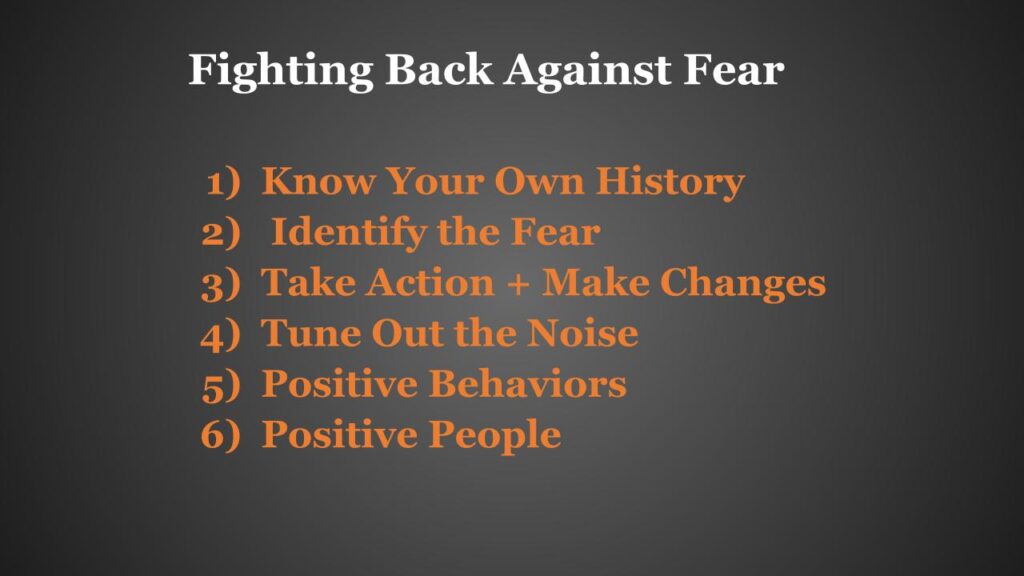
This persistent anxiety manifests in various ways across different stages of life and socioeconomic standing. Whether rooted in childhood scarcity, past trauma, or cultural conditioning, fear often clouds objective assessments of the present. Overcoming this cycle requires self-awareness, an understanding of one’s personal history, and a willingness to confront worst-case scenarios rationally rather than emotionally.

Taking deliberate action serves as one of the most effective ways to neutralize fear. By actively engaging with unfamiliar concepts rather than avoiding them, individuals build resilience and adaptability. Tuning out the sensationalized daily news cycle—which frequently prioritizes alarming narratives over objective reporting—allows individuals to refocus their energy on positive behaviors, physical health, and productive problem-solving in alignment with natural human capabilities.
The AI Era as an Ongoing Experiment
Viewing major technological shifts through the lens of experimentation rather than existential dread provides a constructive framework for evaluating the modern artificial intelligence boom. Rather than succumbing to doom-scrolling and pessimistic news coverage, understanding the underlying mechanics of AI reveals its true nature: a highly sophisticated cognitive tool designed to enhance human efficiency.

Much like the introduction of automated machinery in manufacturing or the rise of the internet and mobile applications, artificial intelligence promises to drive unprecedented levels of productivity and economic prosperity. At the same time, it introduces significant labor market disruptions, shifting employment patterns across various sectors and concentrating financial rewards among asset owners and shareholders.

Ultimately, technological revolutions present individuals with choices. By treating these developments as opportunities for continuous learning and adaptation rather than sources of terror, participants in the modern economy can navigate market uncertainty while focusing on the fundamental drivers of a meaningful and satisfying life.