For those who have tuned out the financial drama to focus on daily life, the overarching narrative of the artificial intelligence boom can be summarized by rapid technological development, massive corporate capital expenditure, and widespread speculation about future economic disruption. Yet, beneath the enthusiasm lies a persistent worry: investors fear that while AI is undoubtedly a major technological milestone, the market mania is moving too fast, setting the stage for a magnified replay of the dot-com crash of the early 2000s.

That historical parallel resonates strongly with early retirement pioneers who navigated the turn-of-the-century tech boom. What began as a career-accelerating wave during the dot-com era nearly culminated in job loss and citizenship hurdles when the bubble burst. Decades later, as modern financial commentators field endless questions about the current investment cycle, the conversation has expanded beyond personal blogs into speaking engagements at gatherings like Camp FI Midwest and upcoming appearances at the national Bogleheads conference.
Will the AI Bubble Ruin Our Retirement?
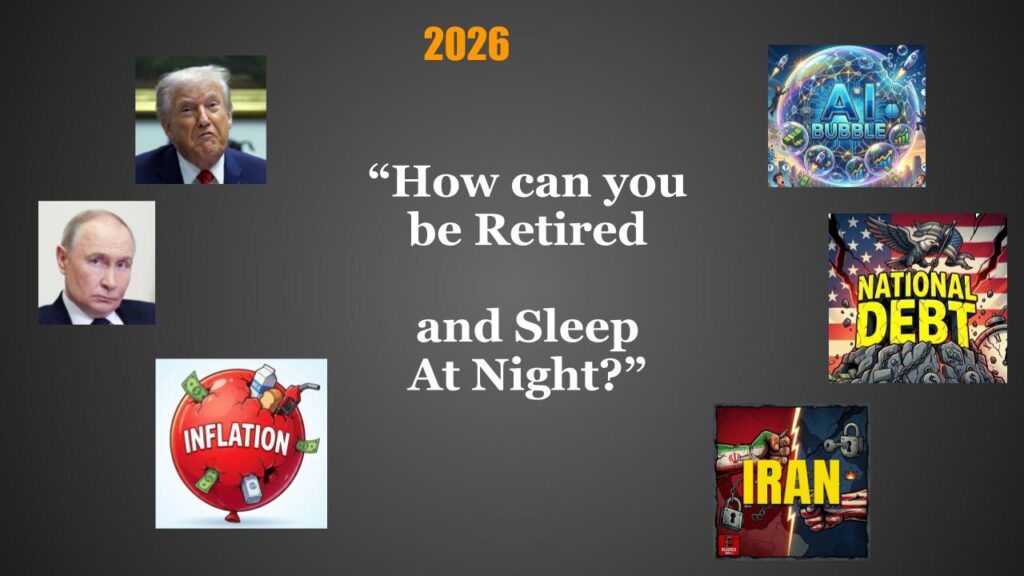
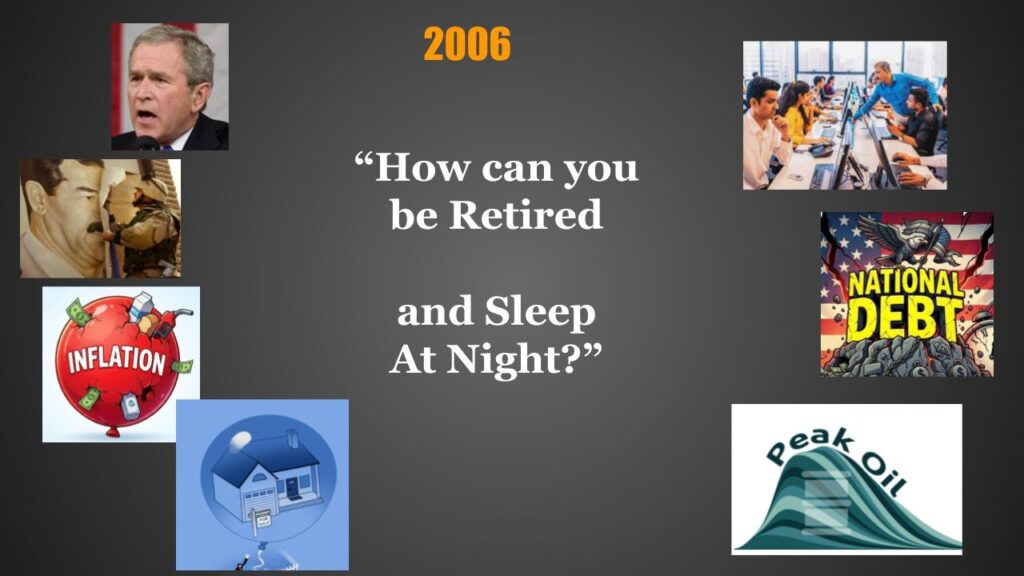
Having celebrated more than two decades of early retirement, long-time financial commentators often encounter a fundamental question from concerned peers: How can anyone remain comfortable and sleep soundly given the state of the world?

A continuous diet of news headlines presents no shortage of potential catastrophes. Observers point to geopolitical instability involving prominent political figures, persistent inflation eroding purchasing power, towering national debt, and bubbling international conflicts that threaten global stability. Yet, human anxiety is nothing new. Exactly twenty years prior, during the mid-2000s, individuals faced an entirely different set of perceived existential threats. Back then, public anxiety centered on different political leaders, wars in the Middle East, national debt, inflation, and an overvalued housing market rather than an AI market bubble. Instead of artificial intelligence threatening modern employment, the prevailing fear was the mass outsourcing of jobs overseas. Society even wrestled with debates over peak oil, worrying that increasing fossil fuel consumption would inevitably outstrip dwindling global supplies—an outcome that ultimately reversed course.
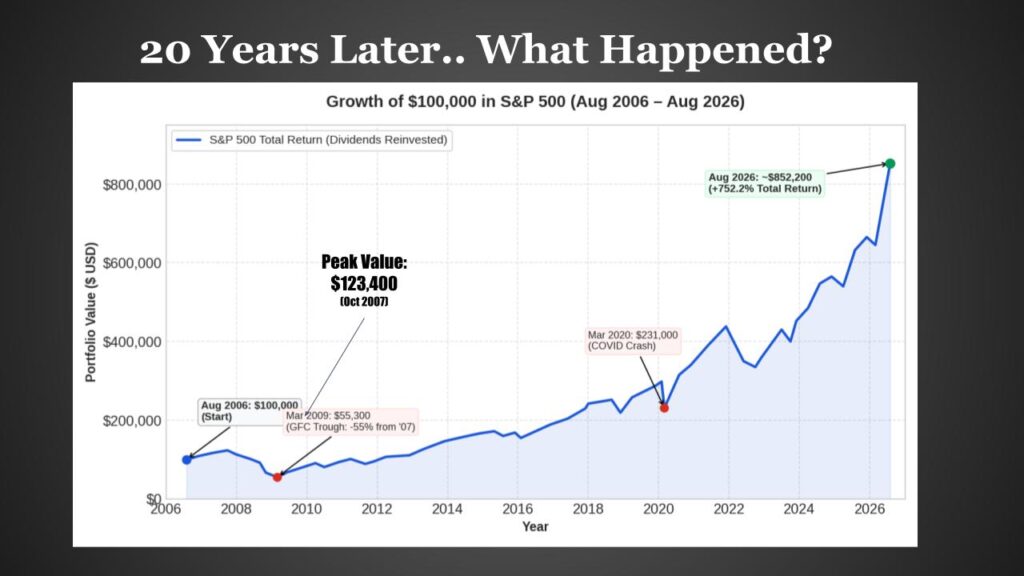
Despite the anxieties of 2006, the subsequent two decades witnessed extraordinary economic and societal progress. Even the Great Financial Crisis—triggered by irrational exuberance over housing prices combined with excessive leverage in mortgage-backed financial instruments—proved to be a temporary setback in the grand arc of market history. While it stands as the most severe economic downturn since the Great Depression, long-term market data demonstrates that diversified equity investments continued to compound significantly over the ensuing twenty years, weathering subsequent disruptions such as the 2020 pandemic-induced crash.

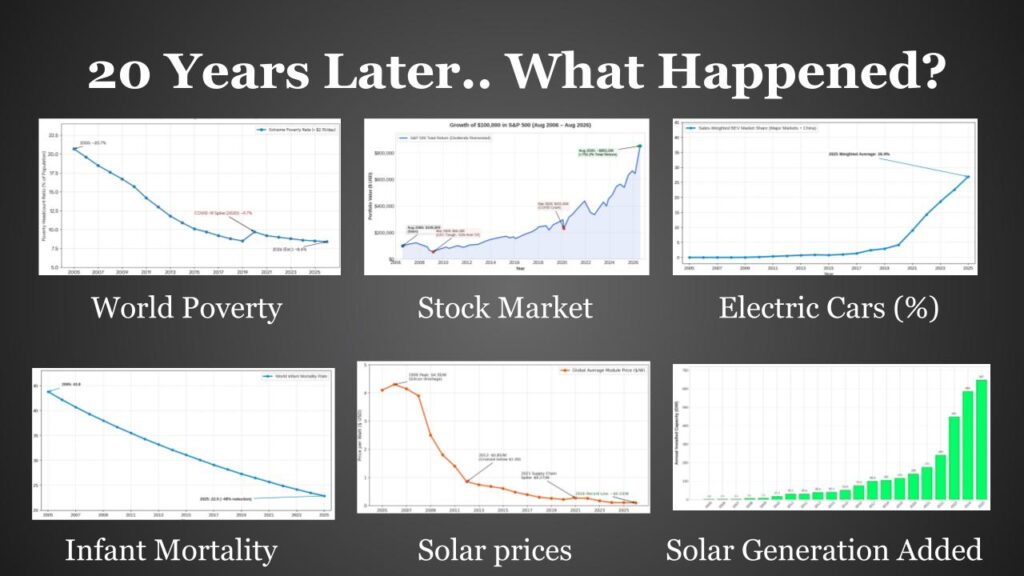
Global metrics outside the stock market also improved dramatically over the same period. The proportion of the global population living in extreme poverty dropped sharply, while global infant mortality rates were cut in half. Clean energy adoption surged as the cost of solar panels plummeted, transforming solar generation into a dominant source of new power capacity worldwide. Simultaneously, the adoption of electric vehicles expanded from a negligible fraction to a substantial share of global automotive sales.
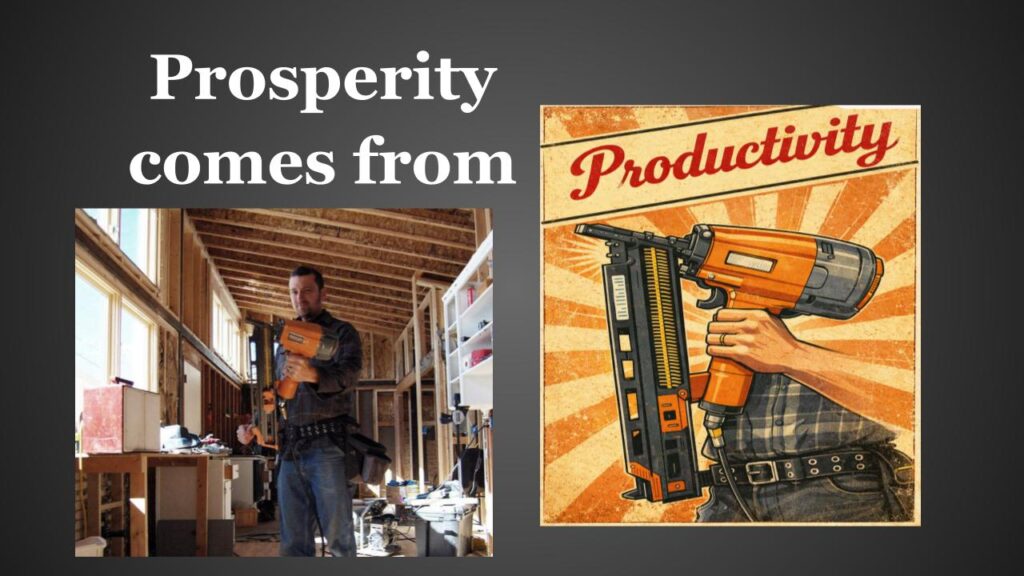
These historical comparisons raise a fundamental question: Should individuals direct their finite energy toward worrying about an uncertain future or toward constructive optimism? While modern commentators question whether the current situation is fundamentally different—pointing to mounting national debt, the scale of the AI bubble, or theoretical scenarios involving unchecked artificial superintelligence—fear-mongering narratives frequently overlook a foundational economic truth. True prosperity does not originate from financial systems or stock market tickers, which ultimately represent numerical abstractions tracked by computers. Prosperity originates from productivity.
Productivity, Prosperity, and the Source of Human Happiness
The underlying mechanics of capitalism are inherently volatile, characterized by cyclical booms and sharp corrections. Beneath the surface turbulence, however, real people perform tangible work and develop genuine innovations. Economic systems and financial markets are human inventions; if a financial system suffers a catastrophic correction due to shifting sentiment, society possesses the capacity to reset the metrics and resume productive activity, a mechanism deployed successfully during past crises.
Human standard of living, economic growth, and the feasibility of early retirement are fundamentally driven by high productivity. However, once society achieves a certain baseline standard of living, human happiness tends to plateau along that specific economic dimension. In developed nations, the basic material requirements for survival and comfort were surpassed decades ago, prompting individuals to seek other factors to maximize overall life satisfaction.
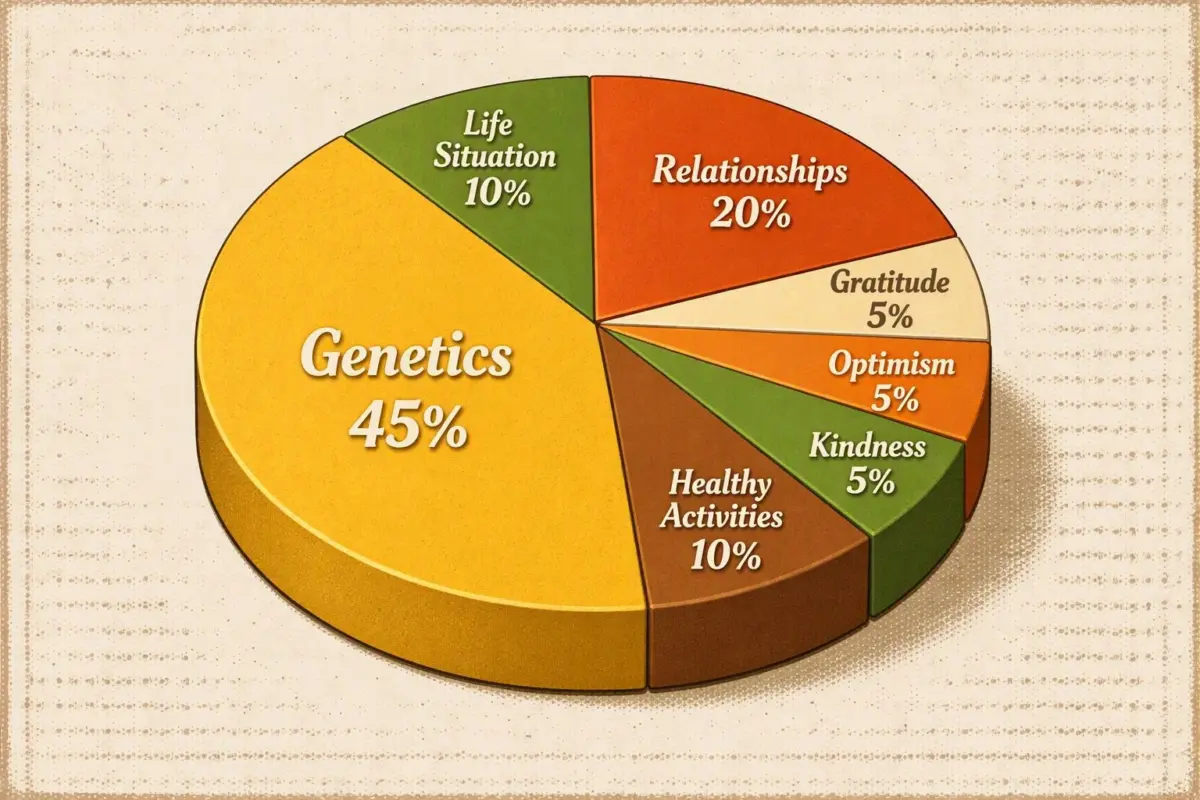
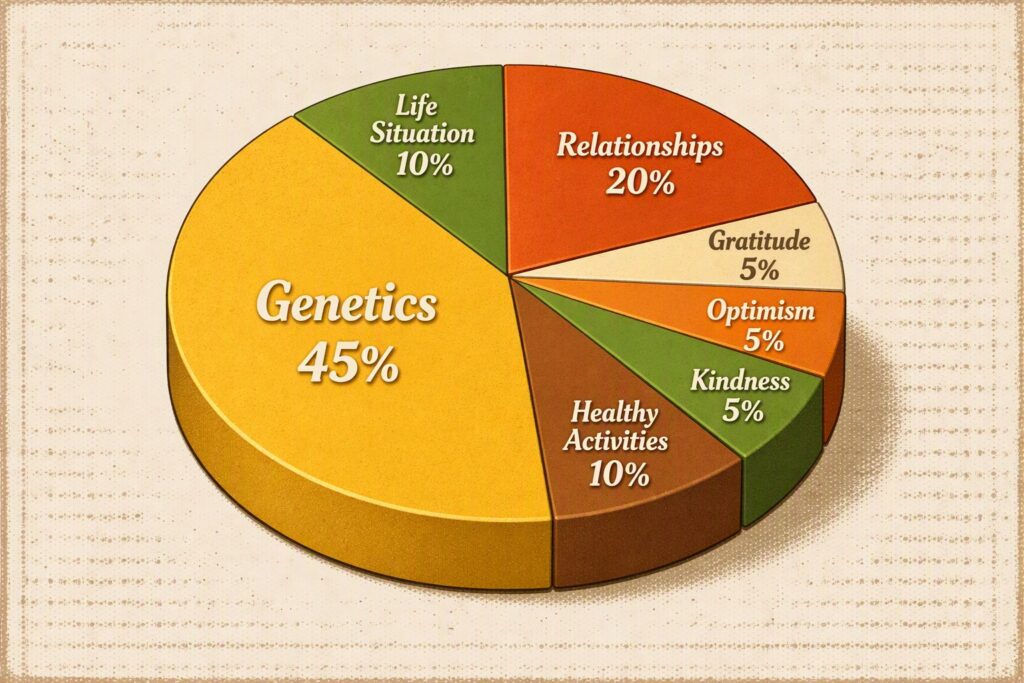
Wealth represents merely one component of an individual’s broader life circumstances, which contribute to the multifaceted pie of human happiness. While genetic predisposition plays a significant role in baseline temperament, individuals retain control over several vital choices. Cultivating strong personal relationships, practicing lifelong gratitude and optimism, and engaging in regular outdoor physical activity consistently rank among the most powerful determinants of well-being.
Despite these enduring principles, pervasive anxiety persists even within communities dedicated to financial independence. The root cause often traces back to a fundamental aspect of human psychology: fear itself.
Confronting Fear and Framing Everything as an Experiment
As biological organisms, humans evolved as sophisticated danger-detection machines. This background anxiety served as an evolutionary survival trait designed to protect early humans from immediate threats. However, modern environments lack the traditional predators and physical scarcity of the past, yet the psychological detection machinery remains active. When one layer of worry is resolved—whether securing adequate food, establishing tribal belonging, or accumulating financial security—the human mind frequently shifts its focus to new targets, ranging from neighborhood aesthetics and tax optimization strategies to regulatory concerns like required minimum distributions for aging retirees.
Combatting this persistent anxiety requires self-awareness and rational evaluation. Examining personal history—such as growing up in households shaped by the scarcity mindsets of the Great Depression or navigating past trauma—can clarify why certain financial anxieties persist independently of objective present realities. Identifying specific fears, exploring worst-case scenarios, and taking decisive action help transform the unfamiliar into the familiar. Action breeds confidence and resilience, cultivating the adaptability needed to navigate unpredictable situations.
Mitigating chronic anxiety also involves auditing one’s daily mental diet, particularly by reducing consumption of sensationalized news media designed to provoke fear rather than impart objective understanding. Aligning daily routines with human evolutionary biology—incorporating physical movement, outdoor activity, and constructive problem-solving—helps alleviate mental health strains associated with sedentary, indoor lifestyles. Surrounding oneself with optimistic, productive peers further reinforces a forward-looking mindset.
Adopting a framework where every major life transition is treated as an experiment can fundamentally alter one’s relationship with uncertainty. Whether evaluating minor lifestyle adjustments or major decisions such as changing careers, relocating, or entering early retirement, viewing outcomes through an experimental lens neutralizes paralyzing dread.
This experimental perspective applies directly to the current artificial intelligence landscape. Rather than succumbing to doom-scrolling and generalized apprehension, viewing AI through the lens of technological evolution reveals profound potential alongside recognizable disruption. Artificial intelligence functions essentially as a powerful cognitive tool that amplifies human efficiency and productivity.
Like previous technological revolutions—from the advent of mechanized manufacturing to the rise of the internet and mobile smartphones—AI will inevitably displace certain routine entry-level administrative and operational roles while simultaneously lowering service costs and catalyzing entirely new industries. While the economic rewards of such technological leaps frequently concentrate among capital owners and shareholders, the broader trajectory of human innovation continues to expand overall economic capacity.
Ultimately, artificial intelligence represents another variable in the ongoing evolution of modern life—an opportunity for individuals to choose between paralyzing fear and proactive engagement, continuous learning, and purposeful living.