For long-standing financial commentators and early retirement advocates, this cycle feels profoundly familiar. Reflecting on these market dynamics, prominent personal finance figure Peter Adeney—widely known as Mr. Money Mustache—recently addressed these widespread fears. Having navigated the early internet boom that helped launch his own path to early retirement, Adeney has spent decades fielding questions about impending financial busts. Recently expanding on these themes through presentations at events like Camp FI Midwest and upcoming appearances at the Bogleheads conference, he has sought to reframe how investors view technological revolutions, economic uncertainty, and the psychology of fear.

Will the AI Bubble Ruin Retirement?
The psychological weight of a volatile global landscape often leads people to question how anyone can remain financially secure or sleep soundly at night. A glance at contemporary news headlines reveals no shortage of anxieties: volatile geopolitical tensions involving global leaders, persistent concerns over inflation eroding purchasing power, a towering United States national debt, and multiple international conflicts threatening global stability. All of this compounds atop fears of an overinflated stock market powered by artificial intelligence.
Yet, a historical perspective reveals that these anxieties are merely updated versions of fears from decades past. Reflecting on a conversation with a friend twenty years ago in 2006, the worries of that era followed a remarkably similar pattern. Back then, people fretted over geopolitical conflicts in the Middle East, rising national debt, inflation, and an overvalued housing market that ultimately precipitated the Great Financial Crisis. Instead of artificial intelligence taking away jobs, the prevailing fear was the mass outsourcing of labor to India and China, alongside existential warnings about "peak oil" and diminishing fossil fuel supplies.

Despite the severe economic downturn of 2008—the largest market crash since the Great Depression—the long-term trajectory of a diversified stock market demonstrated remarkable resilience. Over the subsequent two decades, a hypothetical investment continued to grow substantially, absorbing subsequent shocks like the 2020 pandemic-induced crash. Concurrently, broader global metrics improved dramatically: extreme poverty rates declined significantly, infant mortality rates were cut in half, and clean energy alternatives like solar power and electric vehicles experienced exponential cost reductions and adoption rates.
This historical contrast raises a fundamental question about whether current anxieties are truly different this time around, or if the financial media simply excels at crafting compelling, fear-driven narratives.

Understanding Prosperity and Productivity
At the core of these economic concerns lies a fundamental misunderstanding of where true prosperity originates. Financial systems, stock markets, and national debt figures are ultimately human-engineered constructs represented by numbers on computer screens. When market systems experience severe corrections, society retains the capacity to adapt and rebuild.
True economic prosperity is fundamentally driven by productivity rather than the fluctuations of financial markets. Adeney notes that the core lessons from past economic commentary remain timeless: while capitalism is inherently volatile and prone to wild cyclical swings, beneath the surface waves lie real people doing tangible work and developing genuine innovations.

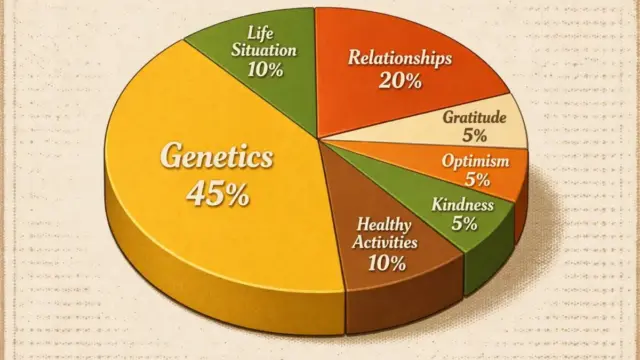
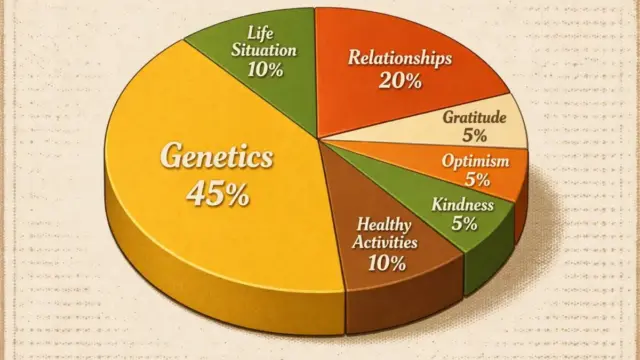
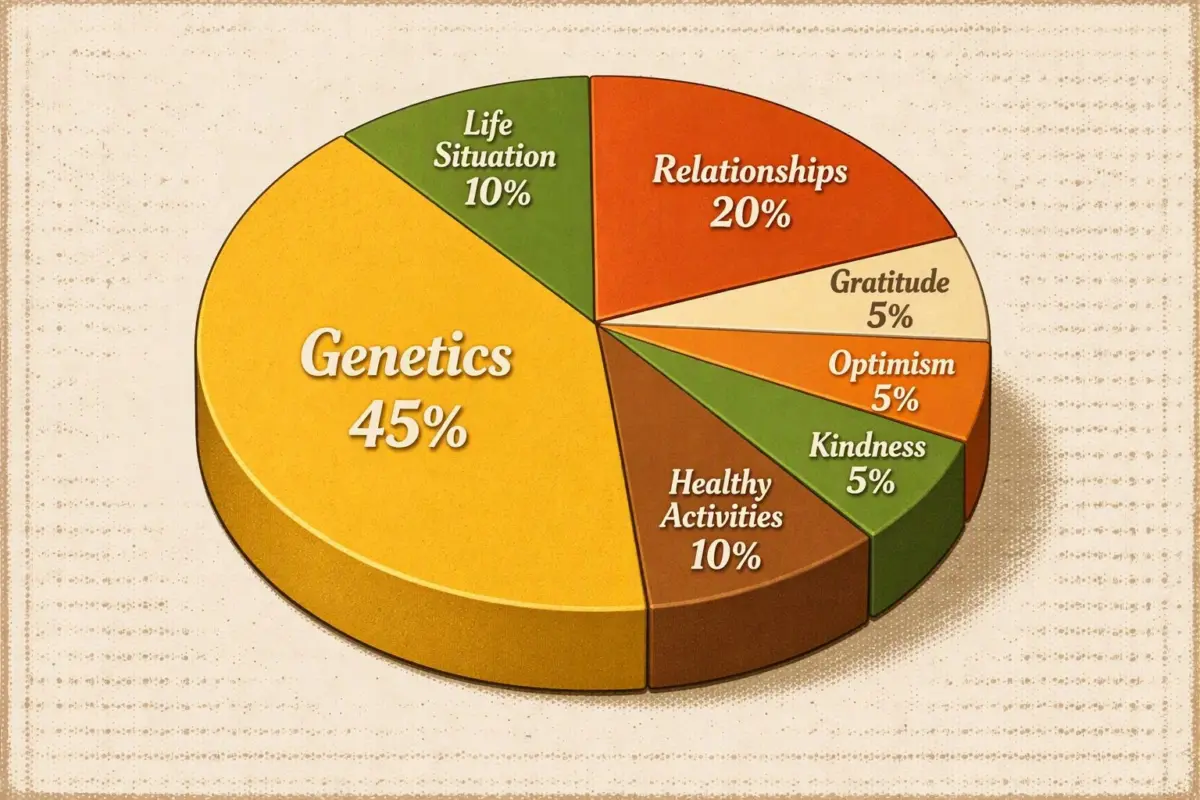
When humanity faces systemic disruptions, it relies on accumulated tools, ingenuity, and productivity to re-establish stability. Furthermore, once basic standards of living are met in developed nations, human happiness and well-being depend far more on non-financial factors—such as strong personal relationships, gratitude, optimism, and engagement in healthy physical activities—than on marginal changes in net worth.
Confronting the Root Cause: Fear Itself
Despite historical evidence showing that market economies continually recover and adapt, many individuals remain consumed by anxiety regarding an uncertain financial future. This persistent state of worry stems largely from evolutionary biology. Human beings evolved as sophisticated danger-detection machines, utilizing background fear as a survival mechanism to protect against predators, disease, and scarcity.

However, modern environments lack the immediate physical threats of the past, causing this detection machinery to shift its focus. Once physical survival and basic financial security are achieved, the human mind moves the goalposts, finding new subjects for anxiety—ranging from neighborhood property standards and tax strategies to macroeconomic events and automated technologies. This perpetual search for threats can transform comfortable, financially secure individuals into chronic worriers.
Overcoming this pervasive background anxiety requires self-awareness and an understanding of personal history. Childhood experiences, family environments characterized by scarcity mindsets, or past trauma often shape an individual’s relationship with money and risk in adulthood. By directly identifying specific fears and examining worst-case scenarios, people can realize that many catastrophic outcomes are statistically unlikely. Taking deliberate action helps make the unfamiliar familiar, fostering resilience and confidence in one’s ability to adapt to changing circumstances.

Additionally, managing mental health requires critically evaluating daily information diets. The modern news cycle relies heavily on selecting the most alarming stories of the day, which can inadvertently poison a person’s outlook. Cultivating positive behaviors, engaging in physical activity, and surrounding oneself with optimistic, productive peers serve as effective antidotes to pervasive media-driven fear.
Approaching Technological Shifts as Experiments
This framework of resilience and adaptability applies directly to contemporary anxieties surrounding artificial intelligence. Rather than viewing emerging technologies solely through a lens of doom-scrolling and apprehension, experts suggest framing major life and technological shifts as experiments.

Artificial intelligence represents a profound technological change, mirroring past transitions brought by the internet and smartphones. While it functions essentially as an advanced cognitive tool capable of dramatically increasing efficiency and productivity, it also presents disruption to traditional labor markets. Like previous industrial revolutions, these shifts tend to displace certain entry-level administrative and technical roles while simultaneously lowering service costs and catalyzing entirely new industries.
Ultimately, technological advancements like artificial intelligence provide an opportunity to make deliberate choices. Whether viewed as an existential threat or a catalyst for learning, adaptation, and broader economic evolution, how individuals respond to change remains within their control. Recognizing that fear is often a symptom of psychological conditioning rather than an accurate reflection of objective reality allows people to navigate market volatility, technological revolutions, and personal transitions with greater clarity and long-term optimism.