
For those who have tuned out financial media entirely, the core narrative of the AI boom can be summarized quickly. Investors worry that while artificial intelligence is unquestionably a major technological breakthrough, the financial mania surrounding it is moving too fast and reaching unsustainable heights. Many fear a repeat of the dot-com crash of the early 2000s, an era that shaped the early career of financial commentator Mr. Money Mustache, before the subsequent market correction threatened his livelihood and citizenship application.

As an established internet financial commentator, he receives numerous inquiries regarding current investment cycles, mirroring questions asked during previous booms and busts. To address these widespread concerns, he recently developed a presentation delivered at the Camp FI Midwest event, with an upcoming refinement scheduled for the Bogleheads conference in November. The core question remains pressing for many savers: Will the AI bubble ruin retirement security?

Reflecting on more than two decades of retirement, the contrast between past and present anxieties offers significant perspective. Financial anxiety is rarely about the present; rather, it is a shifting target. Looking back twenty years to 2006, investors harbored entirely different fears. Back then, political instability involved leaders like George W. Bush, Saddam Hussein, and Osama bin Laden, while the military conflict centered on Iraq rather than Iran. Economic anxieties at the time similarly focused on the national debt, inflation, and an overvalued stock market driven by the housing bubble rather than AI. Furthermore, widespread concern existed over job outsourcing to India and China, alongside the prominent debate of "Peak Oil"—the persistent fear that rising fossil fuel consumption would inevitably outstrip dwindling global supplies.

The subsequent reality challenged those fears. The Great Financial Crisis materialized shortly thereafter, driven by irrational exuberance in housing prices and excessive leverage within mortgage-backed financial instruments, resulting in the most severe market downturn since the Great Depression. Yet, viewed through a long-term lens, even that unprecedented crash appears minor. A hypothetical investment of $100,000 made prior to the crisis would have grown significantly over the following two decades, easily absorbing subsequent market disruptions such as the COVID-19 crash of 2020.

Global socioeconomic indicators similarly defied pessimistic forecasts. Extreme poverty rates dropped from 20 percent in 2005 to eight percent over the subsequent twenty years, while global infant mortality rates were cut in half. Clean energy expanded dramatically as solar panel manufacturing costs dropped by roughly 40 times, allowing solar generation to dominate new energy additions worldwide. Simultaneously, electric vehicle sales surged from near-zero to represent a substantial quarter of all global automobile sales, pointing toward complete market adoption similar to the trajectory already achieved in countries like Norway.

This historical contrast raises a fundamental question: Is the current economic environment fundamentally different? Skeptics point to the towering U.S. national debt, the unprecedented scale of the AI market valuation, or theoretical scenarios involving artificial general intelligence spiraling out of control. Financial media capitalizes on these fears, yet these pessimistic narratives frequently overlook a core economic principle: true prosperity originates from productivity, not financial systems and stock market valuations, which ultimately function as numerical representations on computer screens.

The foundational lesson remains clear: while capitalist systems are inherently volatile and prone to cyclical swings, underlying productivity relies on real people performing tangible work and generating genuine innovations. The concept of an economy or financial market is a human construct. If a financial system experiences a severe correction, societies have historically reset the metrics and resumed productive labor—a mechanism demonstrated during the 2008 financial crisis and numerous historical precedents. Economic growth, living standards, and the feasibility of early retirement are fundamentally driven by technological and operational productivity, rather than short-term market sentiment.

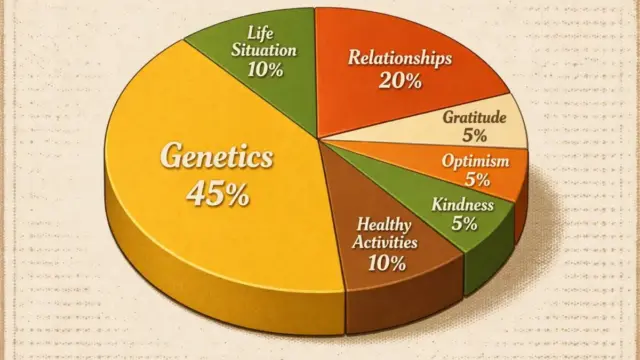
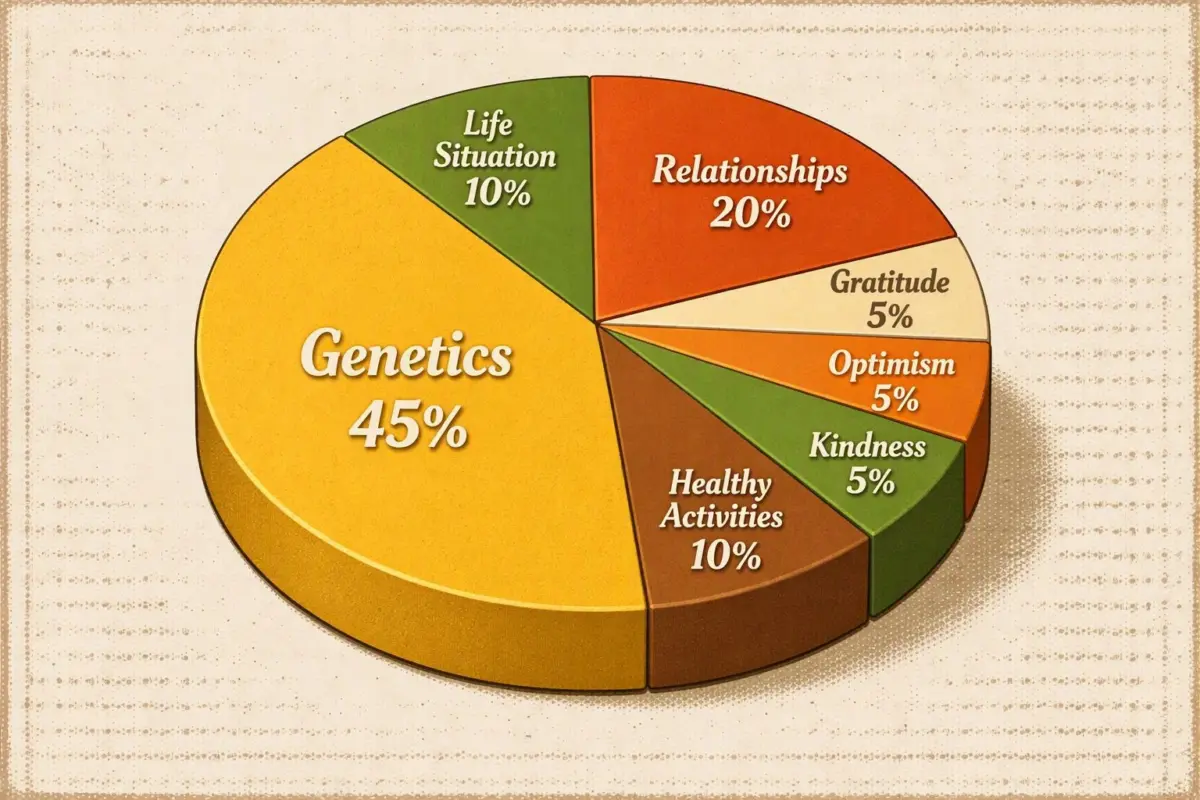
Furthermore, material prosperity represents only one component of human well-being. Once a society achieves a stable standard of living, human happiness largely stabilizes in that dimension, shifting focus toward interpersonal relationships, personal philosophy, and physical health. Happiness studies suggest that while innate disposition plays a significant role, controllable factors—such as maintaining strong social connections, practicing gratitude, optimism, and engaging in regular outdoor physical activity—substantially dictate overall life satisfaction.

Despite these enduring principles, pervasive anxiety persists even among experienced investors. This background fear is largely a product of human evolution; humans function effectively as danger-detection machines. Throughout history, evolutionary pressures prioritized vigilance against predators, disease, and scarcity. Once immediate physical survival is secured, psychological mechanisms frequently shift the target of anxiety toward social acceptance, financial comparison, and status symbols. Over time, these anxieties can manifest as meticulously structured lifestyle concerns, ranging from homeowner association regulations to complex tax strategies and required minimum distributions for individuals fortunate enough to accumulate substantial wealth.

Combatting this innate fear requires self-awareness and rational evaluation. Understanding one’s personal history—such as childhood experiences of financial scarcity or past trauma—can illuminate why modern financial environments trigger disproportionate stress. By identifying specific fears and examining worst-case scenarios objectively, individuals often realize that potential outcomes are rarely as catastrophic as anticipated. Taking proactive measures transforms the unfamiliar into the manageable, fostering resilience and confidence in one’s ability to adapt to changing circumstances.
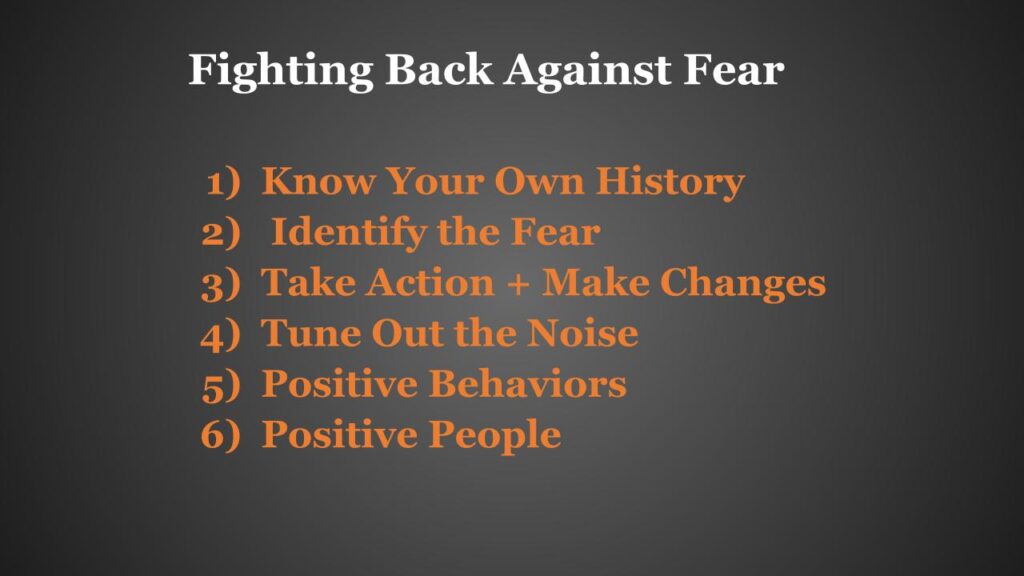
A critical component of reducing anxiety involves filtering out excessive negative stimuli from daily media consumption, which frequently prioritizes sensationalized and alarming stories over balanced reporting. Prioritizing positive behaviors, physical movement, outdoor activity, and constructive engagement with optimistic communities can dramatically improve mental well-being. Adopting an experimental mindset toward major life transitions—whether changing careers, relocating, or entering early retirement—frames uncertainty as a source of intellectual curiosity rather than existential threat.

Applying this perspective to the current artificial intelligence boom reframes the technology not as an impending catastrophe, but as a profound economic experiment. While AI will inevitably disrupt traditional labor markets—displacing entry-level administrative, financial, and eventually transportation roles—historical technological revolutions, from the internet to mobile computing, have consistently followed a pattern of automating existing tasks while generating entirely new industries and lowering service costs.

Artificial intelligence functions fundamentally as a cognitive tool designed to enhance human efficiency and productivity. While the economic rewards of such innovations often concentrate among asset owners and shareholders, the broader technological advancement mirrors previous industrial shifts. Ultimately, AI represents another opportunity for individuals to exercise agency, favoring continuous learning, action, and adaptability over fear and avoidance. As financial observers frequently note, the most meaningful achievements and desired outcomes in life invariably lie just on the other side of fear.