

Yet, even amid these profound ideological conflicts, daily life continues with its own peculiar juxtapositions. Consider the simple, complicated act of finding a venue to watch an international soccer match. The search for a public space that is lively and welcoming—while carefully avoiding establishments dominated by crowds chanting "USA! USA!"—serves as a remarkably apt metaphor for the contemporary Latino experience in the United States. It is a state of perpetual negotiation, moving gracefully and sometimes painfully between cultural allegiances, national identities, and a deep-seated desire for genuine belonging during a fraught historical moment.
This psychological ambivalence extends directly into the realm of language, literature, and identity. The very act of choosing a descriptor for a diverse, sprawling demographic presents a labyrinth of choices: Chicano, Hispanic, Latino, Latina, Latinx, Latine, or older stylistic iterations like Latin@. Academic and literary circles have long debated these terms, and editors have occasionally balked at manuscripts that fluidly shift between them without exhaustive authorial footnotes. But this linguistic fluidity is not an oversight; it is often the entire point. Embracing the discomfort, confusion, and chaos of multiple terms echoes the philosophy of writers like Gloria Anzaldúa, who famously resisted translation and refused to cater to a single, monolithic readership.
Choosing to mix and match labels whimsically is, for many writers, a conscious rejection of static definitions. At the same time, this linguistic playfulness invites legitimate critique regarding the importance of self-definition, political solidarity, and the risk of giving detractors ammunition to trivialize crucial cultural discourse. These internal contradictions mirror broader questions of civic participation. When international sports tournaments pit ancestral homelands against adopted countries, the question of who to root for becomes a microcosm of a much larger, complex predicament.
Statistical research underscores just how misplaced any expectation of a monolithic community is. Recent demographic analyses of U.S. Latinos emphasize that this rapidly expanding population is characterized by shifting identities, rising educational attainment, and steadily growing political influence. Hispanic Americans are not a singular block, but a vast and multifaceted thread woven deeply into the American tapestry.

Encounters within the literary community often crystallize these generational and cultural intersections. A chance meeting at a major literary conference in Los Angeles with veteran author Luis Rodriguez illustrates the enduring power of these connections. For many readers who came of age decades ago, works like Rodriguez’s memoir Always Running provided vital emotional and psychological navigation during turbulent youth. Such literary interactions reinforce a fundamental realization that the answers, comfort, and cultural medicine needed to navigate a complex society are often found from within.
Contemporary fiction frequently strives to capture this exact emotional terrain. Modern novels attempt to construct characters who can embrace their own internal complexities and contradictions, rejecting static community expectations in favor of fluid, evolving identities. By imagining communities of friends, lovers, and neighbors who refuse to pigeonhole one another, art fulfills its highest purpose: visualizing how society could function rather than merely reflecting how it currently operates.
Explorations of the western United States—particularly the Bay Area—frequently touch upon the rich, complicated messiness of living in a region built on indigenous land, carrying historical echoes that persist into the present day. During Hispanic Heritage Month, turning to fellow Latinx writers offers a way to celebrate not a singular, uniform path, but a multitude of ways to love one’s identity amid social and political discomforts.
Public cultural moments continue to challenge traditional narratives of nationhood. High-profile televised performances that playfully subvert patriotic slogans by listing every nation of the Americas help decenter the colloquial understanding of "America" as referring exclusively to the United States. Expanding the literary canon requires a similar shift, looking past a handful of well-known names to embrace a diverse chorus of storytellers who are actively building the contemporary narrative.
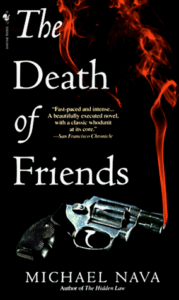
This ongoing literary excavation relies on a robust foundation of foundational and contemporary works that challenge stereotypes and embrace complex, deeply human characters. Among these essential reads are the contemporary queer Chicano detective novels of Michael Nava, notably The Death of Friends and the wider Henry Rios series. Nava’s work combines engaging thriller plotting with unflinching explorations of queerness, homophobia, and internal community pressures set against the backdrops of Los Angeles and the Bay Area.
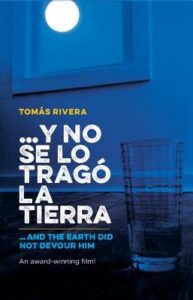
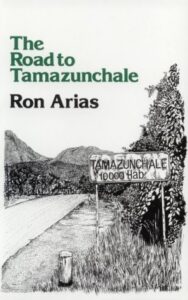
Equally foundational are the works of writers who shattered conventional boundaries decades ago. Cherríe Moraga’s seminal Loving in the War Years broke new ground by seamlessly blending poetry, creative nonfiction, and literary theory to examine Chicana identity and sexuality. Similarly, the "literary abuelos" of the Chicano civil rights movement—such as Tomás Rivera with …and the earth did not devour him and Ron Arias with The Road to Tamazunchale—eschewed safe, stereotypical narratives in favor of formally daring, deeply vulnerable, and aesthetically radical storytelling that remains vital for modern classrooms.
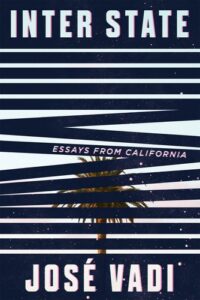
Contemporary essayists and novelists continue to push these boundaries. Writers like José Vadi use the long-form essay to weave personal narrative with rigorous research, exploring subjects as varied as California skateboarding culture, gentrification, dive bars, and jazz history with remarkable joy and clarity. Meanwhile, epistolary milestones like Ana Castillo’s The Mixquiahuala Letters invite active reader participation, allowing the chronology and emotional weight of the story to shift based on the reader’s own personality type, offering a revolutionary approach to narrative structure.
Expanding the conversation further to include works that deeply influence the cultural landscape of the U.S. Southwest brings in monumental texts like Leslie Marmon Silko’s Almanac of the Dead. While Silko does not identify as Latinx, her sweeping, visionary novel explores themes central to the regional community, utilizing critical fabulation to imagine an indigenous reclamation of the borderlands. Alongside these prose milestones, vibrant poetry collections from independent presses—such as Donato Martinez’s Touch the Sky, F.G. Manos’s Papi’s Rift, and MK Chavez’s Dear Animal—ensure that the chorus of contemporary voices remains diverse, independent, and vital.