The young kit, fittingly named Chance by his rescuers, was discovered last June after enduring days of paralysis in his hind legs following the vehicle collision. Left stranded and unable to move, the injured animal’s prognosis was initially grim. A concerned member of the public raised the alarm after spotting the distressed fox by the roadside, prompting local wildlife rescuers to step in and take him under their protective wing.
When Chance first arrived in the care of wildlife professionals, a veterinarian who initially examined the young cub feared that his injuries were too severe and that the kindest course of action would be to put him down. However, determined rescuers refused to give up on the young animal, initiating a painstaking and dedicated rehabilitation program aimed at restoring mobility to his lower body.
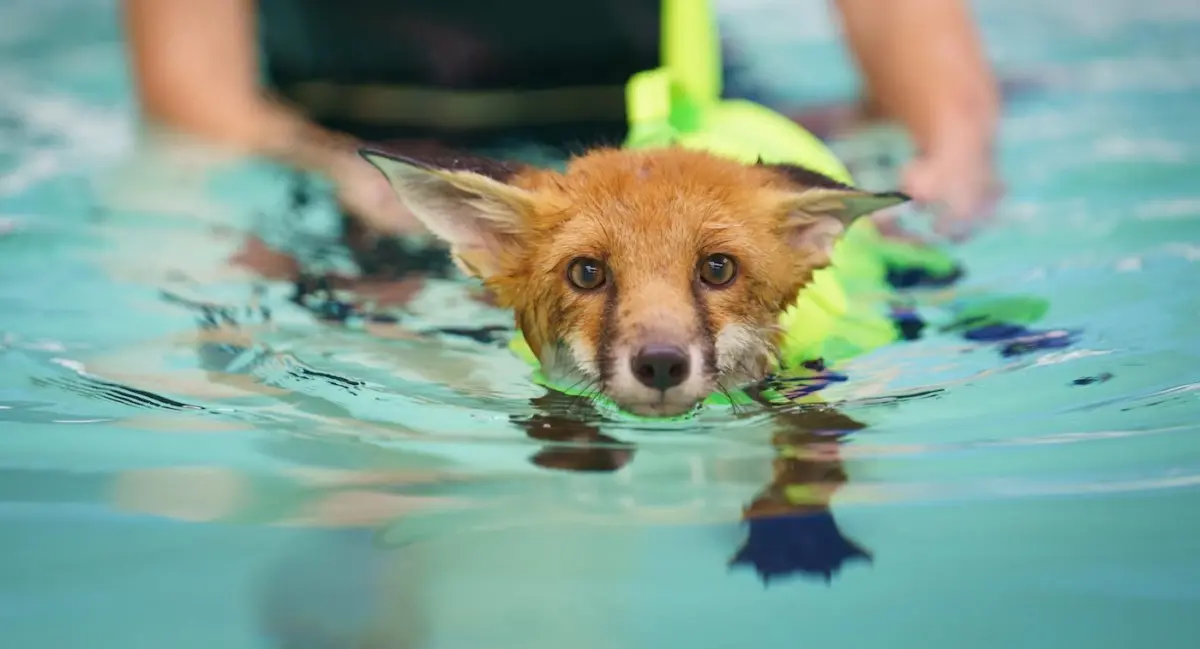
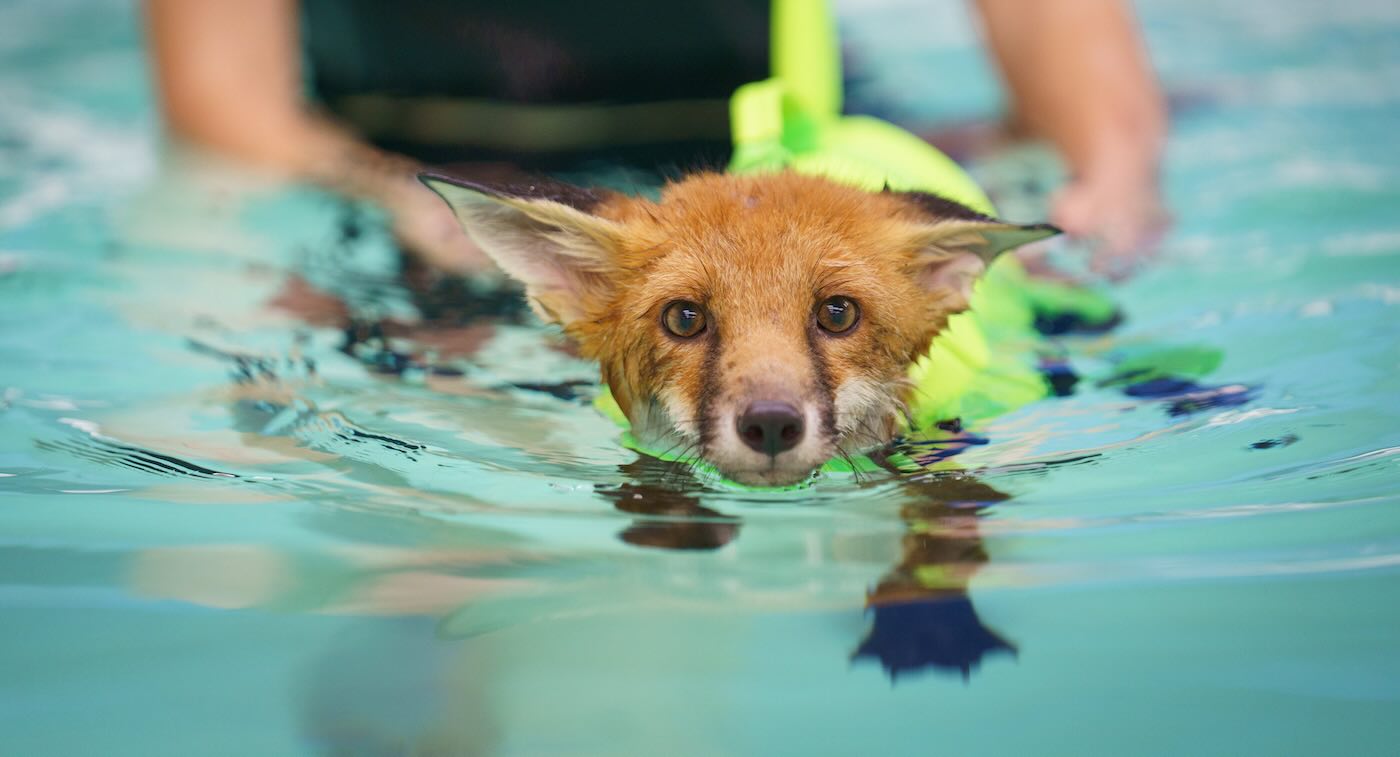
That program has now taken a unique turn at the Mansfield Canine Centre, where Chance receives specialized, free hydrotherapy sessions designed to help him regain the use of his legs. Under the watchful eye of his designated caretaker, Chelsea, the young fox is guided gently through the warm waters of a specialized canine rehabilitation pool.
According to the Mansfield Canine Centre, hydrotherapy is widely recognized as a highly effective, low-impact treatment tailored to support animals recovering from severe injuries, complex medical conditions, post-operative rehabilitation, and long-term mobility challenges. By harnessing the natural buoyancy and gentle resistance of water, the therapy allows animals to rebuild muscle strength, improve coordination and movement, and recover safely while receiving constant professional guidance.
The innovative treatment is already yielding promising results for the resilient young fox. According to his care team, Chance has begun using his back legs much more effectively to support his body weight. He is actively regaining sensation in his lower extremities and can now visibly kick his legs while suspended in the water, marking a dramatic milestone from his condition upon arrival.
To give Chance the absolute best possible chance of eventually returning to his natural habitat, human interaction and handling have been kept to an absolute minimum throughout his time in rehabilitation. Wildlife advocates emphasize that keeping the fox habituation-free is essential. If his physical therapy and overall recovery continue on their current positive trajectory, rescuers hope that the day will soon come when Chance can be safely released back into the wild English countryside where he belongs.
The transformation has left a profound impact on the staff who have watched the cub’s journey unfold. Cathy Fraser, a staff member at the Mansfield Canine Centre, expressed awe at the extent of the animal’s progress over the course of his treatment.
"When you see that it looked like there was no chance he was going to survive, to now, it’s just an incredible journey and to be a part of it is just so lucky," Fraser said. "It’s amazing that this little act of kindness is going to go a long way to potentially Chance being released and living a full, wild life, like he should."
While Chance’s story is a heartwarming tale of resilience and community care, his accident highlights a broader environmental issue currently impacting local wildlife populations. Cheryl Martins, the founder of Mansfield Wildlife Rescue, noted that her organization has observed a concerning and sharp rise in the number of foxes being struck by vehicles across the region this year. According to Martins, extreme seasonal weather patterns have played a significant role in driving urban wildlife onto dangerous roadways.
"A lot of the rodents that they would normally find and hunt are keeping out of the way because of the weather," Martins explained, pointing to the exceptionally hot conditions experienced recently. "They’re moving more into towns and cities looking for food, so they’re getting into the busier roads while they’re out searching."
The combination of dwindling natural food sources and hotter temperatures has forced predators like foxes to expand their foraging territories closer to human settlements, significantly increasing their exposure to fast-moving traffic and urban hazards.
Fortunately, dedicated rescue organizations and local rehabilitation facilities remain on high alert to assist vulnerable animals caught in these difficult circumstances. The Mansfield Wildlife Rescue centre has already successfully nursed back to health five separate foxes that were struck by vehicles over the course of the year, demonstrating an ongoing commitment to protecting local fauna.
For now, Chance continues to make steady strides in the hydrotherapy pool, embodying a symbol of hope for wildlife conservationists and animal lovers alike as he works toward a potential second lease on life in the wild.