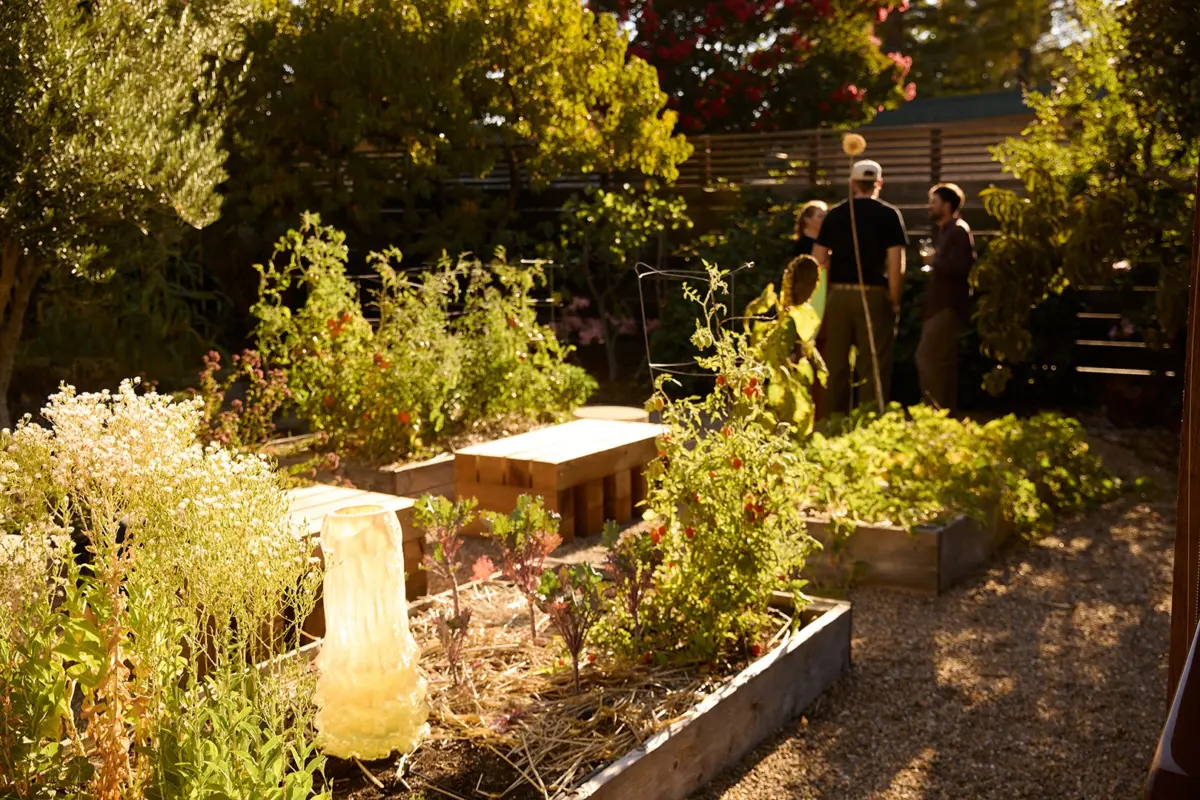
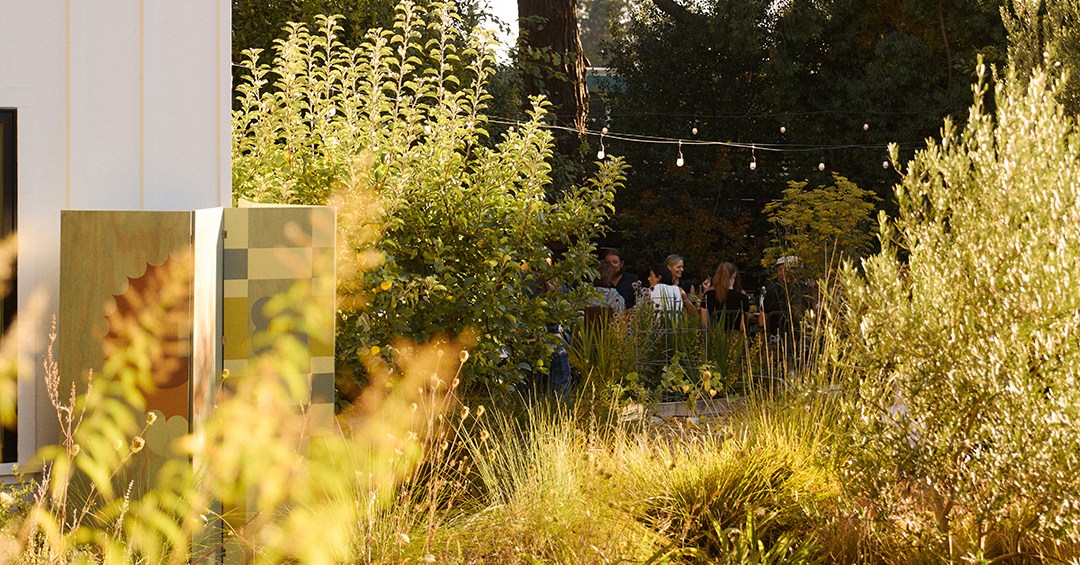
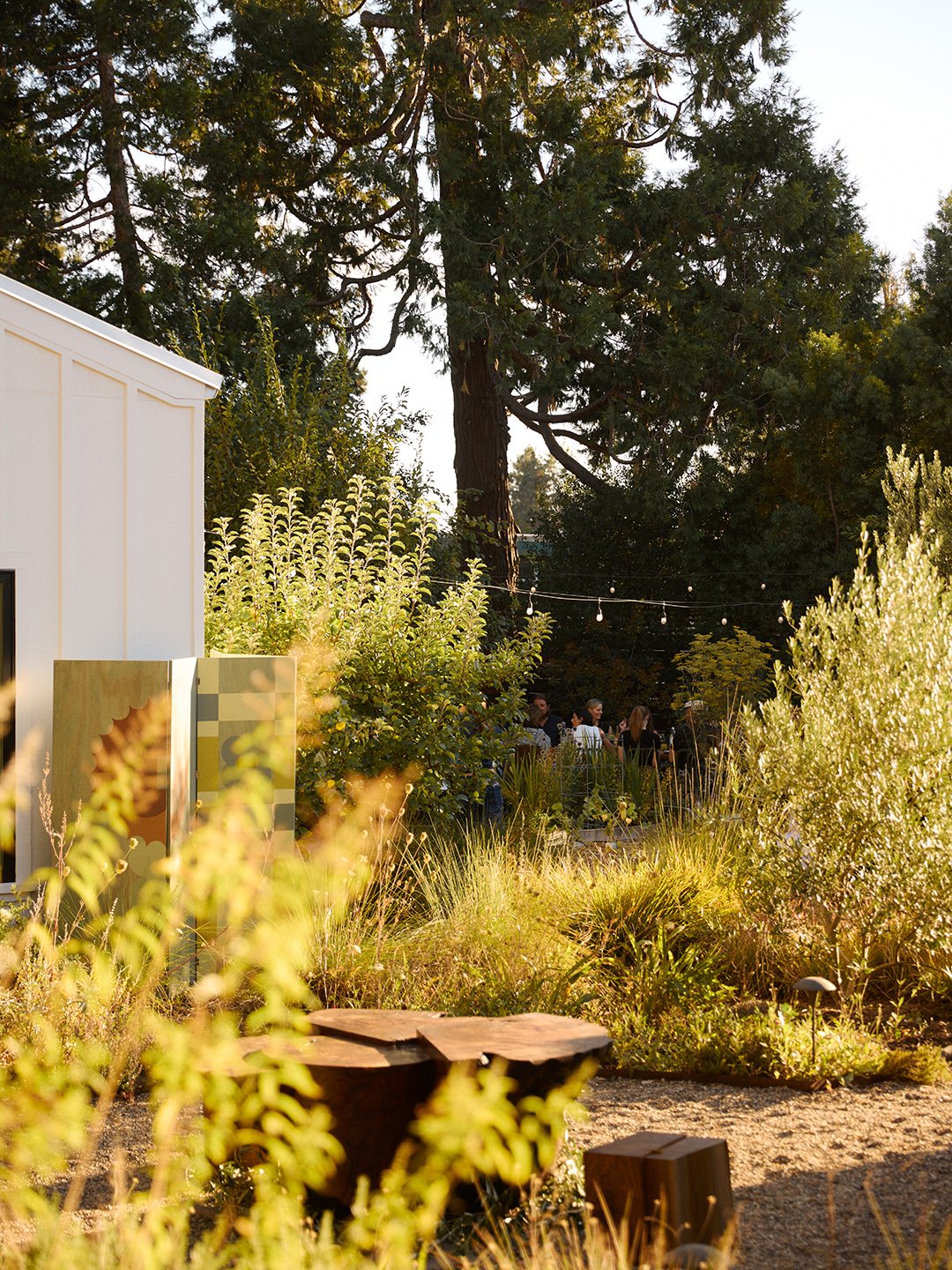
The resulting outdoor exhibition, titled Verdant Phenomena, showcases an array of contemporary pieces from prominent creators and 2026 Good Design Award winners, including Sun Set Furniture, Gantri, and Orca, alongside other notable talents. To celebrate the public opening of the exhibition, Giesenhagen and her partner, John Umbanhowar, welcomed a gathering of artists, designers, and friends for a dreamy, intimate dinner party staged directly among the art objects on display. Against the backdrop of Northern California’s natural beauty, the event offered a masterclass in how landscape, collectible design, and hospitality can seamlessly intertwine.
Reflecting on the philosophy behind the gathering, Giesenhagen points to the intentionality of the layout, starting with her distinct preference for floor-level seating. Rather than relying on traditional chairs with standard seat heights, the designer champions the use of large rugs to anchor outdoor gatherings, fostering a relaxed, grounded atmosphere. By bringing guests closer to the earth, the setup intentionally alters their physical perspective and emotional state. Being low to the ground has a unique way of reducing blood pressure, a sensation Giesenhagen connects to childhood memory, where the surrounding world feels vastly larger, more immersive, and genuinely awe-inspiring. Among her go-to rug collections for achieving this tactile, inviting look are pieces from Nomadory—with whom she has several ongoing collaborations—alongside the natural, neutral textures of Armadillo, and statement-making designs like the vivid Psychedahlia rug by Rachel Shillander for Marc Phillips.
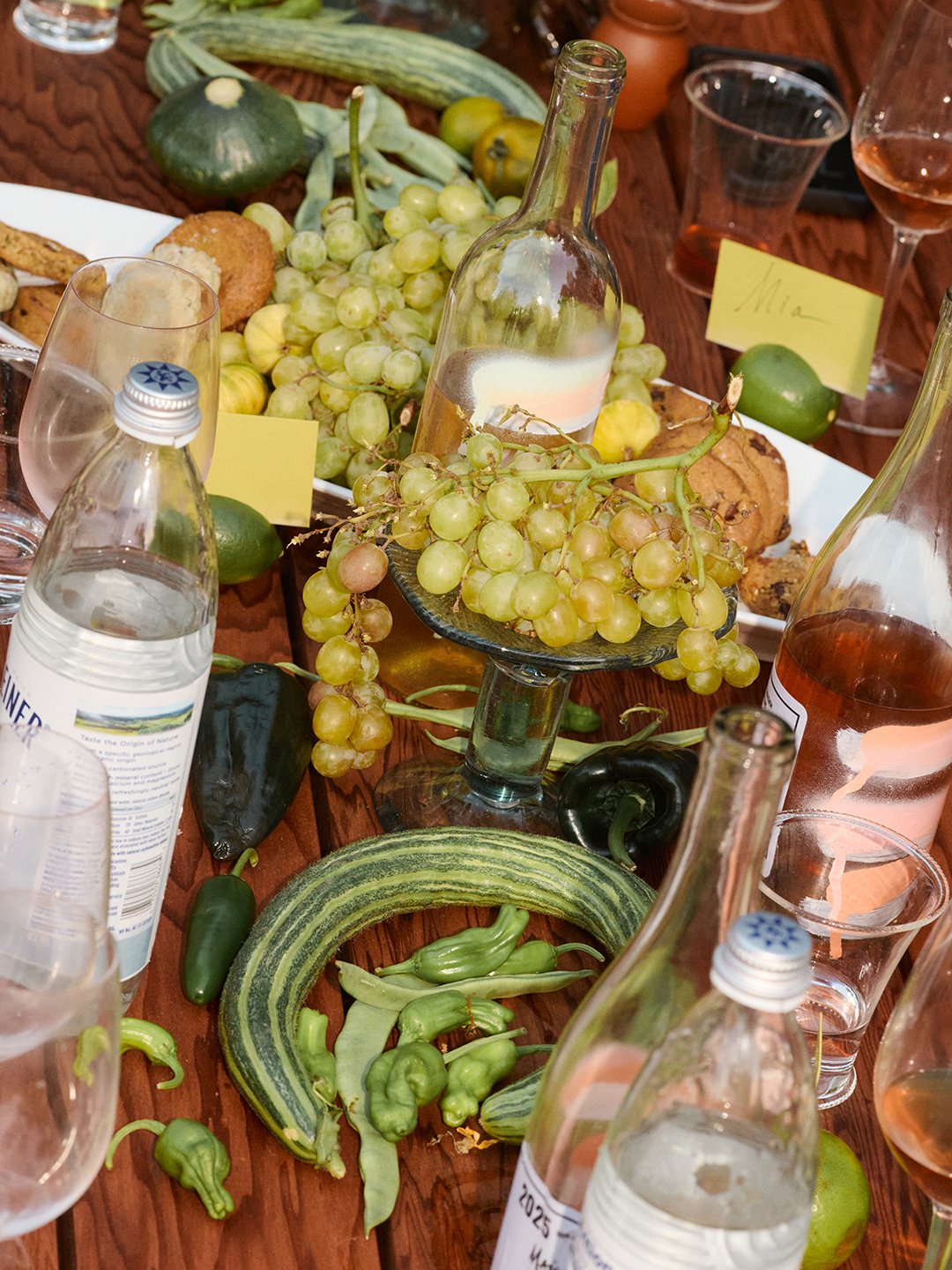
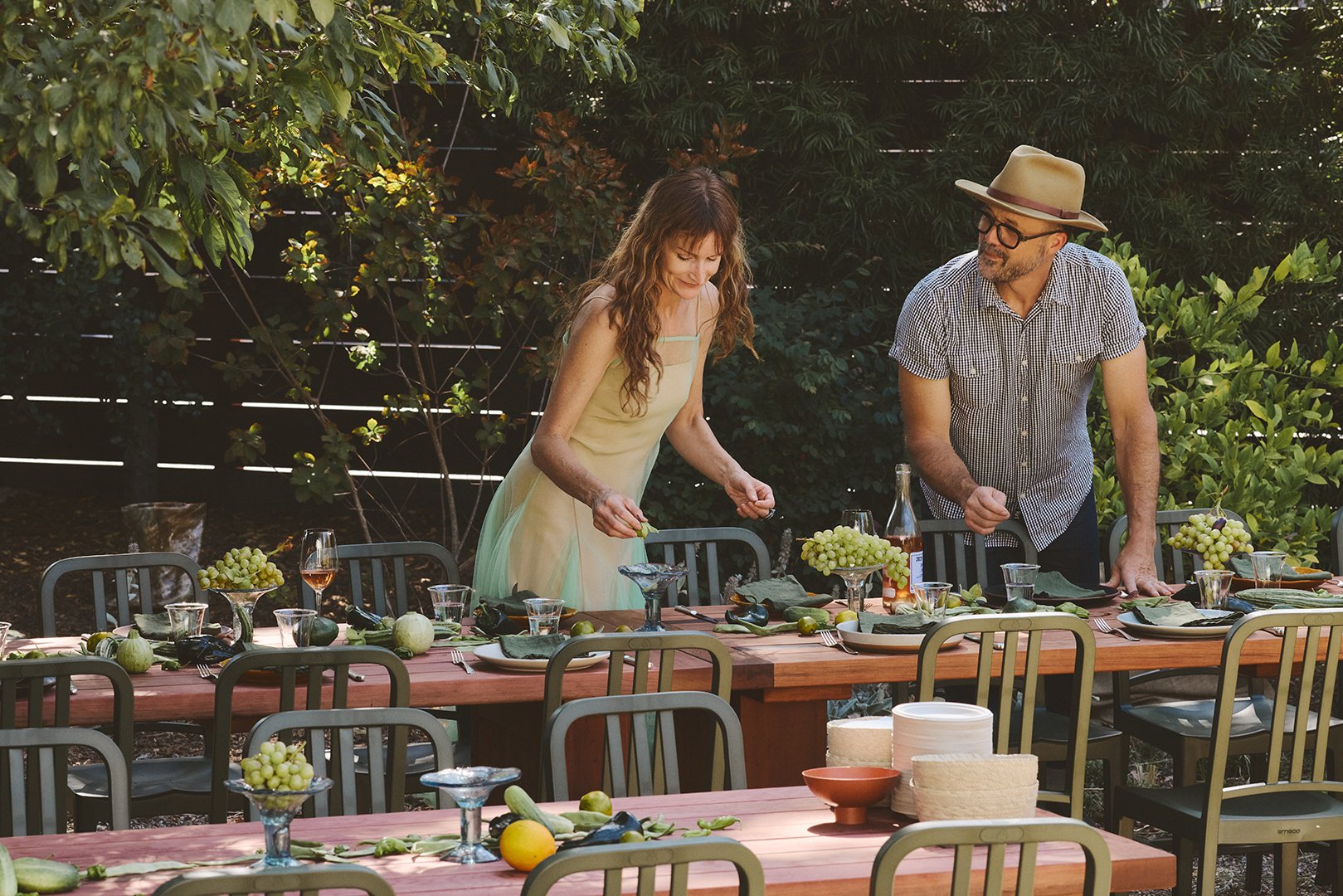
This same commitment to organic composition extends to the dining table itself, where Giesenhagen applies a rigorous design eye to food and flora. When constructing an edible centerpiece for a dinner party, her approach begins with establishing a clear color palette before assessing what seasonal ingredients are currently available. Treating the arrangement like any high-level design composition, she evaluates whether the local harvest aligns with her vision; if the required hues are lacking in nature, she pivots the palette entirely rather than forcing a mismatch. Sourcing for these arrangements is a collaborative, hyper-local effort, drawing from neighborhood farmers markets, independent flower growers, and local produce stands, as well as foraging expeditions into nearby fields, weeds, and fruit trees alongside fellow nature enthusiasts.
True to her philosophy of letting the surrounding environment shine, Giesenhagen almost always skips a tablecloth, noting that covering the surface would conceal the inherent beauty of the table itself. To set individual places, she turns to washed linen napkins, favoring earthy tones like the olive-hued sets from Bed Threads, which offer enough color variety to adapt to any seasonal event. For place card holders, the designer leans into resourcefulness, utilizing unexpected natural elements such as fresh limes or aluminum plant labels, or simply relying on folded card stock inscribed by someone with legible, artistic handwriting.
This integration of collectible design and everyday living forms the core of Giesenhagen’s creative outlook. Objects, art, and environments are not meant to be sequestered behind museum glass; rather, they serve as reflections of human identity, capturing aspirations, memories, hopes, fears, and future uncertainties. Collectible design, in particular, offers emotional and intellectual connections that pure functionalism often overlooks, enriching daily routines by grounding them in personal expression and intentional choices.
Naturally, the setting also dictates the wardrobe for hosting. In Northern California, outdoor entertaining requires careful attention to layers and footwear capable of navigating gravel and dust. For the Verdant Phenomena opening, Giesenhagen collaborated with her close friend, designer Rachel Beth Anderson, who curated the final look drawing from her own extensive vintage collection amassed in Brooklyn over the past 15 years. The resulting ensemble featured a sheer celadon dress by Kamperett layered over a nude slip, paired with a vintage leather jacket, light tan ostrich cowboy boots, and carefully selected vintage jewelry.
The hospitality continued at a self-serve beverage station designed to refresh guests throughout the evening. The bar featured still and sparkling water infused with fresh herbs and aromatics foraged directly from the garden, including basil, thyme, and sage. For spirits, a dedicated cart offered a rotating selection of artisanal mezcals, including current favorites from Bozal. When it came to wine, the pairings remained strictly local, showcasing Sonoma producers such as Maison Des Plaisances, Martha Stoumen, and Scribe Winery, which are permanent fixtures in the household.
The table settings themselves bridged the gap between historic craftsmanship and modern artistry through a curated mix of vintage tableware and contemporary pieces. Among Giesenhagen’s favorite elements are miniature appetizer plates by Good Connection and Virginia Sin, which mimic the silhouette of disposable paper plates but are crafted for daily use. Whether holding morning toast, afternoon snacks, or evening desserts, these objects introduce a playful, tactile element to every meal.
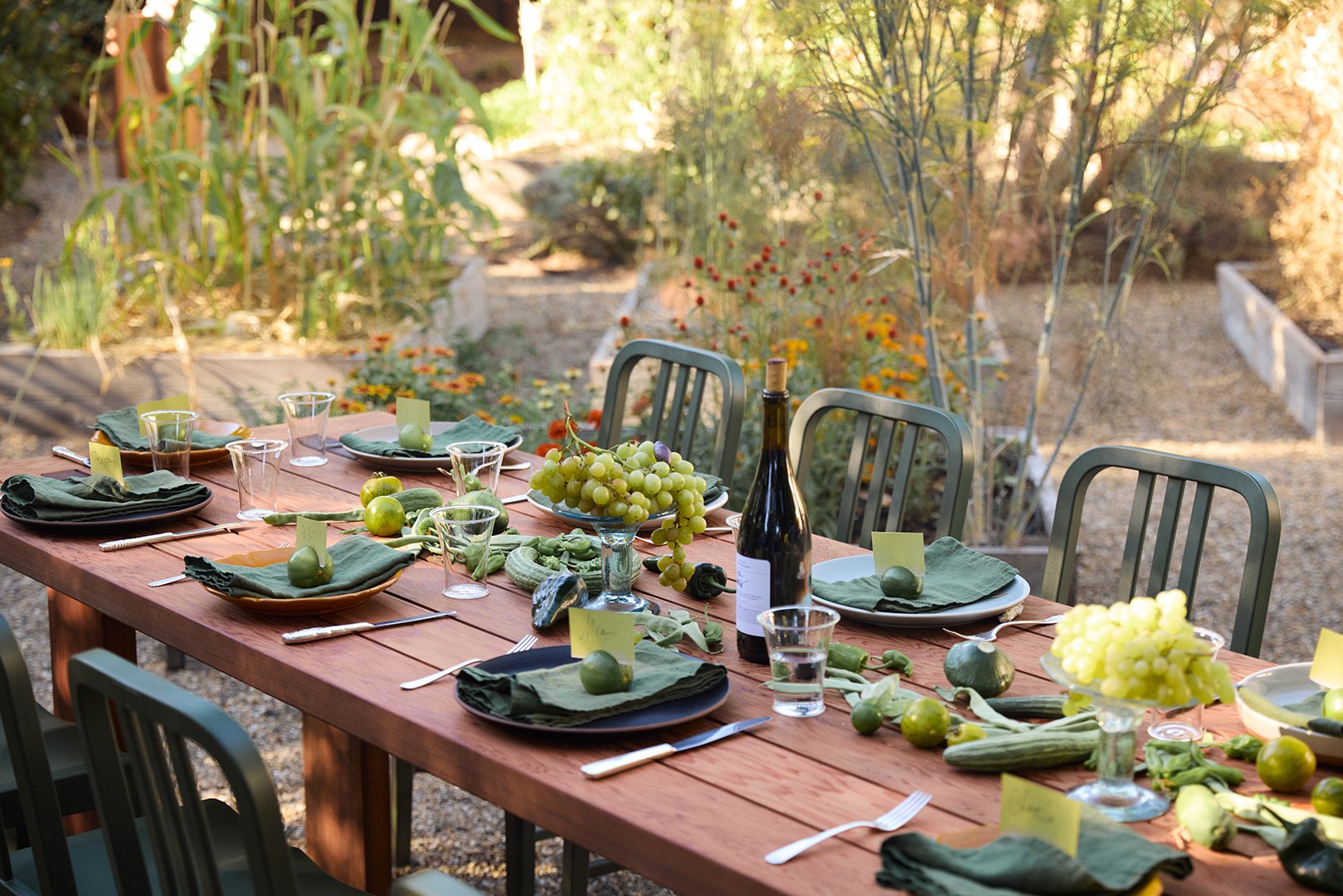
The abundance on display traces directly back to the property’s dedicated cutting garden, overseen by Giesenhagen’s partner, John Umbanhowar. Credited as the chief gardener, Umbanhowar cultivates a rotating harvest of seasonal flora and aromatics that supply both the household and its events. The garden yields a dense tapestry of textures and colors, including basil, shiso, sage, French tarragon, thistle, orange gladioli, dahlias, hellebores, coneflowers, zinnias, lemon balm, lavender, lemon verbena, alliums, various mints, and multiple varieties of yarrow.
As night fell over the Sonoma landscape, the gathering fostered the kind of spontaneous dialogue that defines memorable evenings. One particular moment highlighted the organic flow of the dinner when a winemaker posed a question to the table: What should I name this wine? The inquiry followed a reading of her poem about peaches, perfectly paired with a natural rosé crafted in part from Sauvignon Blanc and featuring a hand-painted label. As the bottle was passed around and enjoyed by the guests, ideas for the name began to circulate freely, ranging from whimsical suggestions like "Peach Fuzz Lip" to the enigmatic "Trust Fall"—leaving the table to wonder how a simple dinner among art and nature could traverse such unexpected creative territory.