Mounting a screen on the wall draws the eye straight to it, while traditional, heavy media consoles dominate floor space and anchor the room’s layout around a single electronic device. For years, finding an alternative meant investing in expensive custom cabinetry, concealing screens behind intricate doors, or relying on projectors that require precise lighting and blank wall space.
Fortunately, a surprisingly clever solution has emerged from an unlikely collaboration. IKEA has joined forces with Xbox to rethink how entertainment hardware integrates into modern living spaces. The result of this partnership is the new nine-piece YXSTABY collection, a product line developed around the evolving reality that digital entertainment and video gaming no longer happen in isolated, dedicated spaces or even in a single fixed location within a home.
While the capsule collection was conceived with gaming lifestyles in mind, its standout piece offers a brilliant utility that extends far beyond the gaming community. At the heart of the collection is IKEA’s first-ever rolling TV stand, a minimalist piece of furniture designed to address the persistent challenge of small-space living, flexible room layouts, and the desire to minimize the visual footprint of modern technology.
The YXSTABY collection arrived in physical stores recently and is slated to roll out to online platforms in the coming weeks. Designed jointly by the Swedish furniture giant and the prominent gaming brand, the line acknowledges that contemporary homes require furniture that can adapt to changing activities throughout the day. However, interior design enthusiasts who have no interest in video games will find plenty to appreciate in the collection’s most pragmatic offering.
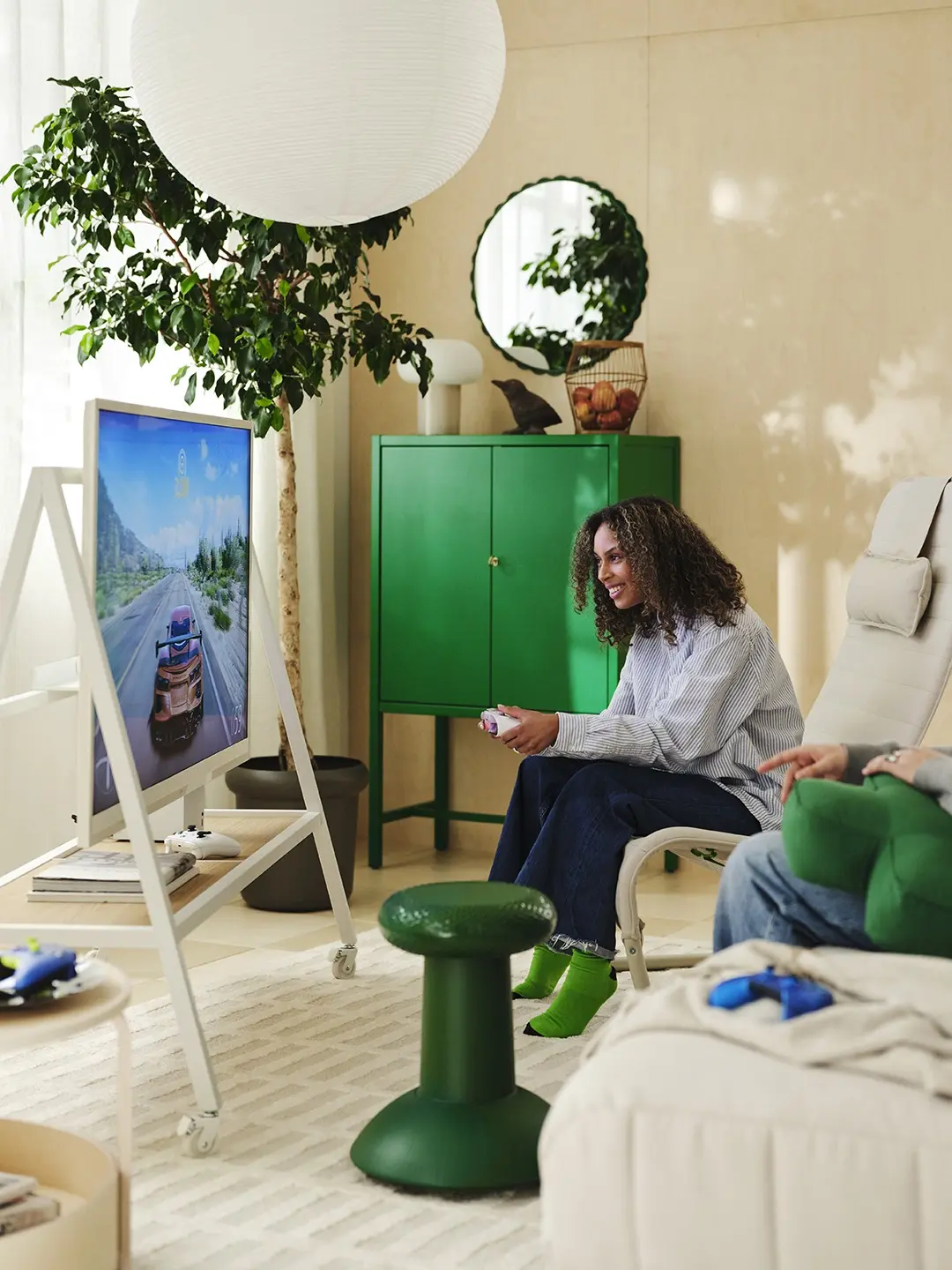
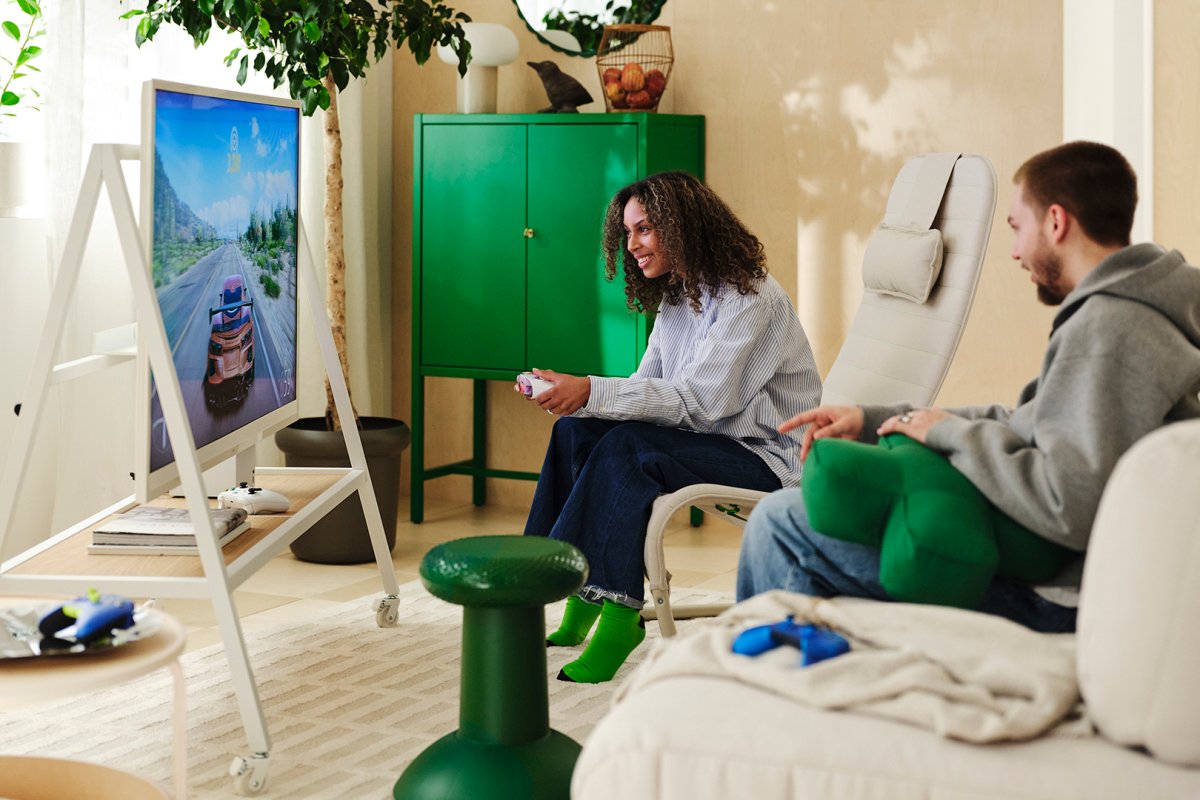
Priced at an accessible $150, the YXSTABY rolling TV stand features a sleek, powder-coated steel frame engineered to support televisions up to 55 inches. The engineering of the stand focuses heavily on both mobility and discretion. Equipped with sturdy castors, the minimalist frame allows a television to move smoothly from room to room, transforming how spaces are utilized.
One of the most frequent hurdles of movable entertainment setups is managing the web of wires, power strips, and peripheral devices that typically accompany a television. The YXSTABY design tackles this issue directly by incorporating built-in storage at the back of the frame. This rear compartment provides a dedicated space to tuck away unsightly cords, streaming boxes, game consoles, remotes, and other necessary accessories, ensuring the stand looks clean and intentional from every angle.
While the rolling TV stand serves as a versatile piece for general media lovers, the remainder of the YXSTABY capsule leans more heavily into its gaming origins. The collection includes complementary items such as a rolling side table designed to keep snacks and gear close at hand, specialized controller storage solutions, and a unique stool featuring a design inspired by an Xbox controller thumbstick. Despite the distinct aesthetic nods to gaming culture, the multi-functionality of the rolling TV stand bridges the gap between dedicated gaming setups and sophisticated, understated living room decor.
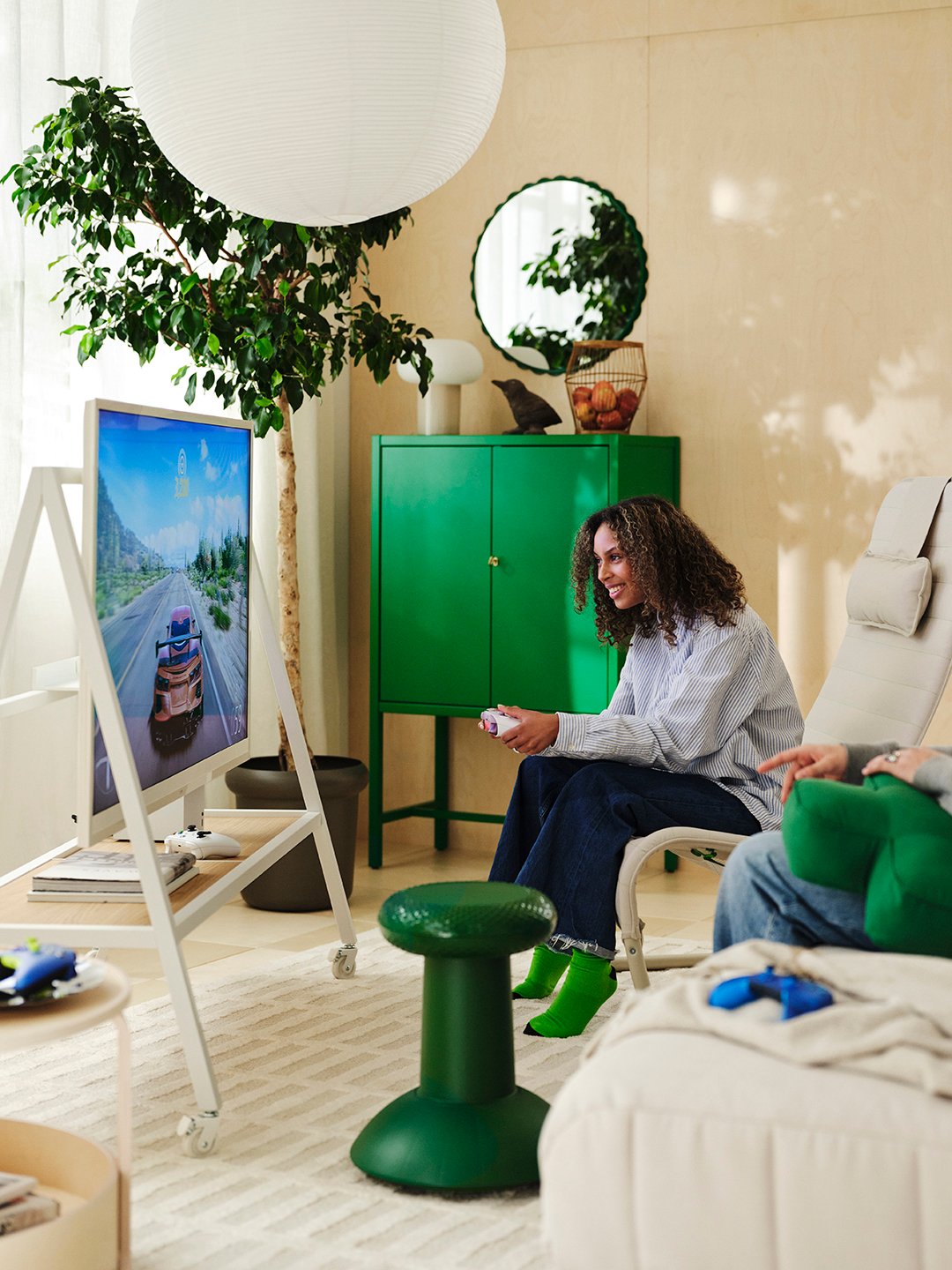
For occupants of studio apartments, open-concept lofts, or compact living rooms that must serve multiple daily functions, the movable stand offers a practical alternative to permanent placement. Whether a resident needs to clear floor space for daytime activities, rearrange seating arrangements for hosting guests, or simply roll the television out of sight entirely when it is not in use, the stand provides a dynamic solution without requiring a costly renovation or bespoke millwork.
By rethinking how hardware is housed and transported within the home, the collaboration between IKEA and Xbox introduces a fresh perspective on furniture design. As living spaces continue to shrink and multifunctionality becomes a priority for urban dwellers and homeowners alike, innovative products like the YXSTABY rolling TV stand demonstrate that accommodating modern technology no longer requires sacrificing aesthetic simplicity or room layout flexibility.