
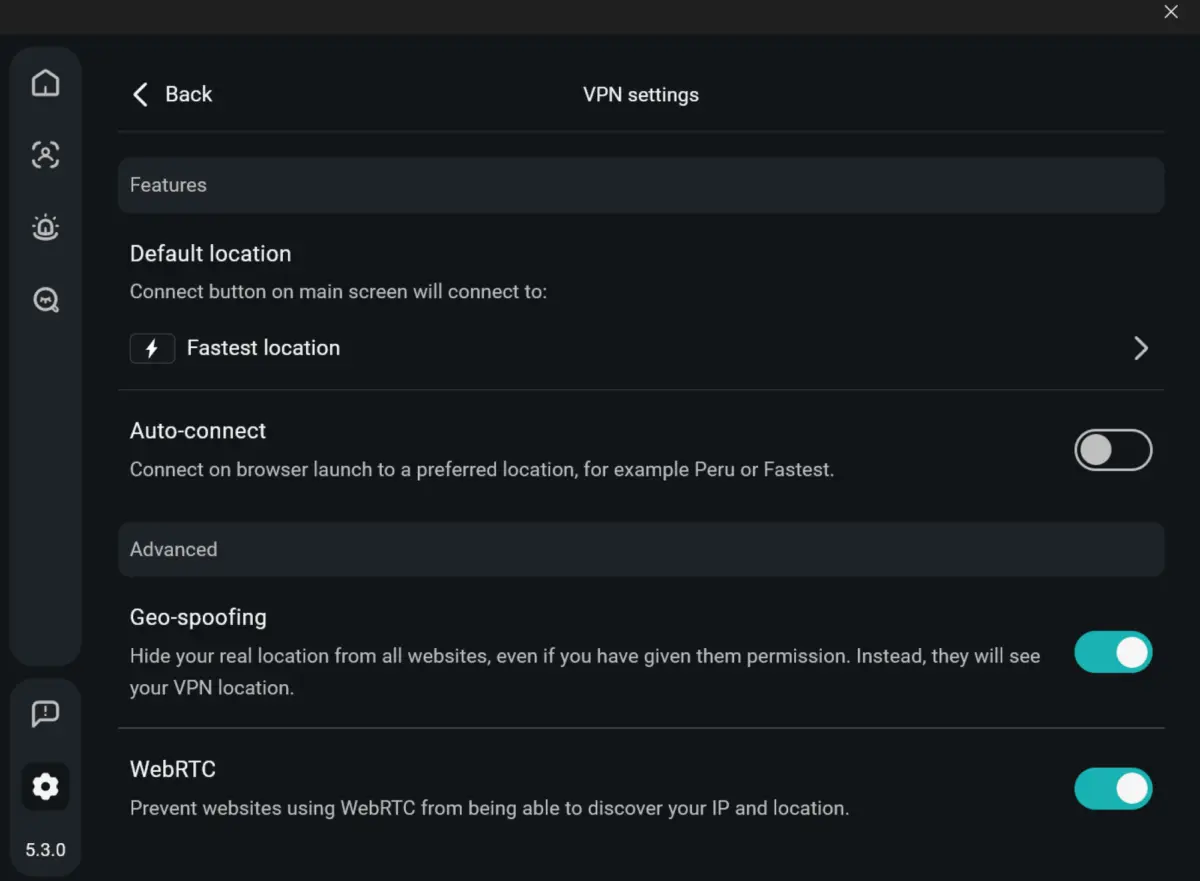
The culprit is WebRTC, a native technology built into virtually all major web browsers designed to facilitate high-speed, peer-to-peer data transfers. While essential for demanding applications like live video conferencing, voice calls, and real-time screen sharing, WebRTC introduces a critical architectural loophole that routinely bypasses standard VPN security tunnels. Understanding how this vulnerability works—and how to mitigate it—has become an essential priority for anyone serious about digital privacy.
To understand the scope of the problem, it helps to examine how a standard VPN operates. Under normal circumstances, a VPN conceals a user’s IP address by routing their internet traffic through a secure, encrypted Transmission Control Protocol tunnel. Theoretically, this ensures that anyone monitoring the network, including local internet service providers, malicious actors, or corporate surveillance tools, cannot track online activity or identify the user’s connection point.
In practice, however, the digital ecosystem is filled with complex interplay between software layers, creating gaps that attackers can readily exploit. Security researchers have long pointed to browser fingerprinting as a major hurdle for privacy advocates. This tracking technique uses hundreds of distinct data points—ranging from hardware specifications and operating system versions to specific web browser configurations and GPU signatures—to establish a persistent shadow profile that follows users across the web, entirely unaffected by whether a VPN is enabled.

Now, attention is increasingly turning toward browser-level communication leaks. Major web browsers including Google Chrome, Mozilla Firefox, Microsoft Edge, Opera, and Apple’s Safari come equipped with WebRTC, which stands for Web Real-Time Communication. This technology enables browsers to bypass the encrypted TCP tunnel created by a VPN to establish direct, high-speed connections for media-heavy tasks.
By design, WebRTC establishes a direct peer-to-peer connection with another device by utilizing the user’s actual public IP address. This optimization dramatically improves data transfer speeds during video calls and live streams, but it comes at a steep cost to privacy. Because the technology requires the user’s real public IP address to function efficiently, it circumvents the VPN’s default security tunnel by employing a separate communication protocol known as the User Datagram Protocol. UDP prioritizes raw transmission speed over security, leaving the user’s real IP address completely exposed throughout the duration of the data exchange and providing ample opportunity for network observers to capture identifying information.
Because WebRTC connectivity is embedded directly into the architecture of modern browsers and remains enabled by default, a standard VPN will fail to conceal a user’s IP address during activities like video conferencing or livestreaming unless additional protective measures are taken. Even when a user activates a browser’s private browsing or incognito mode while simultaneously running a VPN, WebRTC features remain active in the background, quietly leaking identifying data.
Recognizing the severity of these risks, many top-tier VPN providers have introduced advanced security features designed to intercept and prevent WebRTC leaks through integrated network firewalls and automated kill switches. However, these protective measures are not always enabled by default, often requiring users to manually configure their VPN settings to lock down vulnerable communication channels. In instances where a VPN lacks native WebRTC leak protection, users must take matters into their own hands by adjusting configurations directly within their web browsers.
Security analysts emphasize that testing for these vulnerabilities is a straightforward process. Users can visit specialized online security checking tools, such as dedicated IP leak detection websites, while their VPN is actively running. These diagnostic platforms instantly reveal whether a browser is successfully masking its true IP address or if WebRTC queries are actively broadcasting the user’s real network coordinates to the broader internet.

Mitigating the threat of WebRTC leaks, however, introduces a delicate balancing act for everyday web users. Because many popular digital platforms—including web-based video conferencing tools and communication applications like Discord—rely heavily on WebRTC architecture to function properly, disabling the feature entirely can break core browser functionality. Consequently, privacy experts suggest a situational approach, where users toggle WebRTC off during sensitive browsing sessions and temporarily re-enable it only when engaging in secure communications with trusted parties.
Browsers also handle WebRTC capabilities in markedly different ways, complicating unified security advice. Firefox stands out as the only major web browser that allows users to disable WebRTC outright through its internal configuration settings, requiring no third-party extensions. Conversely, Chromium-based browsers like Google Chrome and Microsoft Edge do not offer a native off-switch within their standard settings menus. Instead, users of these platforms must rely on specialized browser extensions obtained from official web stores to manage and restrict WebRTC handling, though privacy advocates advise extreme caution when selecting such add-ons to ensure they do not request excessive permissions, such as access to browsing history or page contents. Meanwhile, Apple’s Safari implements unique system-level restrictions to minimize excessive data leakage without requiring manual feature toggles.
For the average internet user, questions naturally arise regarding whether the threat of WebRTC leaks warrants the effort required to monitor and combat them. Cybersecurity professionals generally adhere to a clear rule of thumb: individuals who are privacy-conscious enough to invest in a VPN should pay equal attention to how their web browser manages WebRTC connections. Given that these background leaks can completely undermine the anonymity provided by a virtual private network, taking the extra step to anonymize IP addresses during UDP connections or disable vulnerable protocols represents an essential safeguard in an increasingly surveilled digital landscape.