The convergence of several factors—a steady, projected increase in local electricity rates, the impending January 1, 2026, expiration of federal tax rebate incentives, and significant modern improvements in battery technology—transformed a distant, hypothetical dream into an achievable hands-on project. Moreover, the announcement that a new hyper-scale data center was slated for construction just a few towns over made the decision to finally take the plunge an absolute no-brainer.
Many of Indge’s tinkering projects are driven by a fundamental sense of curiosity. He enjoys discovering whether he can accomplish a complex goal without paying inflated retail prices, and he is admittedly motivated by the satisfaction of executing an unexpected project. Channeling ingenuity and effort feels like a deliberate pushback against being forced into expensive commercial purchases, and nowhere was that sentiment more rewarding than in this home solar initiative. For anyone contemplating a similar leap into solar power, the undertaking can undoubtedly feel intimidating, but the end result proved to be well worth the substantial effort required.
Planning a Modern Solar Battery System
Traditional grid-tied solar systems rely on electricity generated by photovoltaic panels and feed excess power directly back into the public electrical grid. In return, utility customers are typically paid a rebate rate by their provider for the surplus energy their system generates. In recent years, however, major utility providers have stopped compensating customers at the rates they charge consumers. Instead, they began offering energy credits worth only a fraction of the market value of the electricity they receive, only to turn around and sell that same energy back to consumers at a steep markup.
This current generation-reimbursement model resembles an absurd agricultural scenario. Imagine an apple farmer who sells produce to a supermarket at harvest time and receives a one-to-one credit to acquire apples later when the orchard is dormant. Under modern utility logic, those one-to-one apple credits would suddenly buy back only one-third of the original apples supplied, while the supermarket profits heavily as the middleman. No standard consumer enterprise should operate under such lopsided terms, yet traditional energy providers continue to do so.

Rather than giving away generated power at a steep discount, Indge wanted to retain as much energy as possible for personal use. The first major step toward building an independent power system involved selecting a reliable battery storage solution. A battery system stores excess energy captured throughout the day for later use when panels are no longer generating active power. After extensive research across online forums and video platforms, he settled on the EcoFlow Smart Panel 2 paired with a Delta Pro Ultra system. Reviews were favorable, and a major retailer offered a promotional package deal priced significantly lower than competing bundles.
The vast majority of the total project budget went directly into securing this battery, inverter, and smart panel hardware, costing just over $8,000 before applicable rebates. Considering that the actual solar panel array accounted for only a fraction of that total expense, the pricing models of traditional commercial solar dealers raise serious questions. A traditional grid-tied installation would have cost more than three times what he spent on the battery ecosystem while offering zero capability for local energy storage. He wanted no part of leasing agreements or ongoing payments to a third-party corporation for electricity he could not even control.
Selecting the Ideal Energy Inverter
If the solar panels act as the muscle generating raw energy, the system inverters function as the brain, granting access to that electricity. Inverters convert the direct current (DC) electricity generated by panels into the alternating current (AC) used by standard household appliances. Without an inverter, any solar installation remains entirely non-functional. Three major types of inverters dominate modern residential solar projects: string inverters, microinverters, and hybrid systems.
String inverters represent the most budget-friendly solution, wiring a consecutive string of panels together and feeding them into a single centralized unit. This setup works best for simple rooftop arrays experiencing minimal shade. Microinverters attach a small individual inverter to each solar panel or small group of panels, maximizing production independently so that shade on one panel does not impact the rest of the array. Hybrid systems, which are the most common choice for battery-backed setups like Indge’s, combine high-voltage and low-voltage inverter capabilities into a single unit. These dual inverters convert DC electricity directly from the panels and route it dynamically—either storing power in the batteries or distributing it immediately to the home, often performing both tasks simultaneously.
Matching a solar array to an inverter setup with correct voltage tolerances remains a critical planning phase. Indge chose a packaged ecosystem for simplicity, but warned that attempting a pure custom build requires strict adherence to electrical safety limits. Delivering excessive amperage to an undersized inverter can trigger protective shutdowns, fry internal components, melt equipment, or even spark a fire. Plug-and-play assumptions have no place in high-capacity electrical work.

Sourcing and Mounting Solar Panels
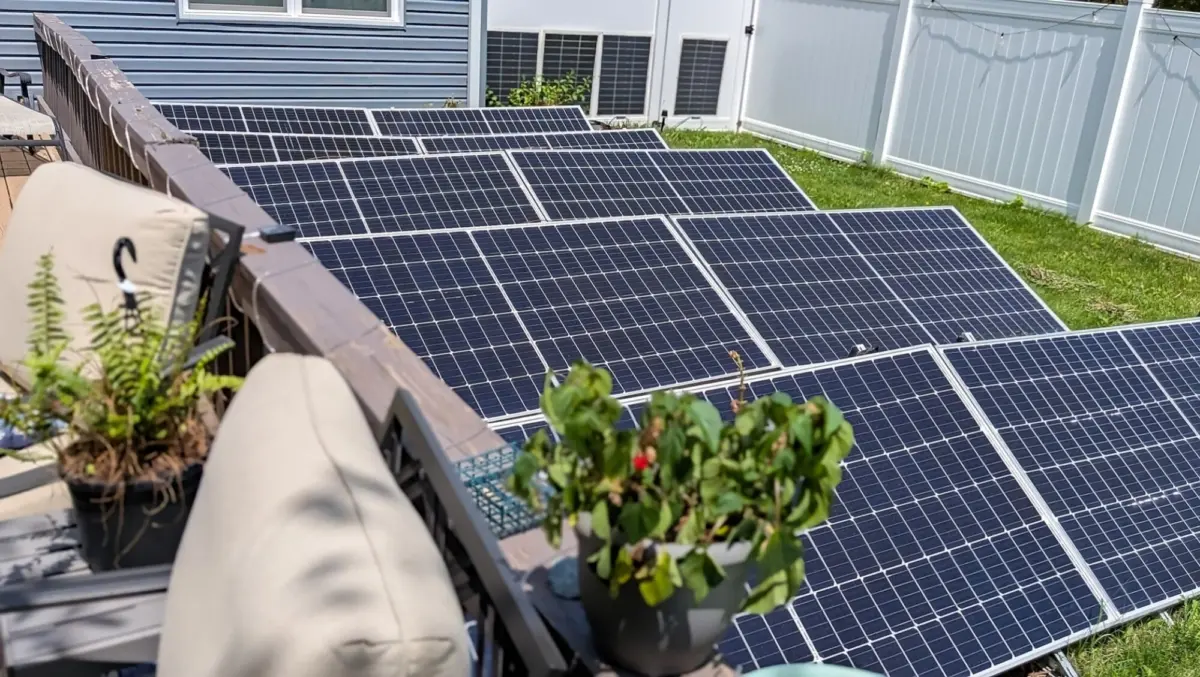
For panels and related hardware, Indge turned to specialized vendors willing to ship heavy equipment pallets directly to residential addresses, avoiding mandatory full-service installation packages. After monitoring clearance inventories, he secured ten URE Peach 390W solar panels at a discount price. While they lack bleeding-edge technological specifications, they marked a massive upgrade over smaller portable panels.
Opting initially for a ground-mounted array rather than a complex roof installation served as a practical proof of concept to minimize initial labor expenses. While roof-mounted arrays can yield higher overall production, the ground-mounted system provides reliable, accessible performance. However, he noted that choosing standard metal-frame racking instead of universal plastic ground-mounting bins would have offered a cleaner aesthetic and a more secure fit.
Before purchasing any hardware, local municipal regulations, permit requirements, and zoning restrictions regarding backyard solar installations must be thoroughly reviewed. While off-grid or hybrid setups face varying degrees of oversight depending on the municipality, electrical permits for sub-panel integrations are universally required. Checking local rules ensures compliance and uncovers any remaining state or municipal solar incentives.
Understanding Electrical Load and Circuit Wiring
Adopting foundational electrical and wiring knowledge quickly becomes necessary for any DIY solar builder. Solar installations carry significant electrical loads, making proper setup vital for protecting equipment and preventing hazards.
Using a water analogy helps clarify electrical metrics: solar panels gather sunlight to produce voltage, representing water pressure, and amperage, representing current water flow. Together, they combine to create wattage output, determining the rate ational energy is delivered and stored in kilowatt-hours (kWh).

Out of the ten panels purchased, nine were deployed for the primary ground array. The EcoFlow Delta Pro Ultra features integrated high-voltage and low-voltage inverter circuits. The high-voltage system utilizes seven panels wired in series, generating approximately 339 volts, which sits safely within the inverter’s 80 to 450-volt operating range. In Midwestern climates, winter weather requires careful monitoring because freezing temperatures lower electrical resistance in silicon, causing panels to push higher voltage spikes that could exceed inverter limits and damage the system.
The low-voltage inverter handles two panels wired in series, producing about 82 volts, staying comfortably beneath the 150-volt maximum threshold even on frosty mornings. The single remaining panel from the initial batch was paired with a smaller portable EcoFlow Delta 3 power station to independently run power to a 500-square-foot home addition, handling a television, soundbar, and computer setup while paving the way for a future 120V mini-split HVAC unit.
Wiring configurations involve series circuits, parallel wiring, or hybrid combinations. Series circuits connect positive terminals to negative terminals in a daisy chain, adding voltage while keeping amperage constant. This method ensures efficient delivery over long runs but suffers if a single panel becomes shaded. Parallel wiring connects matching terminals together, increasing amperage while keeping voltage steady, which helps mitigate shading issues on lower-voltage systems. Indge ultimately utilized a hybrid series-parallel configuration, grouping panels in series and connecting those groups in parallel to balance electrical output and shade tolerance.
Proper grounding is equally essential when managing high-capacity power arrays. Utilizing an existing eight-foot copper grounding rod tied back to the main house grounding system, a copper wire was channeled along the panel frames to divert stray surges or lightning strikes safely. Additionally, installing a 40-amp DC circuit breaker box between the outdoor runs and indoor connections provided an extra layer of system protection and an immediate emergency shutoff switch.
Professional Integration and Electrical Safety
While structural racking, array wiring, and grounding can typically be handled as homeowner DIY projects depending on local codes, connecting a high-capacity battery stack to a home electrical panel involves working with high-voltage 240V lines and significant amperage. Local municipal codes properly mandate that sub-panel installations and main electrical tie-ins be executed by licensed professionals.

Indge hired a qualified local electrician to install the EcoFlow Smart Home Panel 2, which receives energy from the inverter and battery stack and distributes it across dedicated household circuits while seamlessly pulling grid power when necessary. Professional oversight ensured that high-current connections were executed safely and in full compliance with local building codes.
Energy Generation, Savings, and Emergency Backup
Commissioned in November 2025—historically low-light months for solar production—the system immediately exceeded expectations. During peak summer months, daytime solar generation efficiently splits workloads between recharging batteries and powering active household consumption, allowing the home to run entirely on stored battery power through the evening and overnight hours.
While accumulating a full year of operational data will provide comprehensive performance metrics, utility billing feedback reflected an immediate shift from above-average consumption to the top tier of customer efficiency. On typical summer days with air conditioning active, total household consumption hovers around 20 to 22 kWh daily, while the panels generate 15 to 17 kWh. Minor grid utilization occurs only during early morning hours when batteries dip to their reserved emergency capacity.
Furthermore, the system has proven invaluable during severe thunderstorms and high winds that caused widespread local power outages. The inverter’s rapid transfer capabilities allowed the system to switch to backup power seamlessly within milliseconds, keeping household lights and appliances running without a single dropped connection or brownout.
For others considering a similar path, starting with a smaller, portable power station for testing and specific room applications offers a practical, low-risk entry point before investing in a whole-home setup. While navigating the technical learning curve requires patience and caution, taking control of residential energy generation provides a tangible sense of long-term reliability and independence.