
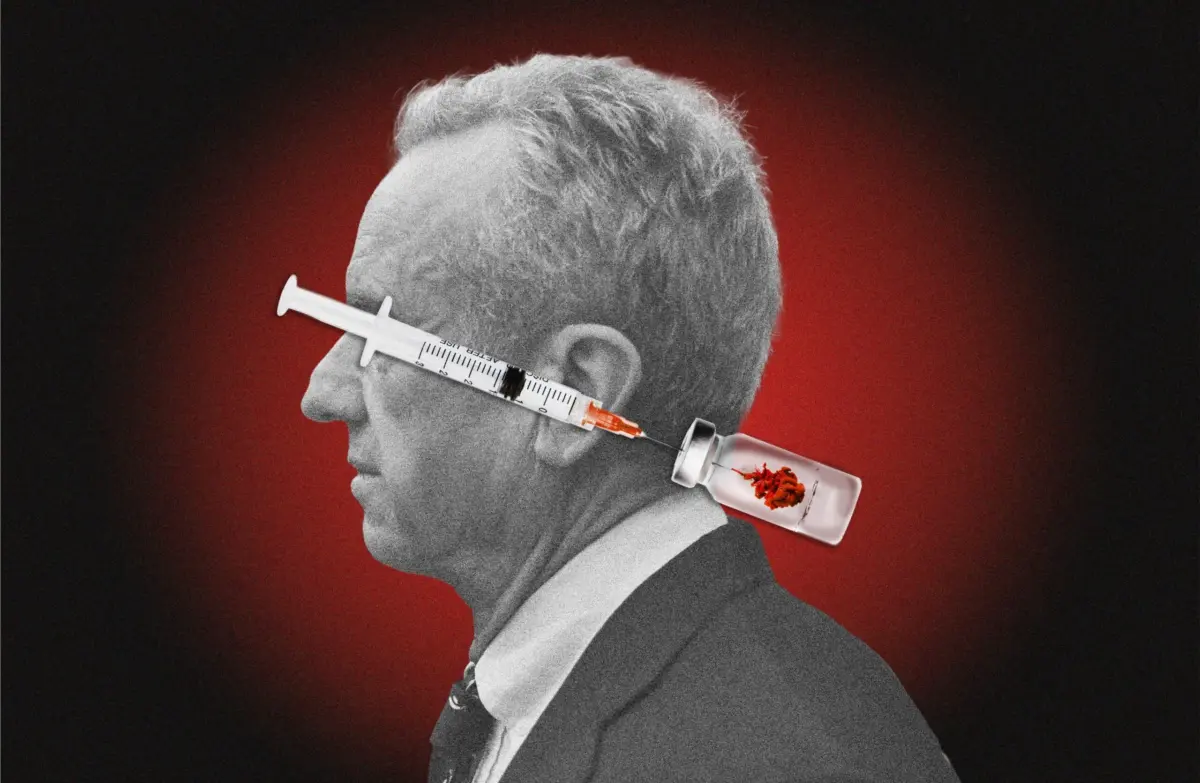
The six peptides in question—BPC-157, KPV, TB-500, MOTS-c, Epitalon, and Semax—first came up for high-level discussion in July. At that time, an advisory panel known as the Pharmacy Compounding Advisory Committee (PCAC) voted in favor of loosening restrictions, recommending that the compounds be moved to the 503A Bulks List. Such a classification would allow compounding pharmacies to legally prepare them. However, that advice was strictly advisory. It did not mean the peptides were automatically added to the bulks list, nor did it grant them formal FDA approval.
Despite the lack of formal approval, this latest development has thrust the emerging health sector into entirely uncharted waters. Dustin Robinson, a lawyer and founding partner of LumaLex Law, a firm that advises businesses in emerging health and peptide sectors, notes that the industry has officially entered genuinely new territory.
The mechanism behind this shift is an interim enforcement discretion policy. Under this policy, compounding pharmacies are permitted to mix the six specific peptides without facing HHS enforcement action, provided they adhere to a strict set of regulatory guidelines. Robinson explains that pharmacies are protected only if they fulfill every single condition outlined in the policy.
These stringent rules dictate that raw ingredients must be sourced exclusively from FDA-registered manufacturers that follow good manufacturing practices. Furthermore, facilities must possess a certificate of analysis, commonly known as a COA, which includes comprehensive test results verifying identity, purity, endotoxins, and the absence of dangerous contaminants such as heavy metals. The regulations also specify that each compounded product can contain only one peptide, and each peptide is limited to specific authorized administration forms, such as intranasal use for Semax. Crucially, these substances cannot be purchased over the counter; they require a valid prescription from a licensed physician.
An official document released by the Department of Health and Human Services highlights the specific role of Secretary Kennedy, who has established himself as a vocal advocate for peptide therapy despite not holding a medical degree or clinical background. The document states that the Secretary has determined this limited enforcement-discretion policy will successfully discourage the continued, widespread use of research-use-only peptides supplied by foreign manufacturers, which pose substantial safety risks to American patients. Based on available evidence and the recommendations of the Pharmacy Compounding Advisory Committee, the document adds that the Secretary concluded the policy advances patient choice and freedom while appropriately protecting patient safety.
Does the FDA agree with RFK Jr.’s decision?
It bears reiterating that this policy has been implemented without the official blessing of the FDA. None of the six peptides have undergone the notoriously rigorous, time-consuming, and expensive clinical evaluation process required to earn formal FDA approval. Consequently, they lack the standardized safeguards and regulatory peace of mind that accompany FDA-approved substances. For patients injecting biological compounds into their bodies, the absence of this rigorous vetting process raises significant medical concerns.
Reports from the Associated Press indicate that while FDA staff members assisted in formulating the safety guardrails for the HHS policy, career scientific staffers had minimal input on the ultimate decision and actively opposed the changes, according to six individuals familiar with the policy’s development. In related news, the recent death of Australian actor and martial artist Richard Norton was linked to the excess use of a prescription peptide obtained via a doctor. However, industry records confirm that the specific peptide involved in Norton’s case was not one of the six compounds covered under the new HHS policy.
The policy puts in place a "highly specific safety valve"
While it may be tempting for observers to view this development as a simple workaround to bypass the FDA entirely, legal experts offer a more nuanced perspective. David J. Holt, an attorney and owner of Holt Law, a healthcare business law firm operating in Minnesota and California, describes the measure not as an evasion of regulatory authority, but as a highly specific safety valve designed to immediately rescue patients from a dangerous black market.
For years, a popular loophole allowed individuals to acquire research-use-only peptides from various online sources and overseas suppliers without any medical oversight simply by checking a digital box certifying that the substances were intended strictly for laboratory research.
According to Jay Campbell, co-founder of the American Peptide Association, these regulatory updates may finally establish much-needed rules and accountability in a largely unregulated space. The interim policy covers state-licensed pharmacies, federal healthcare facilities, and physicians compounding individual medications for patients holding valid prescriptions. Additionally, pharmacies are legally required to report any serious adverse events directly to the FDA and appropriately label the products as compounded drug formulations that are strictly prohibited from resale.
Holt emphasizes that these provisions represent the exact safeguards consumers have desperately needed for years. Beyond consumer protection, Holt suggests that the policy is a strategic move to bring manufacturing and commercial activity in the peptide sector back into the United States, given the massive volume of foreign imports currently entering the market.
What standard does RFK Jr.’s policy set for the peptide space going forward?
Campbell points out that the administration’s decision establishes two pivotal standards for the future of the industry. The first is political in nature. By demonstrating that HHS is willing to act on peptide regulation even when the FDA’s career staff strongly disagrees, the agency has set a powerful precedent that will undoubtedly influence how future batches of reviewed peptides are handled.
The second standard centers on quality control. The interim policy explicitly outlines the rigorous testing a peptide must pass before it is administered to a human being. Because raw ingredients must originate from FDA-registered facilities and be accompanied by certificates of analysis covering identity, purity, and endotoxins, a higher baseline of safety is established. Furthermore, because compounding pharmacies are mandated to report adverse effects, health officials will be able to collect valuable real-world clinical evidence. Campbell asserts that this framework should serve as the absolute baseline for every peptide sold in the United States, extending well beyond the initial six compounds.
Industry experts caution, however, that these changes will not take effect overnight. Robinson notes that pharmacies must first establish fully compliant supply chains. Furthermore, legal analysts warn that this decision should not be interpreted as a green light for other experimental medications. Holt describes the policy as a rare, targeted intervention born from a unique convergence of factors: massive consumer demand, an existing advisory vote in favor of the peptides, a federal administration prioritizing patient choice, and a traditionally slow bureaucratic rulemaking process at the FDA that often takes years to finalize.
While Robinson anticipates a similar review process for the next batch of peptides—with the same advisory panel scheduled to weigh in during February—he emphasizes that the policy is not permanent. A future presidential administration could easily reverse the decision overnight.
Where does this decision leave the FDA and its approval process?
Medical professionals emphasize that regulatory access should never be conflated with clinical or scientific validation. Dr. Ava Shamban, a board-certified dermatologist in California who has served as an investigator in numerous FDA clinical trials, stresses that it is critical to distinguish between expanding patient access and establishing proven safety.
Dr. Shamban explains that while the policy creates a potential pathway for greater access, it does not establish a new standard for FDA drug approval. True drug approval still demands rigorous evaluation of safety, biological efficacy, optimal dosing, and manufacturing quality through extensive clinical testing.
Dr. Steve Kates, vice president of regulatory affairs at Dicerna Pharmaceuticals, explains that securing formal drug approval requires developers to demonstrate clinical efficacy while successfully justifying a safety population. For instance, blockbuster medications like Ozempic were tested on thousands of individuals prior to commercial release, generating a massive repository of safety data that simply does not exist for the six newly unreserved peptides. Efficacy is typically measured by clinically meaningful endpoints negotiated with the FDA, which generally requires data from at least two well-controlled clinical trials. While proponents often argue that peptides have been utilized in various trials, Dr. Kates notes that these historical studies often lack statistical significance.
Dr. Shamban acknowledges that some peptides have circulated within wellness circles for decades, providing anecdotal benefits to tens of thousands of patients under a physician’s care. However, she argues that anecdotal success does not exempt a substance from formal scientific evaluation, nor does it grant legal approval. Other experimental peptides, she warns, are nowhere near the level of testing required to ensure safety without full regulatory rigor. The primary red flag is the dangerous precedent created when mere access is allowed to substitute for scientific evidence.
Purity, sterility, consistency, and potential immune reactions remain legitimate medical concerns, particularly with injectable compounds. When consumers encounter peptides marketed for collagen production, tissue repair, inflammation reduction, or longevity, Dr. Shamban stresses that biological plausibility must never be mistaken for proven clinical benefit.
Expect peptides to get more expensive
The implementation of these new rules is expected to dramatically alter the commercial landscape. Robinson points out that the stringent sourcing requirements effectively cut out most of the overseas supply chain, which will likely create tight manufacturing capacity initially as consumers transition away from online gray market vendors.
Despite these changes, experts doubt the underground gray market will vanish entirely. Campbell predicts that prices for legally compounded peptides will climb substantially due to spiking consumer demand and the added costs associated with sourcing raw materials from FDA-registered manufacturers and conducting mandatory quality testing. Because these regulated rules apply exclusively to the formal pharmacy channel, the higher price point may drive budget-conscious consumers to continue utilizing unauthorized gray market sources. Additionally, popular wellness trends involving the combination or stacking of multiple peptides are not covered under the HHS declaration.
The decision marks a significant development, but not a change in legal status
Patient curiosity surrounding peptide therapies continues to rise significantly, according to Dr. Amanda Kahn, a board-certified internist based in New York City. While acknowledging that these compounds have historically been difficult to access through legitimate medical channels, Dr. Kahn views the new HHS policy as a major development for the fields of longevity, regenerative medicine, and preventative health. She notes that a growing disconnect has existed between robust patient demand and the restrictive regulatory framework governing access, making these updates an important step toward a medically supervised environment.
At the same time, telehealth executives are preparing for the shift. Koehl Robinson, CEO of telehealth company CeliaRx, expresses cautious optimism regarding the regulatory acknowledgment, noting that federal regulators are finally evaluating peptides compound by compound rather than categorizing an entire class of drugs under a single risk umbrella.
Nevertheless, legal experts reiterate that the HHS policy does not alter the fundamental legal status of the substances or confer FDA approval. Robinson emphasizes that the FDA’s own career reviewers explicitly recommended against listing the peptides, meaning the HHS action represents a policy decision rather than a scientific finding confirming safety or efficacy.
What to know if you want a prescription for one of the six peptides
Medical professionals urge consumers to exercise extreme caution if these peptides begin appearing through local wellness clinics and providers. Regardless of marketing claims, the substances remain unapproved by the FDA and have not been formally added to the 503A Bulks List.
For patients obtaining a prescription through legitimate pharmacy channels, Robinson advises checking product labels carefully to ensure they feature the required disclaimer identifying them as compounded drug products not intended for resale. Consumers should also feel empowered to ask pharmacies where the raw ingredients were manufactured, as legitimate operations should easily be able to provide transparent documentation.
Dr. Kahn advises patients interested in peptide therapy to begin with specific health goals rather than following fleeting wellness trends. She stresses the importance of working with knowledgeable physicians who can thoroughly assess risks, unknowns, and appropriate sourcing through licensed pharmacies, reiterating that biological therapies require careful medical oversight rather than casual experimentation.
Concluding with a message of cautious optimism, Dr. Shamban emphasizes that while responsible innovation is essential for the advancement of medicine, regulatory flexibility must never compromise the rigorous scientific standards designed to protect patients from uncontrolled health risks.