
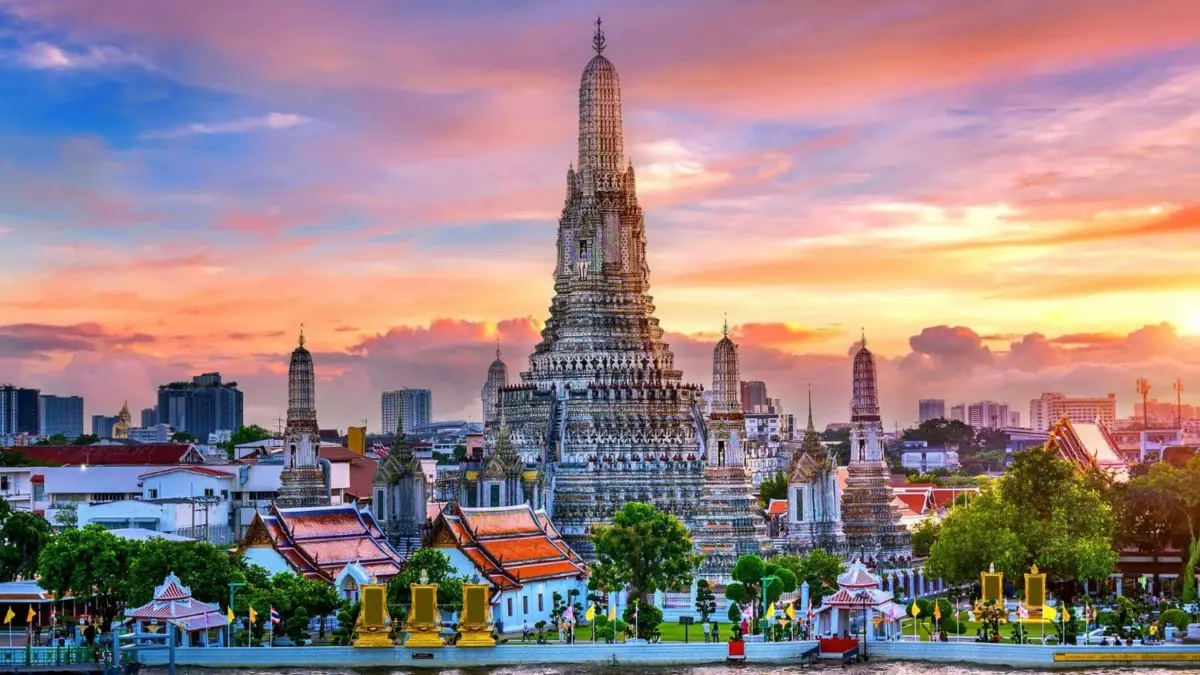
Having traveled south with a companion who was forced to return home after two weeks due to prior commitments, the solo traveler decided to extend the journey by another couple of weeks. Rather than catching a quick flight north, the decision was made to travel overland by bus to experience more of the Thai countryside firsthand. While the overnight journey through largely undeveloped areas offered limited nighttime visibility—making it a transit method not necessarily suited for every tourist—it provided a slow, deliberate transition toward the capital.
Arriving in Bangkok during the early morning hours via a long bus ride, the immediate shift in environment was stark. Transitioning from the serene, tourist-oriented coastal towns to the relentless hustle and bustle of the capital proved to be a significant jolt to the system, briefly prompting questions about why the tranquil south had been abandoned.
Visiting in September brought an entirely different set of environmental challenges, primarily the intense heat reflecting off the concrete pavements, which felt almost unbearable. Stepping outside the hotel immediately triggered a full-body sweat in the balmy atmosphere. Without the refreshing ocean breezes found along the coast, the urban environment frequently induced exhaustion and dehydration, making careful pacing essential for survival in the metropolis.
The Grand Palace
Despite the physical demands of the climate, Bangkok offers iconic cultural landmarks that demand exploration, chief among them the historic Grand Palace. Easily accessible and widely regarded as a must-see destination, the walled city within a city invites visitors to spend hours marveling at its architectural splendor and intricate design.
Established in 1782, the Grand Palace complex stands as Bangkok’s most prominent tourist attraction. It features a dazzling array of glittering mosaics, ornate ceremonial buildings, and sacred temples. Among the crowning highlights of the sprawling site is the revered Emerald Buddha, an ancient green stone carving perched high within the sacred precincts of Wat Phra Kaew. With hundreds of temples and remarkable sights situated around nearly every corner of the capital, the palace complex easily stands out as a premier cultural experience.
Bangkok Old Town
Setting up a base in an Old Town hotel offered a strategic launching point for numerous rewarding hours spent wandering the historic streets and sampling affordable local cuisine at the vibrant night market surrounding Khao San Road. For a solo traveler, the lively thoroughfare provided an ideal atmosphere for quiet observation and people-watching amidst the surrounding energy.
While the street is lined with a diverse selection of bars and restaurants, the true culinary draw lies with the local vendors selling everything from traditional Thai pancakes to Pad Thai for under three dollars. The market truly surges to life after dark, serving as a powerful magnet for young international tourists and generating considerable noise from neighboring clubs playing loud music. Enjoying the market’s lively atmosphere earlier in the evening before retreating with culinary treats to the peaceful sanctuary of a hotel room offered a welcome balance after a long day of sightseeing.
ICONSIAM
For those inclined toward modern retail and indoor exploration, ICONSIAM offers a massive, brightly lit shopping destination anchored by an extraordinary ground-floor food court and market. This bustling lower level provides a wide variety of delicious local foods and beverages at remarkably reasonable prices.
Reaching the massive retail complex via a scenic ferry ride from the Old Town pier cost less than a dollar, though visitors must remain mindful of operating schedules. The final return boat departs unexpectedly early at 5:00 p.m., a detail easily overlooked without prior checking.
Ascending to the top of the mall reveals one of the finest panoramic night views available in Bangkok. Visitors can enjoy a cup of coffee at the rooftop Starbucks or step out onto the terrace to spend quiet moments surveying the sprawling urban landscape below. Beyond the views, the facility houses standard luxury high-end brands alongside specialty stores and dining establishments, making it easy to spend an entire day wandering the air-conditioned interior.
Chinatown
Seeking a different perspective of the city, the traveler relocated after three days to a hotel in Bangkok’s historic Chinatown, anticipating a rich cultural base for further urban exploration. Instead, Chinatown presented an intense environment characterized by extreme heat, heavy crowds, and dense traffic congestion.
Furthermore, the culinary offerings proved significantly more traditional and challenging than anticipated, featuring authentic delicacies such as bird’s nest and shark fin soup. Despite a self-described adventurous palate, these specialized dishes ultimately did not suit personal preferences. Navigating the busy streets while processing a heavy mixture of intense cooking aromas and vehicular exhaust fumes eventually induced mild nausea.
Recognizing early signs of physical illness, the traveler spent the majority of the following days recovering quietly inside the hotel room or foraging nearby streets for simple, comforting nourishment like hot broth and white rice. While Chinatown remains an essential destination for travelers seeking an uncompromisingly authentic cultural experience, the overwhelming congestion prompted another relocation after just two days, leading the traveler toward the peaceful coastal city of Ao Nang.
Tuk-Tuks (Scooter Taxis)
Navigating short distances across the city frequently involves tuk-tuks, which offer an entertaining and direct mode of transport between local attractions. Ensuring a smooth ride requires clearly stating the destination to the driver, ideally by displaying a digital screenshot of the address written in the Thai language.
Consulting a navigation application beforehand helps establish a realistic baseline price before negotiating the final fare directly with the driver prior to boarding. Drivers occasionally attempt to alter agreed-upon prices upon arrival, making pre-trip clarity essential. If a driver remains rigid during price discussions, a polite smile and an approach to an alternative driver usually resolves the issue, as haggling remains an expected part of the interaction.
Travelers should also remain aware that tuk-tuk drivers frequently initiate conversations regarding daily itineraries primarily as an opening to market paid excursions. On one occasion, a driver diverted the route directly to an independent tour office in an effort to secure a booking for a full-day excursion outside the city limits.
Grab Taxi
For a more predictable and often more economical alternative to tuk-tuks, ride-hailing services like Grab proved to be invaluable assets throughout the stay. Grab vehicles typically arrived within minutes, frequently costing only a dollar or two for cross-town trips.
These services became particularly vital when physical exhaustion from the tropical heat made walking impossible. The mobile application provides upfront transparency regarding estimated travel duration and fixed pricing, eliminating fare negotiations.
Grab also served as a reliable, cost-effective transportation option for transiting to airports and railway stations, undercutting the standard private car services typically arranged through hotel concierges.
Reflecting on the entire urban adventure, the overall experience in the Thai capital proved overwhelmingly positive, leaving the traveler eager to plan a future return focused on exploring the northern city of Chiang Mai. Subsequent travel dispatches are planned to detail the most scenic and breathtaking landscapes awaiting visitors in the islands of southern Thailand.