
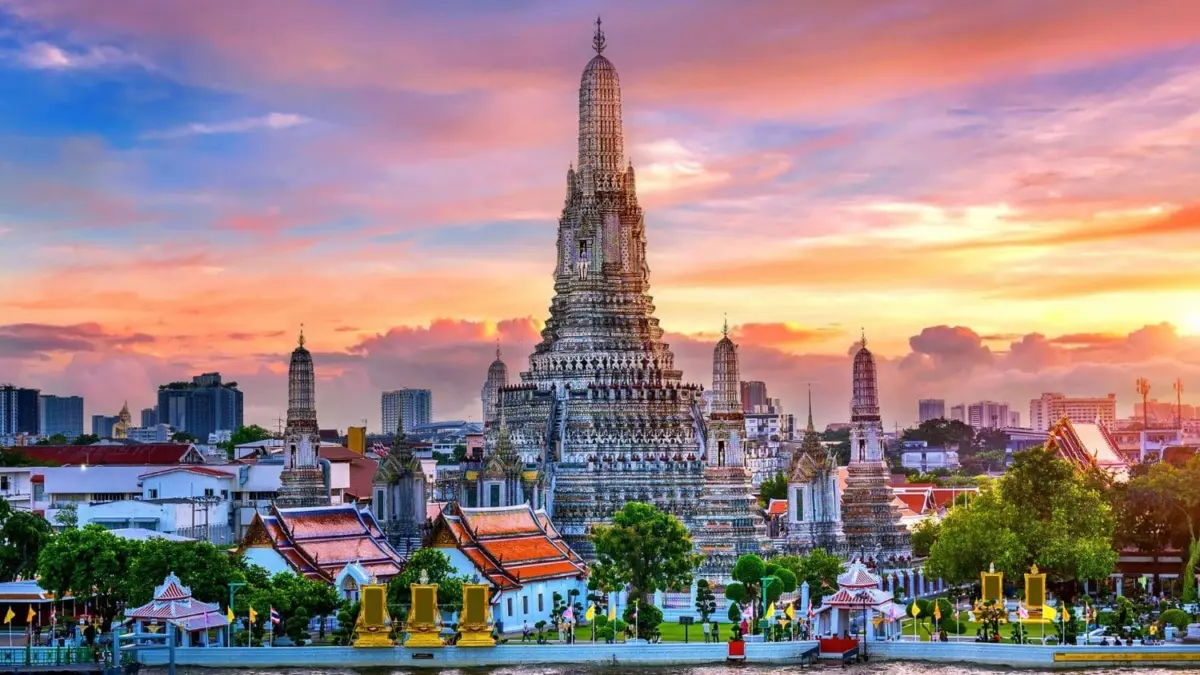
The transit from the tranquil shores of Krabi, Phuket, and the Phi Phi Islands to the capital began with a long overnight bus ride. Opting for a bus rather than a flight was a deliberate choice for someone with time to spare and a desire to witness the changing landscape of the Thai countryside. Yet, the overnight transit through largely undeveloped regions offered little scenery for passengers to admire in the dark, reminding travelers that long-distance bus journeys in the region are not necessarily suited for everyone.
Arriving in Bangkok during the early morning hours, the traveler was immediately struck by a dramatic shift in environment. Stepping away from the relative tranquility and ocean breezes of the southern islands, the relentless hustle and bustle of the capital proved to be a sudden jolt to the system, prompting a brief moment of reflection on why the peaceful beaches had been left behind.
The timing of the arrival added another layer of intensity. Visiting in September, the traveler encountered an environment where the heat reflecting off Bangkok’s vast expanses of pavement was nearly unbearable. Merely stepping out of the hotel resulted in an immediate, full-body sweat. In the absence of ocean breezes, the combination of high temperatures and humidity led to frequent bouts of exhaustion and dehydration, setting the stage for an intense urban experience.
Despite the sensory overload and physical challenges, Bangkok revealed itself as a city of profound historical depth, vibrant street culture, and modern marvels. For those navigating the urban expanse, a series of distinct districts and practical transit choices shaped the remainder of the journey.
The Grand Palace
Among the essential stops in the capital is the Grand Palace, a destination that is easily accessible and fundamentally unmissable for anyone visiting the city for the first time. Sprawling across a vast complex, visitors can easily spend hours wandering the grounds and marveling at the sheer architectural splendor. Established in 1782, the Grand Palace stands as Bangkok’s most popular tourist attraction, functioning essentially as a walled city within a city. The complex is a dazzling visual display composed of glittering mosaics, elaborate ceremonial buildings, and sacred temples.
A primary highlight within the compound is the revered Emerald Buddha, an ancient green stone carving housed high within the ordination hall of Wat Phra Kaew. With hundreds of temples scattered across the city and remarkable sights waiting around every corner, the historic palace grounds stood out as a personal favorite for the traveler.
Bangkok Old Town
With accommodations situated in the historic Old Town, the traveler spent many pleasant hours exploring the surrounding streets and sampling local fare at the night market near Khao San Road. As a solo traveler, the neighborhood offered an ideal environment for resting and people-watching. Lined with a diverse array of bars and restaurants, the bustling street is equally famous for its vibrant street vendors, who offer everything from traditional Thai pancakes to plates of Pad Thai for under three dollars.
As night falls, the market truly springs to life, serving as a powerful magnet for younger international tourists. While the atmosphere can grow quite loud with music blasting from neighboring clubs, the earlier hours of the evening offered a more manageable experience. Collecting food treats early in the evening allowed the traveler to retreat to the quiet comfort of a hotel room to unwind after a long day of sightseeing.
ICONSIAM
For those inclined toward modern retail and culinary exploration, ICONSIAM represents a massive, brightly lit destination that demands a visit. At the base of the complex lies an extraordinary indoor floating market and food court, offering a vast selection of delicious local dishes and beverages at remarkably reasonable prices.
The journey to the mall itself offered a memorable transit experience. Boarding a ferry from the Old Town pier, the traveler paid less than one dollar for the river crossing. However, a valuable lesson was learned regarding local operating hours: the final return boat departed unexpectedly early at 5:00 p.m., a schedule oversight that was narrowly avoided by checking departure times ahead of the return trip.
At the upper levels of the complex, visitors are rewarded with one of the most expansive night views available in Bangkok. Whether enjoying a cup of coffee at Starbucks or stepping out onto the open-air terrace, the location provides a peaceful vantage point to survey the sprawling city below. Beyond the views, the mall houses high-end international brands alongside specialty stores and dining establishments, making it easy for visitors to spend an entire day exploring the air-conditioned interior.
Chinatown
Seeking a different perspective, the traveler relocated after three days from the Old Town to Chinatown, anticipating it would serve as an engaging base for further exploration. Instead, the district proved to be intensely hot, noisy, and heavily congested, while the culinary offerings leaned toward a level of traditional authenticity that tested the limits of the traveler’s palate. Dishes featuring bird’s nest and shark fin soup quickly made it clear that certain local delicacies were not suited for everyone.
Navigating the crowded streets, the heavy mix of intense cooking aromas and vehicular exhaust fumes began to induce nausea. Recognizing the early warning signs of illness, the traveler spent the majority of the stay confined to the hotel room or foraging nearby streets for simple remedies like comforting broth and white rice.
While Chinatown remains an essential destination for those seeking an uncompromised cultural and culinary experience, the overwhelming congestion prompted another relocation after just two days, leading the traveler toward the quieter coastal surroundings of Ao Nang.
Tuk-Tuks and Scooter Taxis
Navigating short distances through Bangkok’s dense traffic often involves hailing a tuk-tuk, a fun and traditional mode of transit well-suited for moving between nearby attractions. To ensure a smooth journey, travelers are advised to provide drivers with a clear destination, ideally supported by a screenshot of the address written in Thai script. Consulting a ride-hailing app beforehand provides a reliable estimate of fair pricing, which should be confirmed with the driver prior to entering the vehicle to prevent unexpected fare hikes upon arrival. Haggling is standard practice, and if a driver remains firm on an unreasonable rate, a polite smile and an approach to the next driver is usually the best course of action.
Travelers should also remain aware that tuk-tuk drivers frequently initiate conversations about daily itineraries as a tactic to market commercial excursions. On one occasion, a driver diverted the route entirely to visit an external excursion office in an attempt to sell a full-day tour outside the city limits.
Grab Taxi
For a more reliable and often more economical alternative to traditional street transport, ride-hailing services like Grab proved invaluable throughout the city. Grab taxis typically arrived within minutes, with fares frequently amounting to just a dollar or two for standard urban trips—often undercutting the cost of tuk-tuks.
These services became especially crucial when the oppressive daytime heat made walking unmanageable. The application provides upfront transparency regarding travel time and fixed costs, eliminating ambiguity. Furthermore, Grab offered a dependable and cost-effective option for transit to airports and railway stations, bypassing the significantly higher rates typically charged by hotel-organized car services.
Reflecting on the entire urban chapter, the time spent exploring Bangkok ultimately left a deeply positive impression. Looking ahead to future journeys, a return trip north to explore the cultural richness of Chiang Mai remains firmly on the horizon, while upcoming travel accounts promise to highlight the stunning natural scenery found across the southern expanse of Thailand.